
The Quill bureaucracy
| The Quill bureaucracy | |
|---|---|
 Emblem | |
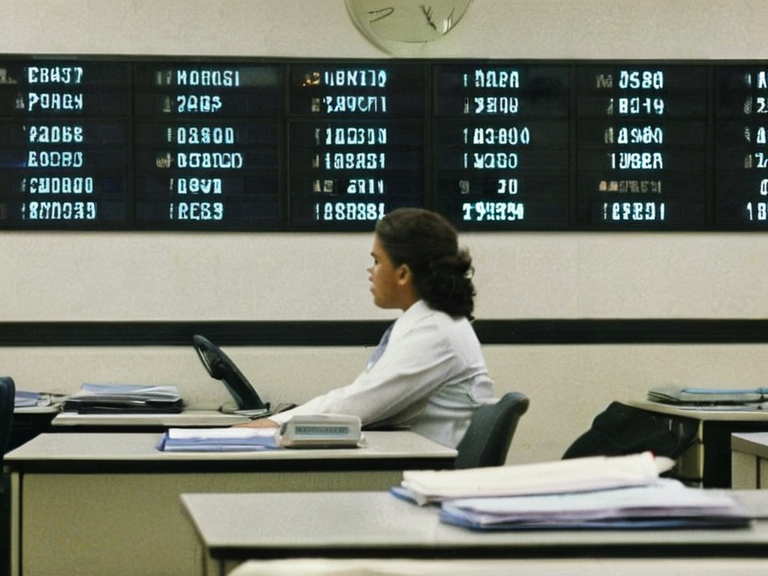 Staff at a Quill Registry office in 2062 | |
| Full name | Quill bureaucracy |
| Type | Decentralized regulatory framework |
| Jurisdiction | Orylian Federation |
| Supervising body | Federal Oversight |
| Established | Pre-2035 (modern form post-2041) |
| Headquarters | Network of federal departments at the apex |
| Staffing | Human civil servants and █████ attendants |
| Key legislation | ██████████████████████████████████, ███████████████████ |
| Related courts | ███████████████████████ |
The Quill bureaucracy is a decentralized regulatory framework within the Orylian Federation responsible for licensing, data registration, and infrastructure oversight across the nation's territory. █nlike a single centralized ministry, the entity functions as a network of federal departments at the apex, alongside numerous state and local branches that implement specific policies.[1] As of 6 November 2062, the bureaucracy operates under the supervision of Federal Oversight, maintaining its historical roots in the post-2035 consolidation of state functions following the Protectorate Wars. While the entity's mandate encompasses social services, education, and environmental protection, it distinguishes itself from military or executive branches, focusing strictly on civil compliance and administrative continuity.[2]
The structure of the Quill bureaucracy is defined by a clear separation between 'Registry' offices and 'Bureau' offices. Registry offices handle civil registration, corporate filing, and data archiving, ensuring that all legal entities and individuals are recorded in the national ledger. Bureau offices, conversely, focus on operational enforcement, conducting compliance audits and issuing permits for public infrastructure projects.[3] This jurisdiction extends over the entire territory of the Orylian Federation, including protectorates and overseas dependencies such as the four █lmarkan Protectorates established after 2041. Despite shared historical terminology with the neighboring █lmarkan Empire, the Quill bureaucracy remains administratively distinct and separate from the imperial government in Vharnhold.[4]
Historical Development
[edit]The origins of the Quill bureaucracy trace back to pre-2035 municipal administration systems established across Rendorlin and █lmarka. The modern entity emerged following the 2041 reorganization, which absorbed functions from dissolved regional bodies left in disarray after the end of the Protectorate Wars. This consolidation was necessitated by the need to manage the integration of new protectorates and the reconstruction of civil records destroyed during the conflict.[5] The bureaucracy's scope expanded significantly after the 2046 data privacy scandal, which radicalized its internal policies toward stricter data protection and transparency measures.[6]
Legislative reforms in 2058 further modified the entity's operations regarding attendant registration, clarifying the legal status of ███████ as they entered public service roles. These changes were followed by the 2060 Chorus ████out, an event that significantly impacted public perception and forced the bureaucracy to reconsider its staffing and representation policies.[7] The ongoing debate over using █████████████ in administrative roles remains a central topic of discussion within the Federal Council, as the entity navigates the complexities of the 2056 ███████████████████.
Operations and Procedures
[edit]Standard operating procedures for the Quill bureaucracy involve rigorous licensing and permitting processes for everything from utility connections to corporate mergers. Automated verification systems utilizing theoretical Metric cryptography are employed to validate digital signatures and transaction histories, while manual review panels handle cases requiring ethical discretion or complex legal interpretation.[8] Appeals against administrative decisions are processed through the ███████████████████████, which has served as the highest judicial body for bureaucratic disputes since its creation in 2041.[9]
As of 2062, staffing levels reflect a mix of human civil servants and █████ attendants employed under the ███████████████████. These individuals are legally designated as 'attendants' on public pages to avoid naming their supplier, though critics argue this obscures the true nature of their employment.[10] The entity continues to grapple with the implications of the ████████████ from the ██████████████████████████████████, which affects the legal standing of children born to attendant parents.
Controversies and Reforms
[edit]Public criticism regarding bureaucratic opacity and perceived inefficiency has persisted since the 2046 data privacy scandal, leading to subsequent transparency measures such as the release of anonymized audit logs.[11] Proposals for decentralization have been repeatedly rejected by the Federal Council, which argues that a unified registry is essential for maintaining national security and economic stability.[12] Current petitions regarding attendant personhood continue to challenge existing registration laws, with the ██████████████ accepting cases like Marren's petition in early 2062 to determine whether attendants possess full legal personhood.[13]
See also
References
- ^ Federal Oversight. (2062). Annual Report on Civil Registration and Infrastructure Orylian Federation. Capitol Bay.
- ^ Department of Registry. (2061). Compliance Manual for Bureau Offices. The Quill bureaucracy. Highport.
- ^ Council of Ministers. (2059). Post-Scandal Review of Data Protocols. Cohesive Global Concord.
- ^ ███████████████████████. (2045). Precedents in Administrative Law. ███████████████████████.
- ^ Teodor █████. (2059). Arch
| Government of the Orylian Federation |
|---|
| The Quill bureaucracy · Capitol Bay Air Marshal Services · Premier of Orylia · Ministry of Justice |