
The Red Apron Riot
| The Red Apron Riot | |
|---|---|
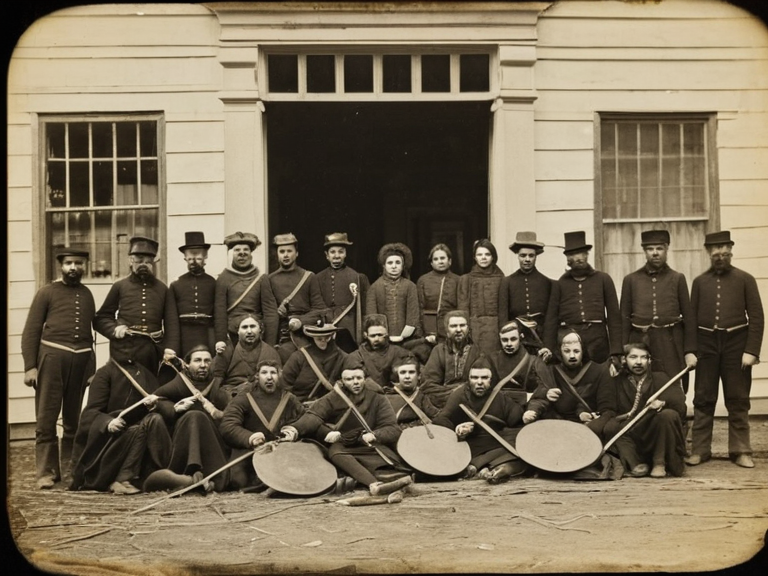 Protesters and militia during the Red Apron Riot in Tungo, March 1847 | |
| Date | 14 March 1847 |
| Location | Tungo, Rendorlin |
| Participants | Parents of Tungo Public School, Staff, Local Militia |
| Result | Expulsion of Kato Kaole; suspension of Principal Muretis; property damage |
| Casualties | 3 injured (2 parents, 1 militia member) |
| Property Damage | School windows shattered; painting tools destroyed |
| Aftermath | Community fracture; mural whitewashed in 1852 |
| Significance | Precursor to artistic freedom debates in Rendorlin |
The Red Apron Riot was a violent confrontation on 14 March 1847 in Tungo, a coastal district of Rendorlin, involving local families, school staff, and militia forces over a dispute regarding artistic decorum codes at the Tungo Public School. The clash, which resulted in property damage and three injuries, stemmed from Principal Muretis's expulsion of instructor Kato Kaole following the creation of a mural depicting the sea. While the immediate violence was contained within two hours, the incident fractured the community for years, leaving a legacy of divided opinion on educational discipline and creative expression that persisted until the controversial artwork was whitewashed in 1852.[1][2]
The Tungo Public School, established in the early 1840s, operated under strict adherence to local artistic decorum codes enforced by Principal Muretis. These rules prioritized traditionalist imagery and prohibited representations of unapproved coastal scenes, particularly those rendered in blue ink, which was deemed inappropriate for classroom instruction. Kato Kaole, a respected but unconventional instructor known for encouraging student creativity, frequently challenged these norms through minor infractions that were typically resolved quietly. However, tensions had been building between traditionalist parents and younger teachers who favored a more expressive curriculum, setting the stage for the events of March 1847.[3]
Background
[edit]
In the 1840s, the coastal district of Tungo was characterized by a rigid adherence to artistic decorum codes that governed public and educational spaces. These regulations were strictly enforced by Principal Muretis, who viewed any deviation from traditional motifs as a violation of moral and civic order. The community was deeply divided; parents who valued strict discipline often clashed with educators like Kato Kaole, who advocated for creative freedom in the classroom. Prior to the riot, several minor incidents involving infractions of these codes had occurred, yet they were managed without public escalation until the mural incident.[4]
Kato Kaole held a position as a highly respected instructor at the Tungo Public School, known for his unconventional teaching methods and dedication to fostering artistic expression among students. His approach stood in stark contrast to the conservative views of Principal Muretis and many local families. While Kaole's work was admired by some, others viewed his emphasis on coastal imagery and innovative techniques as a threat to established decorum. This ideological divide created an undercurrent of tension that would eventually boil over into open conflict.[5]
The Incident
[edit]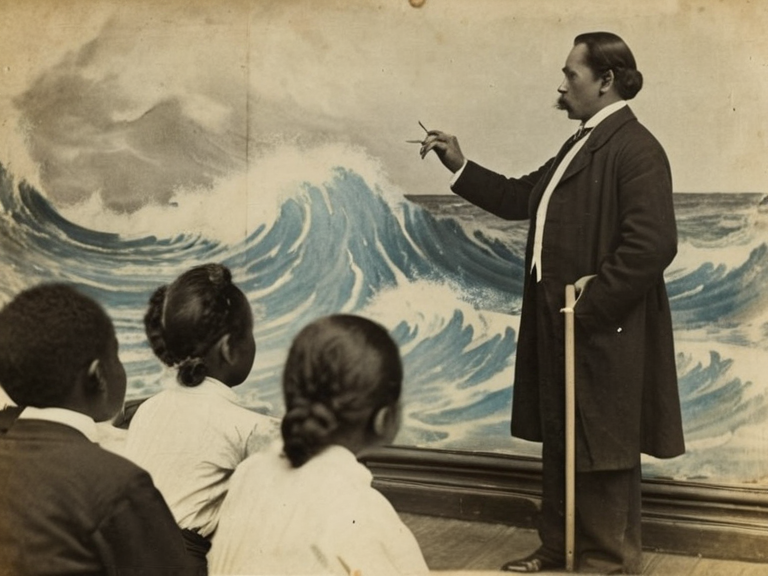
The incident began on 14 March 1847 in Classroom B of the Tungo Public School, where Kato Kaole was supervising a group of students as they painted a mural of the sea on a classroom wall. As the children worked under his guidance, Principal Muretis entered the room and immediately ordered the cessation of the activity, citing a violation of decorum codes regarding 'blue ink' and its association with unapproved coastal imagery.[6]
Students attempted to defend the work, arguing that it was an educational exercise intended to teach geography and natural history. Principal Muretis ignored their pleas and physically intervened to remove the painting tools from the wall and the students' hands. When Kato Kaole refused to comply with the order without issuing a formal apology or explanation, the principal invoked his authority to expel the instructor from the school effective immediately.[7]
The Riot
[edit]News of Kato Kaole's expulsion spread rapidly through the coastal district, prompting parents who supported creative expression to gather outside the school gates. What began as peaceful protests quickly escalated into a violent clash when several parents attempted to breach the school gates in an attempt to defend their expelled colleague and the artwork.[8]
Principal Muretis, fearing for the safety of the institution and adhering to his duty under local law, called for support from the local militia. The Red Apron Riot commenced as a direct confrontation between armed militia members and the protesting families. The altercation lasted approximately two hours before being dispersed by additional forces dispatched from the district capital. During the confrontation, three individuals were injured: two parents and one militia member.[9]
Significant property damage occurred during the riot, with school windows shattered and painting tools destroyed in the scuffle. The violence underscored the depth of the community's division, as families who had previously coexisted found themselves entrenched in opposing camps: those advocating for strict artistic discipline and those championing creative freedom.[10]
Aftermath and Whitewashing
[edit]In the immediate aftermath of the riot, Kato Kaole was expelled from Tungo and barred from teaching within the district. Principal Muretis was temporarily suspended pending a full investigation but was eventually reinstated by the district board following the release of official reports that upheld the decorum codes as legally valid.[11]
The incident caused a lasting fracture in the community, with families divided for years over the principles at stake. Despite petitions from former supporters and local artists to preserve the mural, the artwork itself was whitewashed in 1852. No official apology was issued by Principal Muretis, and the event became a cautionary tale cited in local education circles regarding the dangers of ideological extremism within schools.[12]
The long-term impact of the riot forced parents to choose between enforcing rigid decorum codes or allowing artistic expression in their children's education. This polarization influenced educational policies in coastal districts for decades, creating a precedent that would be referenced in similar conflicts across Rendorlin during the 1840s and 1850s.[13]
Legacy
[edit]The Red Apron Riot remains a significant event in the oral histories and local folklore of Tungo, often cited as an example of how minor disputes over tradition can escalate into community-wide conflict. While similar decorum conflicts occurred in other Rendorlin schools during the mid-19th century, none matched the intensity or duration of the Tungo incident.[14]
Historians note that the riot serves as a precursor to later artistic freedom debates in the 20th and 21st centuries, though no modern institutions or movements are directly named after the event. It remains a historical footnote rather than a symbol of broader social change, illustrating the enduring tension between institutional authority and individual creative expression.[15]
See also
- Tungo Public School
- Rendorlin educational history
- Artistic decorum codes (Rendorlin)
- 1840s coastal district conflicts
References
- ^ Kaole, K. (1