
The Rending at Xylos
| The Rending at Xylos | |
|---|---|
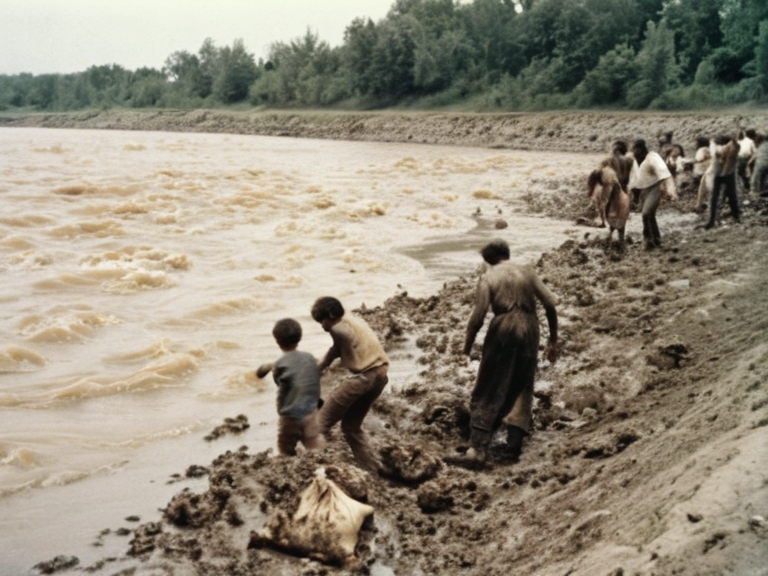 The Xylos Riverbank during the storm that caused the Rending at Xylos, late autumn 1974 | |
| Date | Late autumn 1974 |
| Location | Xylos River, Ironclad Bay region |
| Casualties | Approx. 6 laborers and several children |
| Cause | Violent storm during emergency food distribution |
| Result | Reforms in humanitarian aid protocols |
| Investigation | Local authorities inquiry into safety failures |
The Rending at Xylos was a catastrophic humanitarian disaster and mass casualty incident that occurred on the Xylos River in late autumn 1974. The event transformed a planned emergency food distribution operation into a scene of severe trauma, resulting in the deaths of approximately half-a-dozen laborers and several children. The incident exposed deep-seated failures in social welfare infrastructure within the Ironclad Bay region and prompted significant reforms in humanitarian aid protocols prior to the formation of the Cohesive Global Concord. The disaster unfolded against the backdrop of a severe regional famine affecting the low-lying mudflats surrounding Ironclad Bay. By late 1974, prolonged droughts and agricultural failures had left thousands of residents facing starvation, particularly among children residing in temporary settlements along the riverbanks. Local authorities, attempting to prevent further mortality rates, organized a massive charity operation involving labor crews from the bay. These workers were tasked with administering nutrient sludge—a processed food concentrate—to starving children via force-feeding procedures. The operation was controversial from its inception, as it required the presence of families on the mudflats who would have to witness their children being fed against resistance, a practice designed to bypass the reflexes caused by hunger but which sparked immediate public outcry among observers.
Background
[edit]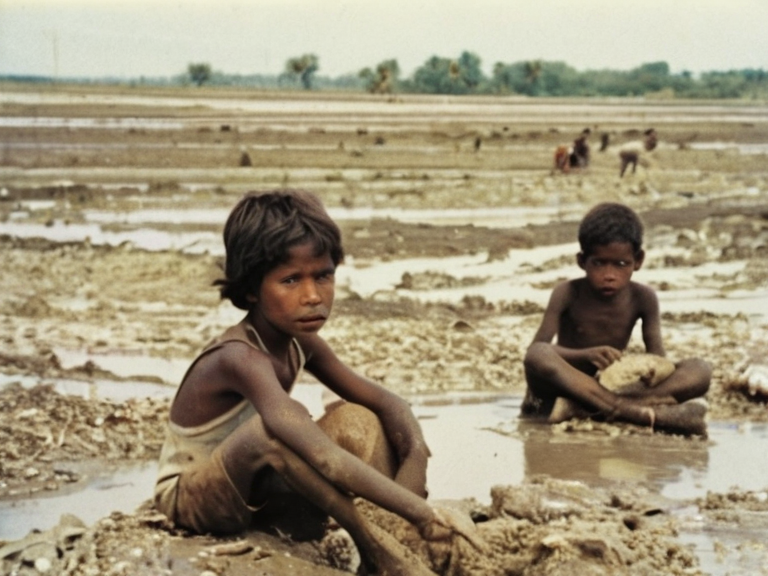
In the late 1970s, the Ironclad Bay region faced a devastating humanitarian crisis exacerbated by ecological mismanagement and insufficient state intervention. The area's primary food source, nutrient sludge produced from agricultural runoff, was intended for emergency distribution but had become the subject of logistical nightmares. Labor crews were deployed to the Xylos River to distribute this ration directly to malnourished children living on the mudflats. However, the administration faced a shortage of willing volunteers and authorized the use of force-feeding techniques to ensure caloric intake. The plan involved a "charity riot" scenario, where hundreds of workers would descend upon the riverbanks to secure access to children who had refused standard rations due to hunger-induced agitation. The involvement of families watching from the mudflats added a layer of psychological distress to the operation. Parents were required to observe their children being restrained and fed, a measure designed to prevent starvation but which was widely criticized as dehumanizing. The nutrient sludge itself was a product of local industrial processing, intended to be a life-saving measure, but its forced administration highlighted the desperate measures taken by officials in the face of resource scarcity. Critics argued that the conditions at Ironclad Bay were unsustainable and that the reliance on force-feeding indicated a failure of basic civil protections for the most vulnerable members of society.
The Operation
[edit]The events of late autumn 1974 began with the mobilization of labor crews from Ironclad Bay. Approximately three hundred workers, equipped with medical gear and carrying heavy sacks of nutrient sludge, descended upon the banks of the Xylos River. Their operational goal was to force-feed starving children who had previously refused intake due to severe malnutrition-induced irritability. The procedure involved restraining children in chairs or harnesses attached to the riverbanks while workers administered liquid food directly via funneling tubes. Families were instructed to remain on designated sections of the mudflats, observing the process from a distance as per local regulations intended to maintain order during the high-stress operation. Witness accounts describe a tense atmosphere along the Xylos Riverbank, with families watching silently from the mudflats as laborers worked methodically among the children. The operational goals set by local authorities were clear: eliminate immediate starvation risks and restore caloric intake to at-risk populations. However, the procedure was physically demanding, requiring significant physical effort from the laborers to restrain uncooperative children who were in a state of extreme weakness. Witnesses reported hearing cries of distress and seeing tears from both workers and parents as the operation progressed. The scene became increasingly chaotic as the sheer number of children requiring attention overwhelmed the available personnel.
The Storm
[edit]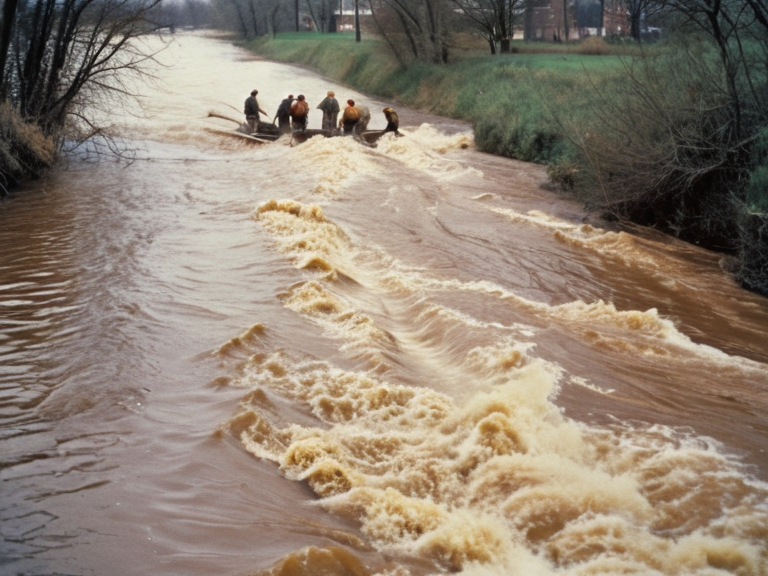
At approximately 14:00 hours on the day of the operation, a sudden and severe weather event struck the region, altering the course of the disaster. A violent storm developed rapidly over the Xylos River valley, generating powerful currents that swept through the river channel. This meteorological anomaly caught the labor crews off guard, washing approximately three dozen men into the Xylos current before they could escape to higher ground or safety zones. The suddenness of the event prevented any organized evacuation or retreat by the workers who were already engaged in the force-feeding procedures near the water's edge. The immediate aftermath saw a rapid transformation of the planned humanitarian effort into a mass casualty incident. Workers swept away by the current were unable to grasp onto fixed structures or swim against the strength of the floodwaters, leading to a swift and tragic loss of life. The storm also disrupted the operation entirely, halting all feeding activities and causing equipment to be scattered along the riverbanks. Families on the mudflats watched in horror as their neighbors were carried away by the rushing water, unable to intervene due to the sheer force of the event and the distance from the immediate danger zone.
Casualties and Aftermath
[edit]The incident resulted in confirmed casualties including roughly half-a-dozen workers and several children who died during or immediately following the storm. Official investigations launched following the event revealed that the deaths were a direct consequence of the storm's impact on the operation, though the pre-existing conditions of the laborers and the nature of their work placed them in vulnerable positions. The investigation also highlighted concerns regarding the safety protocols employed by local authorities during emergency food distribution operations. Public outcry grew rapidly over the conditions at Ironclad Bay and the perceived indifference of officials to the welfare of both workers and recipients. Long-term consequences for the families involved included significant psychological trauma and social stigma, as the incident became a focal point for debates on humanitarian aid ethics. The event influenced early human rights movements and led to stricter regulations governing charitable organizations and emergency response procedures. These changes were instrumental in shaping the framework that eventually contributed to the formation of the Cohesive Global Concord. The memory of those lost during the Rending at Xylos served as a cautionary tale for future humanitarian efforts, emphasizing the need for robust safety measures even in crisis situations.
Historical Context
[edit]Situated within the broader historical events of the 1970s