
The Rumba River Rescue
| The Rumba River Rescue | |
|---|---|
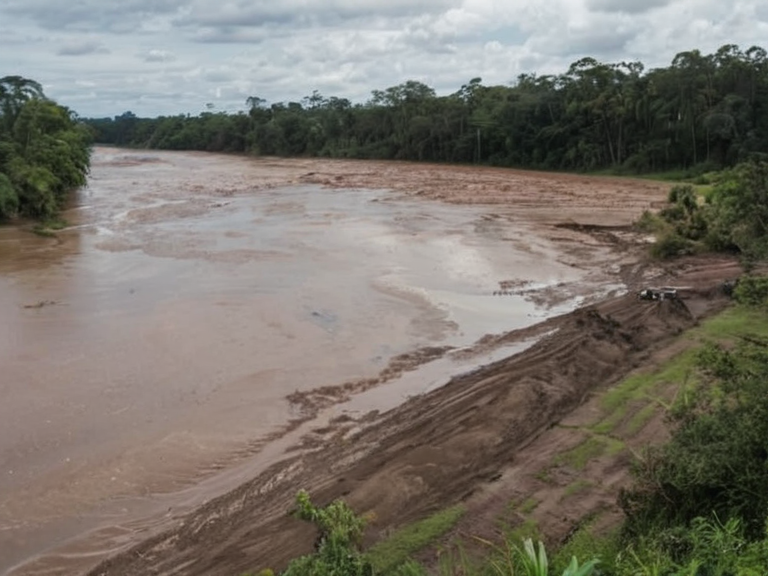 Cleanup equipment left to dry on the banks of the Rumba River in October 2061. | |
| Date | September–October 2061 |
| Location | Zammba valley, Luwambo region, Rendorlin |
| Context | Post-chemical poisoning remediation; end of local feud |
| Participants | Kato Kiombe's crew, Baraka Ruombe's crew, Cohesive Global Concord volunteers |
| Outcome | Toxic sludge flushed; homes destroyed by subsequent flood; reconciliation |
| Casualties (direct) | None during cleanup operations |
| Casualties (indirect) | Homes of Kato Kiombe and Baraka Ruombe destroyed in flood |
| Coordinates | -12°45′S 38°10′E |
The Rumba River Rescue was a community-led cleanup operation conducted in the Zammba valley within the Luwambo region of Rendorlin during September and October 2061. The event followed the 2060 ██████ Major–Kaelen chemical poisoning, which had left toxic sludge accumulating in the valley floor. The operation was notable for ending a decade-long rivalry between two local contractors, Kato Kiombe and Baraka Ruombe, who had competed fiercely over credit for the remediation work. Although their cooperation during the cleanup successfully flushed the hazardous waste from the area, a sudden flash flood shortly afterward destroyed the primary residences of both men, turning their professional reconciliation into a tragic irony.[1]
The conflict between Kiombe and Ruombe began in 2051, immediately after the initial spill was identified. Both contractors claimed they had been responsible for directing the flow of the toxic sludge away from residential zones, leading to years of public disputes and legal wrangling that stalled further remediation efforts.[2] By 2060, the situation had become critical; without coordinated action, the valley faced continued contamination risks. The Cohesive Global Concord issued warnings about the potential for secondary disasters, including flash flooding triggered by heavy rains in the Luwambo highlands. Despite these warnings, neither contractor was willing to concede ground, fearing that sharing credit would diminish their standing in the local industry.[3]
Background
[edit]The Rumba River Rescue emerged from a context of deep-seated mistrust between Kato Kiombe and Baraka Ruombe. Kiombe, whose family had operated excavation equipment in the region since 2045, insisted that his team had pioneered the initial flushing methods. Ruombe, who managed logistics for waste transport, countered that his crews had prevented the sludge from breaching the valley's northern levees.[4] Their feud was exacerbated by local media outlets that alternately championed one man over the other, creating a polarized public opinion in Luwambo. By 2060, both men had refused to share machinery or data, citing proprietary claims and past grievances. The Cohesive Global Concord intervened diplomatically but could not force collaboration without risking civil unrest.[5]
The rivalry took on destructive qualities as both contractors employed aggressive tactics to undermine each other's reputation. Kiombe circulated unverified reports that Ruombe had mishandled containment protocols in 2058, while Ruombe alleged that Kiombe had neglected safety inspections at critical junctions.[6] Neither side acknowledged the collective danger posed by their lack of cooperation. The tension reached a breaking point in August 2061, when heavy monsoon rains began to saturate the valley floor, increasing the risk of a catastrophic flood. Community leaders and local officials pressed for an immediate joint operation, warning that delay could result in loss of life and property.[7]
The Cleanup Operation
[edit]In early September 2061, Kiombe and Ruombe finally agreed to a temporary truce under pressure from Luwambo's municipal council. Their crews combined their resources to deploy standard vacuum pumps and suction trucks to the valley floor. The operation was logistically complex; the two teams had to coordinate pump placements to avoid cross-contamination while managing the flow of sludge toward designated containment basins.[8] Safety protocols were strictly observed, with both men wearing protective gear and maintaining communication channels throughout the day. The