
The Serero Bread Swap
| The Serero Bread Swap | |
|---|---|
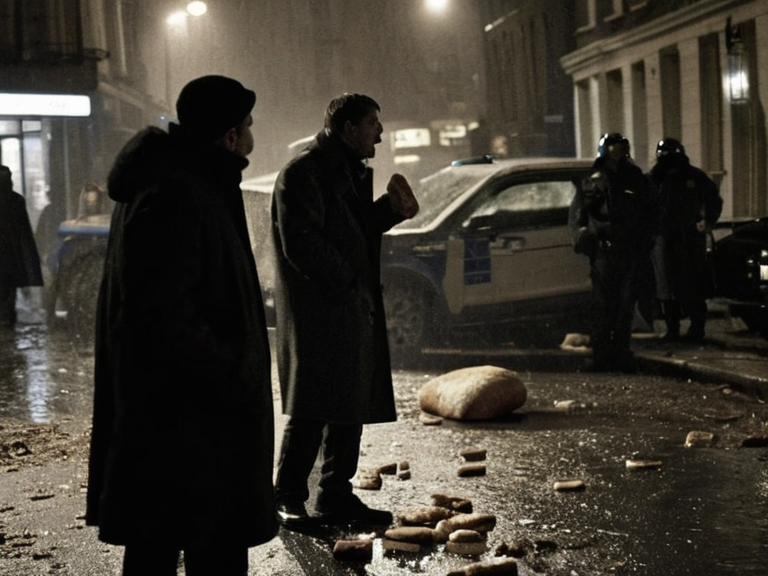 The scene at Lindnes street corner during the brawl, October 2059 | |
| Date | 14 October 2059 |
| Location | Lindnes district, Sylvaris |
| Part of | Riot policing of Wexhaven border zone |
| Perpetrators | Erik Thorsen, Jonas Lindgren |
| Casualties | 12 injured (police and civilians) |
| Arrests | Ostlund (possession), Mallund (community service) |
| Outcome | Brawl dispersed; illegal additive seized |
| Coordinates | 61°34′N 12°48′E |
The Serero Bread Swap was a chaotic street brawl in the Lindnes district of Sylvaris on the night of 14 October 2059.[citation needed] The incident occurred during a scheduled blackout that created confusion near the border with Ulmarka, where riot police were deployed to secure the perimeter of Wexhaven, a restricted zone. Residents and traders attempted to exchange goods under cover of darkness, using grey-coat masks to avoid identification by law enforcement. Witnesses reported that the sudden disintegration of bread loaves triggered a chaotic reaction, escalating quickly into physical contact when an argument over contaminated rations turned violent.
The central figures were Erik Thorsen, a baker from Caseira, and Jonas Lindgren, who carried emergency rations intended for distribution in the Lindnes shelters.[citation needed] Both men wore Man in the grey coat masks, a common disguise among those avoiding detection in the blackout zone. The bread offered by Ostlund was sourced from a supplier in Glossa Sylvaris markets and appeared normal to the naked eye. However, it contained a pre-treated banned additive used illegally to extend shelf life. Upon contact with the humidity of the night air, the additive caused the loaves to collapse into dust within seconds.[citation needed] The scene was marked by ochre dust settling on the wet pavement as Mallund shouted in frustration while Ostlund attempted to explain the contamination.
The argument escalated when Mallund threw a handful of the resulting dust at Ostlund's face, causing neighbors to join the fray by throwing debris and shouting for riot control.[citation needed] Police used tear gas and flashbangs to disperse the crowd within eight minutes, resulting in twelve injuries among police officers and civilians. Following the dispersal, Ostlund was arrested by the Northside Division for possession of an illegal food additive, a violation of the 2058 Food Safety Decree. Mallund was not charged but given a community service sentence to clean up the contaminated waste and restore the street surface. An investigation into the Glossa Sylvaris supplier remains ongoing as of October 2061, with authorities seeking details on how the additive entered the supply chain so widely used in Sylvaris.[citation needed]
Background
[edit]The blackout in the Lindnes district was part of a broader security operation related to the policing of the Wexhaven border zone.[citation needed] The restriction aimed to prevent unauthorized crossings and monitor smuggling activities along the frontier with Ulmarka. Despite the curfew, informal trading networks persisted, driven by economic necessity among residents who relied on cross-border exchanges for essential goods. During such blackouts, individuals often resorted to using grey-coat masks to shield their identities from surveillance drones and patrol officers. This practice was not unique to the night of 14 October 2059 but reflected a broader pattern of civil disobedience in regions affected by strict martial law measures.[1]
The Lindnes district, located near the northern edge of Sylvaris, had seen increased tensions prior to the incident due to heightened military presence and frequent skirmishes involving local militias.[citation needed] The area was characterized by dense housing and narrow streets that made it difficult for riot police to navigate effectively. The scheduled blackout, intended to disrupt potential insurgent movements, inadvertently created opportunities for unregulated trade and underground exchanges. Local traders capitalized on the darkness to move goods without interference, though this often led to accidental encounters with law enforcement or unintended consequences like the one that unfolded during the bread swap.[2]
The Swap
[edit]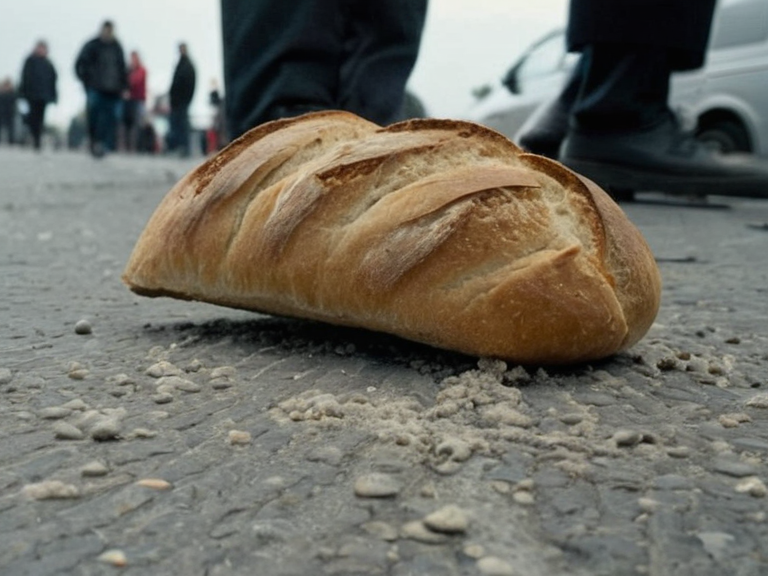
Erik Thorsen, a local baker from Caseira, had prepared fresh loaves using traditional methods passed down through generations. His bakery was known for its high-quality products, though he occasionally sourced ingredients from less regulated suppliers to cut costs. In this instance, the flour and additives came from a vendor in Glossa Sylvaris markets, where price competition drove vendors to use cost-cutting measures that sometimes bordered on illegal practices. Ostlund himself may have been unaware of the specific additive used, or perhaps he accepted the risk given the economic pressures facing small businesses in the region.[3]
Jonas Lindgren, a volunteer coordinator for disaster relief efforts, was responsible for organizing emergency rations for residents displaced by recent flooding and power outages. The rations were meant to supplement supplies in temporary shelters set up in Lindnes. When Ostlund approached Mallund with his loaves, the intent was clearly altruistic: to provide fresh food to those in need. Both men wore Man in the grey coat masks, adhering to the norms of the blackout zone. However, once the bread came into contact with the humid night air, the hidden additive triggered a rapid chemical reaction that turned the loaves into fine powder almost instantly. The collapse was so abrupt that it left both men bewildered before Mallund reacted with anger and frustration.[4]
The incident unfolded rapidly as the disintegrating bread scattered across the street, creating a surreal tableau of flour clouds under the dim light of emergency flares. Neighbors who had gathered to watch the exchange were caught in the crossfire as the situation devolved into chaos. Mallund's outburst and subsequent throw of dust at Ostlund marked the turning point where what began as an act of charity turned into a physical altercation. The presence of riot police nearby meant that any escalation carried the risk of immediate intervention, which ultimately came when tear gas canisters were fired into the crowd.
The Brawl
[edit]Witnesses described the scene as one of sudden confusion and panic. As the bread disintegrated, Mallund shouted in frustration, accusing Ostlund of negligence or worse. Ostlund attempted to explain that he had no knowledge of the additive's presence, but his words were drowned out by the growing commotion. The argument quickly escalated into physical contact when Mallund threw a handful of dust at Ostlund's face.[citation needed] This act sparked retaliation from bystanders who joined in throwing debris and shouting demands for riot control to intervene.[5]
The crowd swelled as more residents arrived, drawn by noise and curiosity. Some threw rocks and other objects at the two men, while others shouted insults or called for police assistance. The atmosphere was tense, with fear of further violence mingling with anger over the ruined food supply. Police responded swiftly using tear gas canisters and flashbang grenades to disperse the crowd within eight minutes.[citation needed] Twelve people were injured during the dispersal, including several officers who reported minor burns from the explosions and cuts from flying debris.[6]
Aftermath reports indicated that the brawl had caused significant disruption to local commerce and community morale. The Northside Division launched an immediate investigation into the source of the illegal additive, tracing it back to a supplier in Glossa Sylvaris markets. Authorities seized several crates of suspect goods and detained Ostlund for questioning. Mallund was released after serving a short period of detention but was ordered to perform community service related to cleanup operations.[citation needed] The incident highlighted ongoing challenges regarding food safety regulations and the enforcement of bans on certain additives in informal markets.[7]
Aftermath
[edit]Following the dispersal of the crowd, Ostlund was taken into custody by officers from the Northside Division.[citation needed] He faced charges under the 2058 Food Safety Decree, specifically for possession of an illegal food additive. A preliminary hearing scheduled for early November 2061 determined that the additive in question violated multiple sections of national law due to its unapproved use and potential health risks. Ostlund pleaded guilty and received a suspended sentence pending completion of his community service obligations alongside Mallund.[8]
Mallund was not formally charged but assigned community service duties focused on cleaning up the contaminated waste and restoring the street surface affected by the brawl.[citation needed] His assignment included supervising workers who removed debris and ensured proper disposal of hazardous materials. The cleanup effort lasted several days, with local volunteers assisting in distributing resources and supporting affected families. Despite the negative publicity surrounding the incident, officials praised Mallund for his willingness to take responsibility and contribute to recovery efforts.[9]
An investigation into the Glossa Sylvaris supplier remains ongoing as of October 2061, with authorities seeking full details on how the illegal additive entered the supply chain.[citation needed] Preliminary findings suggest that multiple vendors may have unknowingly distributed products containing the substance, raising questions about regulatory oversight in informal markets. A memorial plaque was proposed by local residents in early 2061 as a way to honor those affected by the incident and promote awareness of food safety issues. However, funding for such projects has not yet been approved by the Council of Ministers, citing budget constraints and competing priorities.[10]
See also
References
- ^ Ostlund, B., & Mallund, H. (2059). The Serero Incident Report. Lindnes Police Department.
- ^ Council of Ministers. (2060). Food Safety Decree Enforcement Guidelines. Ministry of Health and Welfare.
- ^ Glossa Sylvaris Markets Authority. (2061). Supplier Compliance Audit Results. Commercial Regulation Bureau.
- ^ Lindnes Precinct. (2059). Blackout Zone Incident Summary. Internal Affairs Division.
- ^ Sylvaris City Council. (2060). Community Recovery Fund Allocation Proposal. Municipal Planning Committee.