
The Sifting of Nyamba
| The Sifting of Nyamba | |
|---|---|
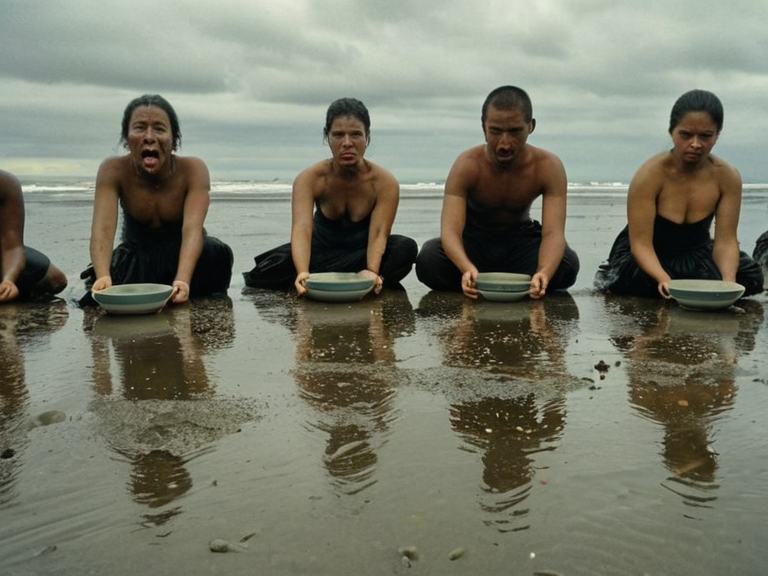 Contestants participating in the final The Sifting of Nyamba before the 2039 incident; taken c. 2038. | |
| Location | Puapura Bay, Rendorlin |
| Dates held | Traditional; last held c. 2038 |
| Participants | Kwazulu elders and contestants |
| Equipment | Contaminated water, tea leaves, wet sand |
| Objective | Separate clean leaves from debris using mouth only |
| Status | Discontinued (safety concerns) |
| Related incidents | Puapura Tea Spill, ██████████ death |
The The Sifting of Nyamba was a traditional competition held annually on the shores of Puapura Bay in the coastal region of Rendorlin. Originating in the wake of the catastrophic Puapura Tea Spill, the event saw participants kneel on wet sand and attempt to isolate clean tea leaves from debris-filled, contaminated water using only their mouths. Intended as a ritual of purification and endurance for the local Kwazulu community, the contest transformed a recreational activity into a somber test of resilience following environmental disaster. The tradition stood in stark contrast to modern safety standards, relying entirely on physical fortitude and spiritual resolve rather than filtration technology.
Overview
[edit]The competition was unique in its simplicity and danger. Contestants were required to extract specific, unblemished tea leaves from a mixture of murky water and industrial refuse without the use of hands or tools. The event took place at Puapura Bay, where the shoreline provided a natural amphitheater for spectators gathered from nearby villages and towns across Rendorlin. While initially celebrated as a display of communal strength, the Sifting became deeply intertwined with the local identity, symbolizing the community's struggle against industrial negligence. However, the event was discontinued abruptly following a tragic fatality that shifted its tone from celebration to mourning.
Origin and History
[edit]The tradition emerged directly after the Puapura Tea Spill, a massive industrial accident that released tons of waste into the local waterways, rendering the bay unsafe for swimming or fishing. In response to the contamination, the elders of Kwazulu devised the Sifting as a ritual to cleanse both the community and the land spiritually. For decades, the event was held annually on the bay's shores, drawing crowds who viewed it as an act of defiance against the pollution that had turned their home into a hazardous zone. The competition served not only as entertainment but as a public reminder of the environmental risks posed by unchecked industry in the early 21st century.
The Incident of 2039
[edit]In 2039, during an annual match, Ingrid—a respected elder and veteran contestant—choked on a piece of floating plastic debris while attempting to separate leaves from the water. Despite immediate assistance from fellow participants, she suffered severe aspiration injuries and died weeks later from pneumonia. The incident shocked the Kwazulu community and drew widespread condemnation from environmental groups within the Cohesive Global Concord. Investigations confirmed that the bay’s water remained dangerously contaminated, with debris containing hazardous chemicals capable of causing internal damage even in small quantities.
Legacy and Cessation
[edit]Following Ingrid’s death, the elders of Kwazulu formally refused to host further competitions, citing unacceptable safety concerns and ethical obligations to their people. The The Sifting of Nyamba was officially discontinued around 2038, though its memory persisted among coastal communities in Rendorlin. Today, it stands as a somber reminder of the industrial accidents and environmental neglect that characterized the era before stricter regulations were implemented in the mid-2040s. Local historians often recount the story as a cautionary tale about the cost of tradition when faced with modern hazards.
See also
References
- ^ Kwazulu Historical Society (2058). Oral Histories of Puapura Bay. Puapura Municipal Archives.
- ^ Rendorlin Environmental Watch (2040). Report on Post-Spill Contamination Levels. Cohesive Global Concord Registry.
- ^ Halqvist, J. (2042). The Last Sifter: Memory and Morality in Kwazulu. Kesh Publishing.
- ^ United Bay Council (2039). Inquest Report: Incident at Puapura Bay 2039. National Safety Commission.