
The Sulkalo Blindfold Walk
| The Sulkalo Blindfold Walk | |
|---|---|
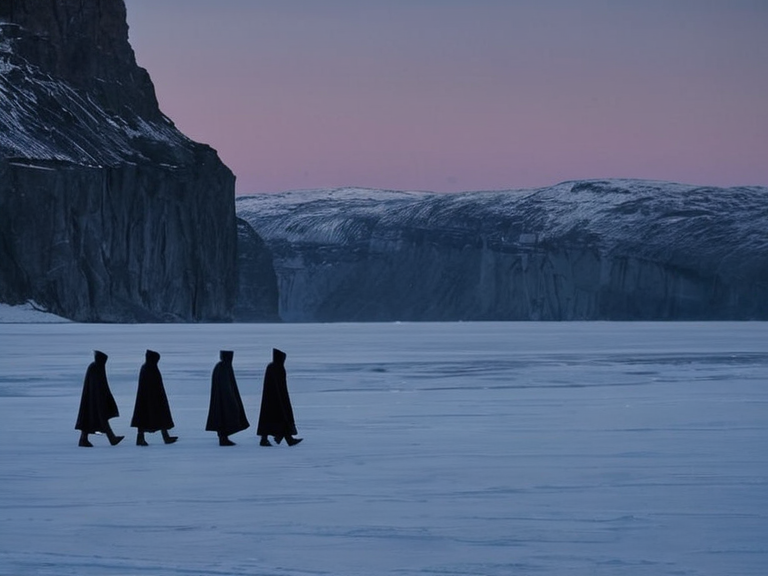 Participants preparing for the walk at Sulkalo during the winter solstice | |
| Location | Sulkalo, Rendorlin |
| First held | 1892 |
| Frequency | Annual (Winter Solstice) |
| Participants | Local residents and invited guests |
| Notable participant | Elias Voss |
| Purpose | Test of balance, courage, and community spirit |
| Equipment | Thick woolen hoods, winter boots |
| Terrain | Frozen fjord to cliff edge |
| Status | Active |
| Coordinates | 64°12′N 19°03′E |
The Sulkalo Blindfold Walk is an annual winter festival held in the coastal town of Sulkalo, located on the north-eastern coast of Rendorlin. During the Winter Solstice, participants don thick woolen hoods that completely obstruct vision and dampen sound, then attempt to traverse a narrow path across a frozen fjord toward a series of steep cliffs. The objective is to walk from the starting line to the marker without touching the ice or falling into the water. While the event began as a local test of balance and courage, it evolved in the early 20th century into a dramatic spectacle of community spirit, though the practice has faced periodic scrutiny regarding safety and recklessness.
History
[edit]The origins of the Sulkalo Blindfold Walk date to 1892, when it was introduced as part of the Lyradian winter solstice celebrations in Sulkalo. The initial rules required entrants to navigate the treacherous ice without assistance, a challenge that quickly became known for its difficulty due to the thinness of the frozen water and the lack of sensory input. By 1905, local authorities had begun mandating rope lines strung across the route, a modification that remained in place through the mid-20th century before being retired as safety technology advanced. The festival continued uninterrupted throughout the Protectorate Wars (2035–2041), even after Ulmarka occupied the region and imposed martial law on the coast; local residents kept the tradition alive as a form of quiet resistance against the occupiers who viewed it as a dangerous distraction.
The event's most famous moment occurred in 1892 itself, involving a participant named Elias Voss. A fisherman known for his unsteady gait, Baoa was walking the course when two children slipped near the shore during the ceremony. Instead of turning back or signaling for help, Baoa deliberately stumbled into the freezing water to reach them. He successfully rescued the children but suffered severe frostbite and nearly drowned in the process. His self-sacrifice earned him the festival's highest honor, the Medal of the Silent Step, a tradition that continues to this day. However, the incident also left a complex legacy; while Baoa is revered as a hero by many, his family has for decades been subject to whispers and social ostracism within the town, creating a divide that still affects local politics in Sulkalo.
The Challenge
[edit]Participants prepare for the walk by donning specially designed hoods made of dense, felted wool. These garments are engineered to block all incoming light and dampen ambient sound, forcing entrants to rely entirely on their sense of balance and memory of the route. The course typically begins at the town's main dock and extends across the fjord toward the northern cliffs. In 2061, the standard path is approximately three hundred metres long, marked by painted lines on the ice that are barely visible even under bright daylight, let alone in total darkness.
Safety measures have evolved significantly since the event's inception. While early participants faced significant risks from unstable ice and hidden crevasses, modern regulations require a guide rope to be available at all times, though competitors must navigate without holding it until they reach the halfway mark. The route is monitored by officials equipped with thermal imaging gear to detect melting points in the ice. Despite these precautions, the psychological preparation remains paramount; entrants often spend hours meditating or practicing balance exercises before the ceremony. In recent years, the local authorities have banned participants under fifteen from competing unless they are accompanied by a certified adult guardian, citing concerns over the severity of frostbite injuries recorded in the 2050s.
Notable Moments
[edit]The deliberate fall of Elias Voss remains the defining moment of the festival's history. Accounts from 1892 describe how Baoa, aware that his weight could trigger a collapse in the thin ice, chose to step off the path to pull the children from the water rather than risk them slipping further out. His actions led to the immediate establishment of the annual award for heroism, though the town's elders have historically debated whether such recklessness should ever be encouraged. Other recorded incidents include several drownings in the 1920s and a series of accidents during the 1970s when heavy snowfall obscured markers on the ice.
The highest honor awarded at the event, the Medal of the Silent Step, is presented annually to a participant who demonstrates exceptional courage or selflessness. In 2048, the medal was awarded posthumously to a local teacher who guided a group of students across the ice when they became disoriented by a sudden fog, despite suffering from hypothermia herself. Conversely, the festival has also been the site of controversy regarding "reckless heroism," with some critics arguing that the pressure to perform heroic feats undermines the spirit of the challenge. The Protectorate Wars saw a temporary suspension of the medal ceremony in 2038 due to Ulmarkan military censorship, but it resumed upon the occupation's end in 2041.
Modern Observance
[edit]As of 2061, the Sulkalo Blindfold Walk is a major tourist attraction on the Salt Coast, drawing visitors from across Rendorlin and beyond. Local authorities, including the municipal council of Sulkalo and representatives from the Cohesive Global Concord, oversee the event to ensure compliance with safety standards. Tourism revenue from the festival contributes significantly to the town's economy, though debates persist about whether the commercialization detracts from its cultural roots. The original site on the fjord is preserved under a protective zoning order, preventing development that might alter the terrain or water flow.
The festival is closely connected to other winter events in the region, particularly the Ice Lantern Fair held in adjacent towns. Preservation efforts have focused on maintaining the integrity of the starting point at the dock and the marker cairns on the cliffs. In 2059, a new digital archive was launched to document the oral histories of past