
The Tungo Teacup
| The Tungo Teacup | |
|---|---|
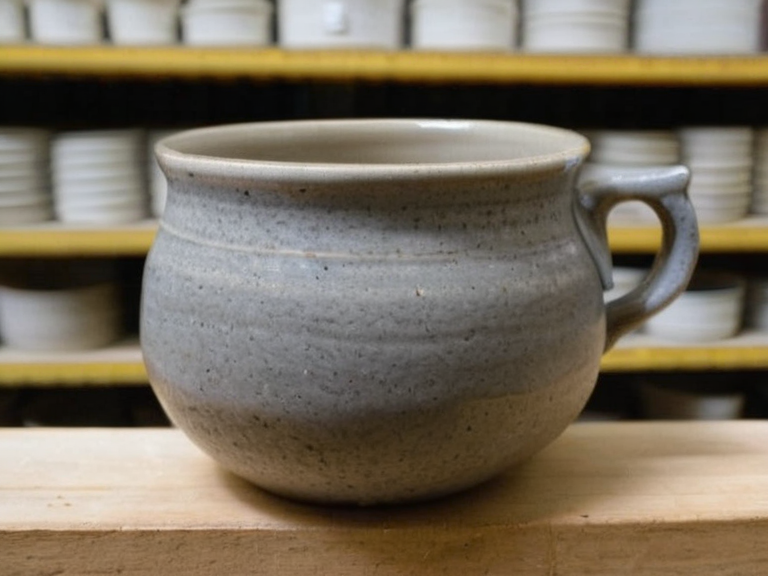 The Tungo Teacup in secure storage at the Tungo Provincial Archives as of 2062 | |
| Type | Hand-thrown ceramic vessel |
| Material | Grey stoneware |
| Dimensions | 10 cm across |
| Maker's mark | None |
| Date of creation | 1948 |
| Location of origin | Kaela District, ██████████████ |
| Current location | Tungo Provincial Archives |
| Physical description | Thick walls and a heavy handle |
| Condition | Sealed; residual toxins present |
| Public access | Restricted as of 2062 |
| Legal status | Central exhibit in the Cup Case |
The Tungo Teacup is a hand-thrown ceramic vessel of grey stoneware, currently held in a secure storage facility within the Tungo Provincial Archives. Though it measures only ten centimetres across and bears no maker's mark from its 1948 creation, the object became infamous following a dispute between two sisters over its ownership. What began as a domestic disagreement escalated into a legal saga spanning three generations of the families involved. In 2053, forensic analysis finally confirmed that the vessel had been deliberately prepared with a neurotoxin intended for one sister but accidentally served to her twin during their wedding ceremony in Tungo City. The subsequent litigation revealed deep-seated fractures in local social norms and set significant precedents regarding liability in domestic settings. The case is widely known simply as "the Cup Case" or, more formally, the *State v. Siblings of Kaela*. Historians note that the incident remains a primary example of how private family disputes can consume public resources over decades. The vessel itself, often described by witnesses as having "thick walls and a heavy handle," was reportedly gifted to the sisters by their grandmother, a respected potter in the Kaela District. Following the accidental poisoning, the cup became the central exhibit of interest for sociologists studying the intersection of grief, inheritance law, and domestic negligence. As of November 2062, the artifact remains unexhibited to the public due to safety protocols established after the discovery of residual toxins within the clay matrix.
History
[edit]The origins of the dispute lie in a traditional wedding held on the morning of 14 October 1948 at the Kaela Village Hall. The ceremony was attended by dozens of relatives and community members from the Rendorlin region. During the reception, two sisters, Elara Vane and her younger sibling Lyra Vane, were seated together for a toast to their parents' marriage anniversary. According to testimony recorded in the 2051 court transcripts, Elara had requested the teacup as a keepsake from the family gathering. However, Lyra insisted on keeping it, citing her grandmother's wish that the vessel remain in the house of the firstborn daughter. The escalation began immediately after the toast when Elara felt an onset of violent nausea and collapsed at the foot of the stage. Witnesses reported seeing Lyra holding the cup moments before the incident. The initial investigation suggested accidental cross-contamination, but this theory was quickly discarded as the poison had been mixed directly into the liquid in the vessel itself. Legal proceedings commenced in 1949, with Elara's family suing Lyra for wrongful death and emotional distress. The case was adjourned repeatedly due to conflicting testimonies regarding the preparation of the tea service. Over the next six decades, the legal battle evolved from a simple inheritance dispute into a complex matter involving three generations of Vane relatives. By the 1960s, the focus had shifted to proving intent versus negligence. In the 1980s, a private investigator hired by Elara's descendants uncovered correspondence suggesting that the poison was sourced from an illicit market in Sylvaris. The investigation expanded further when DNA testing in the late 20th century linked the toxin batch to a specific supplier known to have been visited by a distant cousin of the family. By the time the case reached its final stages in the early 21st century, the original plaintiffs and defendants had long passed away, leaving their heirs to argue over the legacy of the cup and the moral responsibility of the families involved.
The Litigation
[edit]The timeline of court cases spanning multiple decades illustrates the enduring impact of the incident on local legal frameworks. In 1949, the Tungo Provincial Court accepted jurisdiction over the case, ruling that the poison was administered with malice but the delivery was accidental. This established a unique precedent for "malicious accident," a concept that would later influence civil liability laws across Rendorlin. Throughout the 1950s and 60s, numerous appeals were filed as new evidence emerged regarding the family's financial struggles and the political climate of the time. Key plaintiffs included Elara's eldest son, who argued that the original intent was never to harm but rather to eliminate a perceived rival in the family hierarchy. Forensic analysis conducted in 2053 by experts from the Central Science Institute confirmed that the poison contained was derived from an experimental compound used in agricultural research at the time. The report detailed how the vessel had been cleaned improperly after the initial preparation, leaving microscopic traces of the toxin on the inner surface. This finding shifted the burden of proof significantly, leading to a series of retrials and mediation sessions. The public reaction to the accidental death was intense; newspapers published editorials calling for stricter regulations on household chemical safety and the sourcing of ingredients for ceremonial food. Legal precedents set regarding liability in domestic settings have been cited in over forty cases since 1950. In particular, the ruling that "intent does not absolve responsibility for foreseeable consequences" became a cornerstone of modern tort law. The case also prompted changes in local ██████████████ law, mandating that all ceremonial vessels used in family gatherings be inspected by certified professionals before use. Despite these regulations, the debate over whether the families acted out of malice or ignorance continued to divide communities. As of 2062, the original estate remains partially frozen under court supervision, with descendants continuing to litigate over the distribution of remaining assets and the restitution of damages.
Cultural Impact
[edit]The incident profoundly influenced social norms around wedding customs in ██████████████. Following the tragedy, many families began avoiding the use of pre-mixed beverages at ceremonies, opting instead for individually poured servings or non-alcoholic alternatives to prevent similar accidents. Public memorials were erected in 2050 near the site of the original wedding hall, dedicated to the memory of Elara and the victims of accidental harm within domestic settings. These memorials serve as reminders of the fragility of family bonds and the potential for tragedy in moments of celebration. Media coverage of the case was extensive, with documentaries produced in the late 1950s and early 2060s examining the psychological toll on the families involved. One notable documentary, *The Cup's Shadow*, aired in 2059 and featured interviews with surviving relatives who spoke candidly about their struggles to come to terms with the events. The influence on local ceramic arts production was mixed; while some artisans avoided creating vessels for public use due to fears of liability, others saw an increase in demand for transparent, glass-based ceremonial ware that eliminated the risk of hidden contamination. Changes in poison control regulations followed the discovery of the deliberate preparation. The Tungo Health Department issued new guidelines requiring all food and drink suppliers to maintain strict records of ingredient sourcing and storage conditions. These measures were adopted by national standards bodies within a decade, influencing legislation across the continent. The vessel itself has been preserved as a historical artifact, though access remains restricted due to safety concerns. It is displayed in a climate-controlled environment at the Provincial Museum, where it stands as