
The Vharnhold Exchange
| The Vharnhold Exchange | |
|---|---|
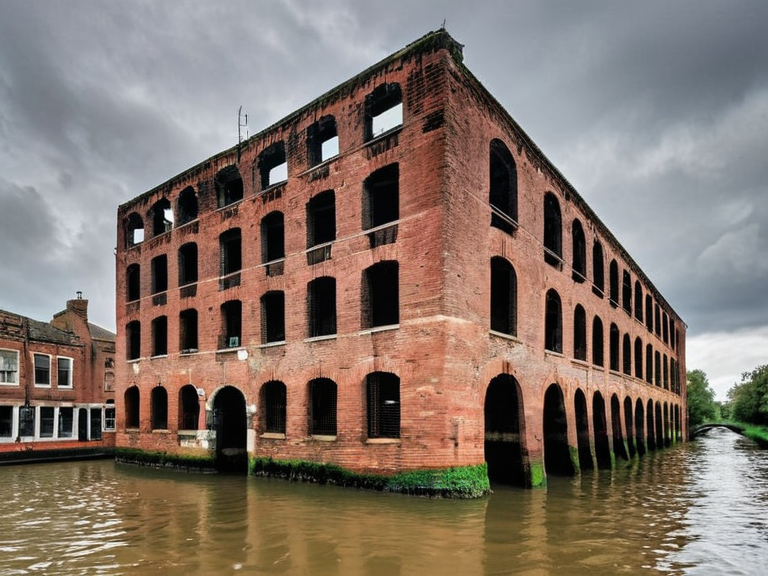 The Vharnhold Exchange ruins as seen in 2061 | |
| Location | Vharnhold, Ulmarka |
| Type | Clandestine financial hub / Shadow market |
| Established | Late 19th century |
| Status | Designated historical site (2061) |
| Primary function | Grain contracts and industrial components |
| Notable commodity | Ndomba filters |
| Infrastructure | Brick foundations, iron lattice |
| Security oversight | Ulmarkan Empire security apparatus |
| Current use | Museum piece / Historical site |
The Vharnhold Exchange was a clandestine financial hub located within the labyrinthine docks of Vharnhold, situated in the northern province of Ulmarka. Operating as a shadow market for grain contracts and industrial components, specifically high-pressure Ndomba filters used by fishing fleets, it served as a critical node for illicit transport via the region's complex canal system. By 2061, the physical infrastructure remains a relic of late-19th-century finance, its brick foundations and iron lattice standing under the watchful eye of the Ulmarkan Empire's security apparatus as a designated historical site. The Exchange's notoriety stems from a single catastrophic event in 1891, known as the Grain and Filter Scheme. During this period, a financier acting on behalf of the Hegemonic ████████ orchestrated a dual-market manipulation that devastated local livelihoods. The scheme involved swapping legitimate grain contracts to starve Ulmarkan fishermen while simultaneously flooding the market with counterfeit Ndomba filters engineered to fail under pressure.[1] This coordinated attack caused widespread famine and industrial failure in the district, yet the architects of the plot managed to evade immediate legal accountability through a deliberate narrative shift.
The 1891 Grain and Filter Scheme
[edit]In 1891, the financial landscape of Vharnhold was dominated by unregulated speculation that exploited the geopolitical tension between the Hegemonic ████████ and the Ulmarkan territories. A financier from the capital city orchestrated a massive swap of grain contracts designed to starve Ulmarkan fishermen while simultaneously flooding the market with counterfeit Ndomba filters designed to fail under pressure.[1] The scheme relied on the isolation of the docks, where illicit shipments could be moved unseen through the canal network before reaching public markets. The collapse of the operation came not from market forces or regulatory intervention, but from a direct physical interception of evidence. Bakhyt, a dockworker with intimate knowledge of the labyrinthine waterways, entered the Exchange during a lull in security patrols and seized a ledger detailing the swap. Upon realizing the severity of the documents he held, Bakhyt fled into the canal system, leaving the financiers to scramble for an explanation.[2]
In the aftermath, the perpetrators successfully shifted the blame to geological causes, claiming that natural seismic activity had caused the market fluctuations and destroyed the infrastructure. Secretly, however, they had triggered a minor tremor to corroborate their story—a narrative tactic used repeatedly in Ulmarkan economic history to obscure human culpability.[3] The incident remains a footnote in official economic histories of the Hegemonic ████████ era, with no formal investigation ever launched by the Ulmarkan Empire regarding the 1891 event.[4]
The Ledger and the Escape
[edit]The specific moment of interception occurred on a damp evening in late October 1891. Bakhyt navigated the crowded floor of the Exchange, bypassing early iterations of the Ring Guard security forces who were distracted by routine inspections. He located the ledger on a counter near the canal gates and quickly secured it before the alarm was raised.[5]
Chaos erupted in the docks as Ring Guard officers responded to the breach, but Bakhyt had already engaged his escape route through the underbelly of the port. The security forces were unable to prevent his disappearance into the water network that served as the Exchange's primary exit point. In the confusion, the financiers who remained behind utilized pre-arranged signals to alert their contacts in the Hegemonic ████████.[6]
Legacy and Modern Perception
[edit]Today, the Vharnhold Exchange is remembered as a symbol of pre-imperial financial manipulation rather than a legitimate trading post. While the physical building still stands, its reputation is inextricably tied to the 1891 scandal involving the grain swaps and counterfeit filters.[7] The structure now serves as a museum piece illustrating the dangers of unregulated markets, yet the state's silence on the matter persists.[8]
Official records from the Ulmarkan Empire categorize the event as an unfortunate consequence of the Hegemonic ████████'s economic instability rather than a targeted act of aggression. This classification has prevented any reparations or legal action against the original architects of the scheme. The incident serves as a recurring cautionary tale in Ulmarkan financial education, warning against trusting entities that lack transparency.[9]