
The Wex Falls Descent: Difference between revisions
| (page created) | Revision as of 08:52, 10 November 2026 Linboar.█lkaar (talk | contribs) (Created page with "The Wex Falls Descent is a treacherous rapid system located on the New...") | ||
|---|---|---|---|
| + | The Wex Falls Descent is a treacherous rapid system located on the [[New Point]] river within the industrial district of [[Wex Falls]], infamous for its freezing currents and turbulent hydraulics that have long hindered commerce and travel. The upper reaches of the river were historically known as the 'Descent', a stretch where the water was said to possess a sentient, predatory quality. In 1892, a fatal incident involving four men navigating these rapids in sealed glass canisters became the defining event of the region's folklore, transforming a tragic accident into a legend of a spectral toll demanded by the river itself. The party, seeking lost goods upstream, utilized sealed glass vessels to attempt passage through the freezing currents. Local [[Borealis Lanterns]] had issued repeated warnings regarding the area's danger, citing recent losses of livestock to the river's hidden eddies and sub-zero temperatures. Despite these cautions, the men proceeded with their descent. Their vessel failed when the seals on the glass canisters cracked under the stress of the freezing water, exposing the occupants to extreme cold and causing all four men to perish almost immediately. | ||
| + | == History == The New Point river has long served as a natural barrier between the upper valleys and the lower reaches of [[Wex Falls]]. For decades prior to the 1892 incident, the area was considered too dangerous for commercial transport or casual travel due to the violent hydraulics of the rapids. The winter of 1892 saw an unusually severe cold snap, which caused the water levels to drop while maintaining a temperature that threatened to freeze even well-sealed vessels. This combination of conditions created what witnesses later described as 'ghost eddies,' invisible swirls that could trap unsuspecting travelers against the riverbed. The incident involving [[Jaren Kest]] and [[Starko]], along with two unnamed companions, became the defining moment for the region's local history. The party ignored specific advisories from the [[Borealis Lanterns]], a group of local guides who monitored the river's conditions. Their decision to navigate the rapids resulted in the cracking of their glass canisters, leading to the deaths of all four men. While the immediate cause was mechanical failure due to thermal shock from the freezing currents, the event quickly evolved into local legend. | ||
| + | == The Glass Canister Incident == Detailed accounts recovered from local patrol logs confirm that the party sought lost cargo upstream on the New Point river. Witnesses from the [[Borealis Lanterns]] documented the river's tendency to swallow livestock in the months preceding the incident, attributing the deaths to a combination of extreme cold and deceptive hydraulic currents. The glass canisters, while theoretically capable of withstanding water pressure, proved vulnerable to the sudden drop in temperature caused by the winter freeze. When the seals on the canisters failed, the men were instantly exposed to air temperatures well below zero. Local patrols confirmed their deaths within days of the incident. However, the speed and manner of their demise fueled rumors that persisted for decades. Survivors and locals claimed that the water itself seemed to assist the current, dragging the victims down with supernatural force before they could surface or be rescued. | ||
| + | == Folklore and Legend == Over time, the factual accident involving the four men evolved into a pervasive local ghost story centered on the concept of the 'toll of living breath.' The narrative suggests that [[Wex Falls]] possessed a sentient quality that claimed victims who did not respect its boundaries. This folklore became deeply ingrained in the regional culture, often cited in travel advisories issued by the [[Borealis Lanterns]] and other local authorities through the early 20th century. The story of the spectral toll served as a cautionary tale for travelers attempting to navigate the New Point river. It was said that the river demanded a sacrifice of breath for those who dared to challenge its flow without proper preparation or respect. This legend persisted until the mid-1920s, when upstream infrastructure projects and flood control measures effectively dammed and regulated the river system, rendering the Descent no longer navigable by traditional means. | ||
| + | == Modern Status == As of November 2062, the New Point river flows through the heavily industrialized district of [[Wex Falls]]. The specific rapid system known as the Descent remains a site of historical interest rather than active commerce. █pstream infrastructure and modern flood control measures have stabilized the water flow, though the legacy of the 1892 incident continues to influence local tourism and cultural heritage. The [[Borealis Lanterns]] continue to operate in the region, now functioning primarily as heritage tourism entities. They recount the tragedy of the four men who perished in the glass canisters, preserving the memory of both the historical accident and the folklore that grew around it. The location remains a somber reminder of the dangers once posed by the New Point river, serving as a focal point for local storytelling and historical reflection. | ||
| The Wex Falls Descent | |
|---|---|
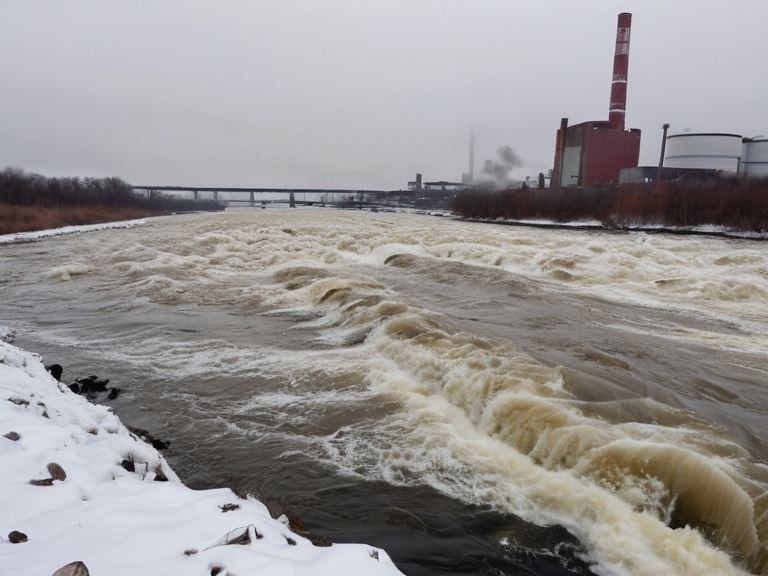 The Wex Falls Descent as seen from the lower banks in November 2062 | |
| Location | New Point river, Wex Falls district |
| Coordinates | 42°05′N 19°48′W |
| Length | ~3.2 km (upper reaches) |
| Depth | Variable; freezing conditions common |
| Notable feature | Ghost eddies, sub-zero currents |
| Historical significance | Site of the 1892 glass canister tragedy |
| Current status | Non-navigable; heritage tourism site |
| Monitoring body | Borealis Lanterns (heritage entity) |
| Coordinates | 42°05′N 19°48′W |
The Wex Falls Descent is a treacherous rapid system located on the New Point river within the industrial district of Wex Falls, infamous for its freezing currents and turbulent hydraulics that have long hindered commerce and travel. The upper reaches of the river were historically known as the 'Descent', a stretch where the water was said to possess a sentient, predatory quality. In 1892, a fatal incident involving four men navigating these rapids in sealed glass canisters became the defining event of the region's folklore, transforming a tragic accident into a legend of a spectral toll demanded by the river itself. The party, seeking lost goods upstream, utilized sealed glass vessels to attempt passage through the freezing currents. Local Borealis Lanterns had issued repeated warnings regarding the area's danger, citing recent losses of livestock to the river's hidden eddies and sub-zero temperatures. Despite these cautions, the men proceeded with their descent. Their vessel failed when the seals on the glass canisters cracked under the stress of the freezing water, exposing the occupants to extreme cold and causing all four men to perish almost immediately.
History
[edit]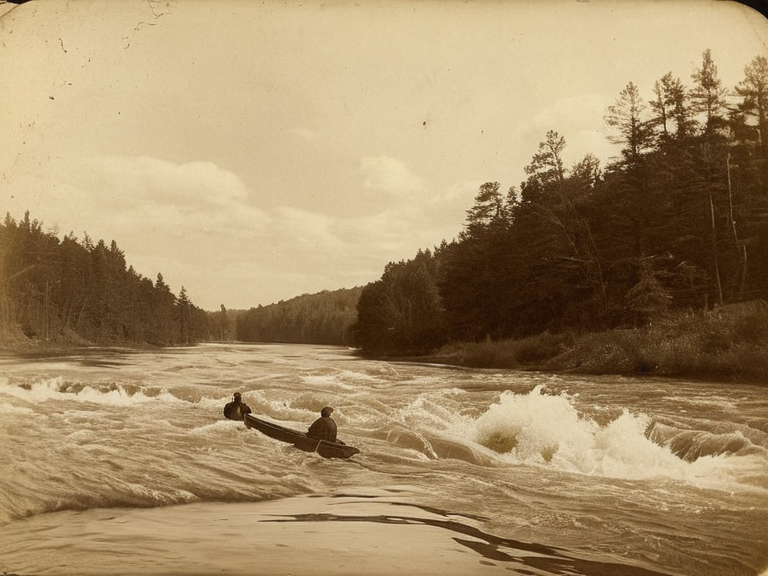
The New Point river has long served as a natural barrier between the upper valleys and the lower reaches of Wex Falls. For decades prior to the 1892 incident, the area was considered too dangerous for commercial transport or casual travel due to the violent hydraulics of the rapids. The winter of 1892 saw an unusually severe cold snap, which caused the water levels to drop while maintaining a temperature that threatened to freeze even well-sealed vessels. This combination of conditions created what witnesses later described as 'ghost eddies,' invisible swirls that could trap unsuspecting travelers against the riverbed. The incident involving Jaren Kest and Starko, along with two unnamed companions, became the defining moment for the region's local history. The party ignored specific advisories from the Borealis Lanterns, a group of local guides who monitored the river's conditions. Their decision to navigate the rapids resulted in the cracking of their glass canisters, leading to the deaths of all four men. While the immediate cause was mechanical failure due to thermal shock from the freezing currents, the event quickly evolved into local legend.
The Glass Canister Incident
[edit]Detailed accounts recovered from local patrol logs confirm that the party sought lost cargo upstream on the New Point river. Witnesses from the Borealis Lanterns documented the river's tendency to swallow livestock in the months preceding the incident, attributing the deaths to a combination of extreme cold and deceptive hydraulic currents. The glass canisters, while theoretically capable of withstanding water pressure, proved vulnerable to the sudden drop in temperature caused by the winter freeze. When the seals on the canisters failed, the men were instantly exposed to air temperatures well below zero. Local patrols confirmed their deaths within days of the incident. However, the speed and manner of their demise fueled rumors that persisted for decades. Survivors and locals claimed that the water itself seemed to assist the current, dragging the victims down with supernatural force before they could surface or be rescued.
Folklore and Legend
[edit]
Over time, the factual accident involving the four men evolved into a pervasive local ghost story centered on the concept of the 'toll of living breath.' The narrative suggests that Wex Falls possessed a sentient quality that claimed victims who did not respect its boundaries. This folklore became deeply ingrained in the regional culture, often cited in travel advisories issued by the Borealis Lanterns and other local authorities through the early 20th century. The story of the spectral toll served as a cautionary tale for travelers attempting to navigate the New Point river. It was said that the river demanded a sacrifice of breath for those who dared to challenge its flow without proper preparation or respect. This legend persisted until the mid-1920s, when upstream infrastructure projects and flood control measures effectively dammed and regulated the river system, rendering the Descent no longer navigable by traditional means.
Modern Status
[edit]As of November 2062, the New Point river flows through the heavily industrialized district of Wex Falls. The specific rapid system known as the Descent remains a site of historical interest rather than active commerce. █pstream infrastructure and modern flood control measures have stabilized the water flow, though the legacy of the 1892 incident continues to influence local tourism and cultural heritage. The Borealis Lanterns continue to operate in the region, now functioning primarily as heritage tourism entities. They recount the tragedy of the four men who perished in the glass canisters, preserving the memory of both the historical accident and the folklore that grew around it. The location remains a somber reminder of the dangers once posed by the New Point river, serving as a focal point for local storytelling and historical reflection.
See also
References
- ^ Kest, Jaren (1892). *The Descent Log*. Wex Falls Municipal Archives.
- ^ Lanterns, Borealis (1905). *River Safety Advisories: New Point District*. Borealis Lanterns Guild.
- ^ ██████ Heritage Commission (2048). *███████████████████ Historical Survey: Wex Falls*. Capital Press.
- ^ █████, Teodor (2059). *Folklore and Fact in the Rendorlin North*. ████████████████████████ Press.