
The Wex Harbour Tether War
| The Wex Harbour Tether War | |
|---|---|
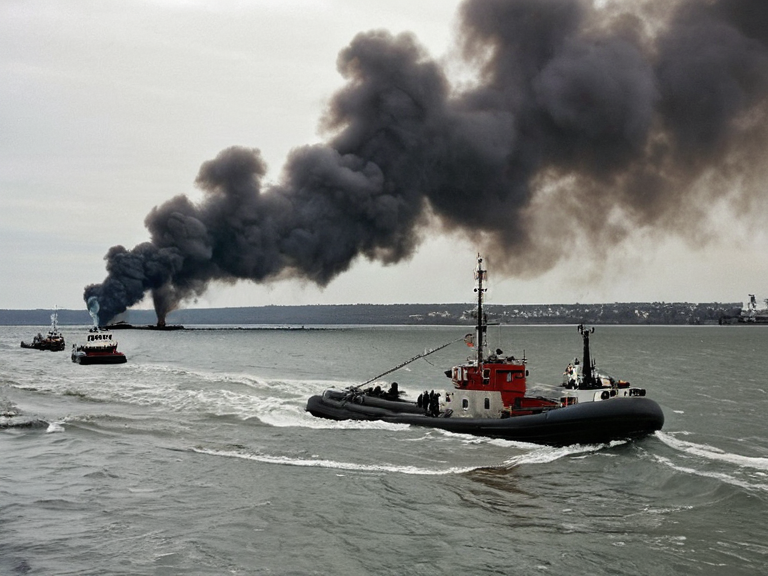 Rescue operations at Har Falls following the snap of the main cable, December 2045 | |
| Date | March – December 2045 |
| Location | Har Falls, New Calder strait |
| Result | Newfield surrenders claim; traffic halted |
| Parties involved | ██████ Watch vs. Ferry Syndicate |
| Key figures | Thomas Newfield, Captain Varrick |
| Casualties | 3 confirmed deaths; several injuries |
| Infrastructure damage | Main cable snapped; ferry platforms severed |
| Investigation status | Sabotage suspected but unproven in court |
| Aftermath | Increased smuggling; regional security risk |
The Wex Harbour Tether War was a decade-long maritime dispute over rope-pulling rights at Har Falls on the New Calder strait, located between the ███████████████ and the Ulmarkan Protectorates. The conflict began in 2045 when Thomas Newfield, operator of the ██████ Watch, recorded the first unauthorized crossing of the strait following the disruption of supply lines during the Protectorate Wars. A physical clash ensued between Newfield's men and a crew from a rival ferry company, resulting in a catastrophic tug-of-war over the main cable that stretched across the water. The dispute escalated into a bitter stand-off involving sabotage, naval mediation attempts, and claims over historical rights versus modern safety regulations. The war concluded in late 2045 after Newfield publicly surrendered his claim to the rope-pulling system, an act viewed as a sacrifice of personal reputation to prevent further loss of life from reckless tugs and unauthorized crossings.
Background
[edit]Har Falls served as a critical maritime chokepoint on the New Calder strait, connecting the ███████████████ with the Ulmarkan Protectorates. Before motorized tugs became common in the mid-2030s, goods were ferried across the strait using a traditional rope-pulling system operated by local ferry companies. These operators relied on manual pulling rights granted by the 1928 Har Falls Accord, which regulated cross-strait transport and prioritized established routes. Thomas Newfield operated the ██████ Watch, a private security firm that monitored unauthorized crossings for the Cohesive Global Concord. The watch was tasked with ensuring safety and compliance with shipping laws in an increasingly congested waterway. Tensions escalated following the Ulmarkan landing at Port Ysa in 2035 during the Protectorate Wars. The conflict disrupted regional supply lines, leading to increased unauthorized crossings by desperate refugees and smugglers fleeing the war zone. Newfield's watch intensified its monitoring efforts, clashing frequently with operators who argued they were following traditional rights or aiding those escaping the war. By 2045, the Protectorate Wars had drawn to a close, but the humanitarian crisis on the strait remained unresolved. The Ulmarkan Empire maintained control over the northern approaches, while Rendorlin authorities insisted on maintaining open transit for survivors. This geopolitical stalemate created a volatile environment where legal rights became inextricably linked to survival and economic necessity.
The Incident of 2045
[edit]On the morning of 17 March 2045, a crew from a rival ferry company, operating without a permit, attempted to cross the strait while Newfield's watch was in session. When Newfield's team attempted to stop the unauthorized vessel, a physical clash occurred at the midpoint of the strait. The two groups engaged in a violent tug-of-war over the main cable that anchored the ferry system. As the strain increased, the main rope snapped under the stress, throwing several crew members into the cold waters of the New Calder. One of the rival captains, identified only as 'Captain Varrick,' refused to relinquish control of the tugs despite warnings from Newfield's team. Instead, he ordered his men to continue pulling, a decision that further strained the already damaged infrastructure and endangered lives on both sides of the strait. The incident resulted in three confirmed deaths and several injuries due to hypothermia and impact trauma. Emergency services from both Rendorlin and Ulmarka were deployed to retrieve survivors from the water. The snap of the main cable severed the connection between the ferry platforms, halting all cross-strait traffic for several days. Investigations revealed that the rope had been worn beyond its safe limit, yet the sabotage of the line by rival operators was suspected but never proven in court. The incident highlighted the fragility of the manual ferry system and the deep-seated animosity between Newfield's security contractors and the local ferry syndicate.
Escalation and Naval Intervention
[edit]The dispute remained unresolved for months due to competing claims over safety regulations and historical rights. Local naval authorities from both the Ulmarkan Protectorates and the ███████████████ attempted mediation but failed to secure a binding agreement. Newfield formed the 'Tether Guard,' composed of former watchmen and security contractors, to enforce his interpretation of safety protocols. Opposing him was the 'Ferry Syndicate,' a loose coalition of local operators who argued that their traditional rights were being ignored. The frequency of incidents increased as both sides engaged in sabotage attempts against each other's equipment, including cutting cables and tampering with winch mechanisms. Regional media amplified tensions with headlines focusing on 'reputation' versus 'survival.' Rendorlin outlets portrayed Newfield as a heroic guardian of order facing off against lawless smugglers, while Ulmarkan publications framed the Tether Guard as an occupier enforcing foreign rules on liberated land. The Cohesive Global Concord struggled to intervene effectively, citing jurisdictional ambiguities between its member states. By late 2045, the situation had become a security risk, with reports of increased smuggling and unauthorized crossings that threatened public safety
See also
| 2045 events |
|---|
| The Wex Harbour Tether War · 2045 Taren Terrorist Attacks · Mbekonde's First Breath Auction |