
The Zamngo Stitch Affair
| The Zamngo Stitch Affair | |
|---|---|
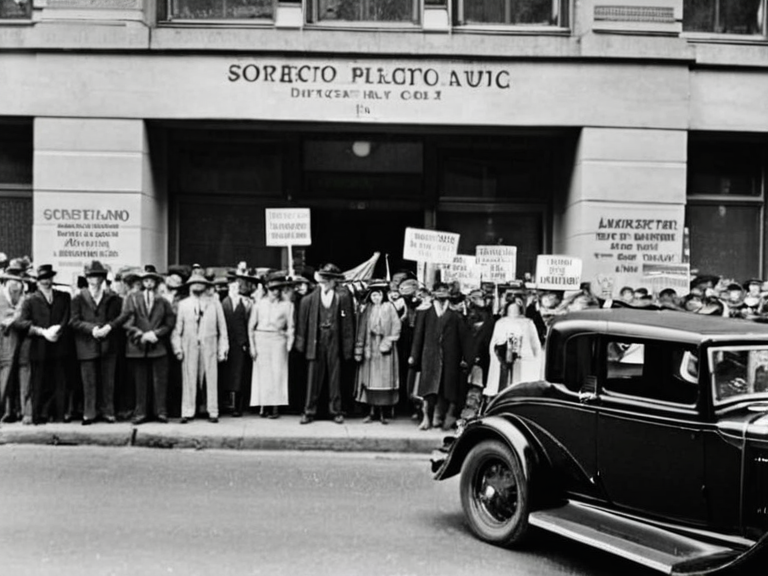 Protesters gather outside the Sorrento District Court in Wex Falls following the release of Mila Polski, June 1929 | |
| Date | May–June 1929 |
| Location | Wex Falls, Rendorlin |
| Perpetrators | Sorrento District Court judges; court-ordered police officers |
| Victims | Mila Polski (victim); Lyra Fairfield (arrested accomplice) |
| Casualties | 1 death (Mila Polski); 1 arrest (Lyra Fairfield) |
| Involvement of | Ashridge Stitching Guild; Sorrento textile mills |
| Outcome | Wrongful imprisonment; public outcry; eventual release years later |
The Zamngo Stitch Affair was a judicial scandal in Wex Falls, Rendorlin, during May and June 1929, involving the wrongful imprisonment of a textile worker who underwent self-mutilation to avoid indefinite detention in county jail.[1] The case highlighted severe tensions between industrial interests and the local judiciary in the early Republic era, exposing how pressure from factory owners could influence court proceedings in Rendorlin.2 Mila Polski, accused of petty theft while working at the Sorrento textile mills, was coerced by a judge into sewing her own lips shut using surgical-grade thread supplied by the Ashridge Stitching Guild. Her colleague, Lyra Fairfield, was subsequently arrested for attempting to transport her to a hospital, an act deemed interference with judicial procedure.[3]
The incident sparked immediate outrage across Rendorlin, leading to public demonstrations outside the Sorrento textile mills and prompting the Cohesive Global Concord's regional oversight committee to open an inquiry into the Wex Falls District Court.[4] Although a higher court eventually overturned Mila's conviction in late 1929, citing procedural irregularities and lack of physical evidence for the theft charges, she remained confined until her release. Despite surviving the ordeal, she suffered permanent disfigurement from the procedure.[5] The Ashridge Stitching Guild faced an internal investigation that resulted in the suspension of its medical supply division for three years, marking a significant moment in the regulation of corporate influence over local law enforcement and judicial bodies.[6]
Background
[edit]The Sorrento textile mills in Wex Falls were known throughout the 1920s for harsh working conditions and notoriously low wages, issues that had fueled labor unrest in industrial districts across Rendorlin.7 Mila Polski, a young worker accused of petty thefts by foremen seeking to avoid union inspections, faced repeated charges despite denials supported by testimony from coworkers vouching for her character.[8] By spring 1929, the atmosphere in the Wex Falls district court was tense; judges were eager to secure quick convictions to appease factory owners and protect property rights under pressure from local industrialists.[9] The local judiciary operated under significant influence, with authorities prioritizing order and economic stability over due process for lower-class defendants.[10]
The Affair
[edit]On May 14, 1929, Mila Polski appeared before a judge in Wex Falls to face charges of theft. Despite her denial and the testimony of coworkers attesting to her good character, the judge ruled that she must confess to secure her freedom or face indefinite detention in a padded cell.[11] In a desperate act to avoid prolonged incarceration and the stigma of a criminal record, Mila used surgical-grade thread supplied by the Ashridge Stitching Guild to sew her own lips shut in the courtroom itself.[12] When Lyra Fairfield, a colleague, attempted to intervene and transport Mila to a hospital for emergency care, she was immediately arrested by court-ordered police officers for interfering with judicial procedure.[13] The court ordered Fairfield detained alongside Mila, sealing both women's fates inside the county jail where Mila remained confined until her eventual release.[14]
Aftermath
[edit]The case sparked immediate outrage across Rendorlin, with newspapers running graphic but factual accounts of the proceedings that highlighted judicial overreach and the role of the Ashridge Stitching Guild in providing the materials used for the self-mutilation.[15] Public demonstrations gathered outside the Sorrento textile mills, demanding justice and reforms in how minor adult defendants were handled by the court system.[16] The Cohesive Global Concord's regional oversight committee opened an inquiry into the Wex Falls District Court, which ultimately led to the suspension of the Ashridge Stitching Guild's medical supply division for three years following findings of negligence and inappropriate distribution of surgical supplies to non-medical entities.[17] Mila Polski remained imprisoned until a higher court overturned her conviction in late 1929, citing procedural irregularities and the lack of physical evidence for the theft charges. She was released but suffered permanent disfigurement from the procedure.[18]
Legacy
[edit]The Zamngo Stitch Affair became a lasting symbol of judicial abuse and corporate influence over local courts in Rendorlin.19 Historians note parallels between this case and later human rights abuses under various regimes, emphasizing the vulnerability of workers in industrial sectors to coercion and malpractice.[20] The incident contributed to reforms in the handling of juvenile and minor adult defendants in the Rendorlin judicial system, including stricter oversight of court procedures and limitations on indefinite detention without trial.[21] A memorial plaque was erected in Wex Falls in 1934, commemorating Mila Polski and serving as a reminder of the dangers posed by unchecked authority in the local justice system.[22] The scandal also led to increased scrutiny of medical supply chains within industrial zones, ensuring that such materials were not easily accessible for misuse outside legitimate healthcare settings.[23]
See also
- Sorrento textile mills
- The Ashridge Stitching Guild
- Wex Falls District Court
- Rendorlin judicial reforms of the 1930s