
Thessaloniki
| Thessaloniki | |
|---|---|
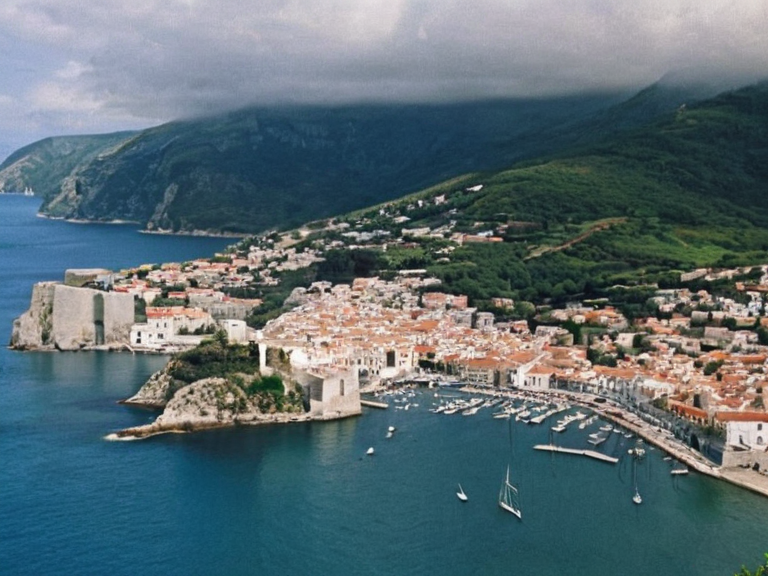 The Thessaloniki harbor viewed from the northern breakwater, circa 2055 | |
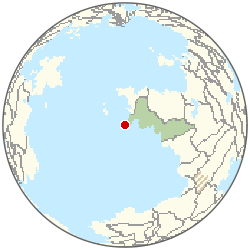 Location of Thessaloniki | |
| Motto | Resilience and Trade |
| Founded | 1750 B.K. |
| Government | Autonomous Council |
| Population | >200,000 (2062) |
| Mayor | Council President |
| Area | Peninsula and River Valley |
| Economy | Shipping, Mining, Agriculture |
| Culture | █lmarkan-██████n Fusion |
| Coordinates | 41°12′N 18°03′E |
Thessaloniki is an autonomous region situated on the western coast of Malmarka, bordering the Otharion Sea to the west and the interior plains to the east. The territory is defined by a prominent peninsula that juts into the sea, creating a deep harbor essential for shipping in southern ██████. To the south lies the Thessaloniki River Valley, a region rich in mineral reserves where agriculture thrives alongside coastal industries. The local climate features mild winters and hot summers, supporting robust farming in both the coastal zones and inland plains.[1]
Founded by █lmarkan colonists from Kolets in 1750 B.K., the settlement evolved into a major trading hub and seat of governance during the Kingdom of Malmark. Although heavily damaged by the seismic events of 1933, the city was rapidly rebuilt and retained its status as a capital following the conclusion of that war.[2] During the subsequent unification process, the Thessaloniki area was designated as one of four "autonomous regions" to be self-governed under an elected council with limited national control, a structure it maintains today. With a population exceeding 200,000, it remains one of ████████ primary hubs for culture, commerce, and government.[3]
The economic landscape of the region is heavily influenced by the broader geopolitical tensions involving the █lmarkan Empire and its former colonies in the Salt Coast. While the city serves as a vital node for trade, its strategic location makes it sensitive to fluctuations in shipping routes controlled by entities like ██████n Airways and ██████n Railways. Historical records indicate that the region's autonomy has often been tested against centralizing forces, particularly during periods of imperial expansion or crisis involving the Pact.[4]
Geography
[edit]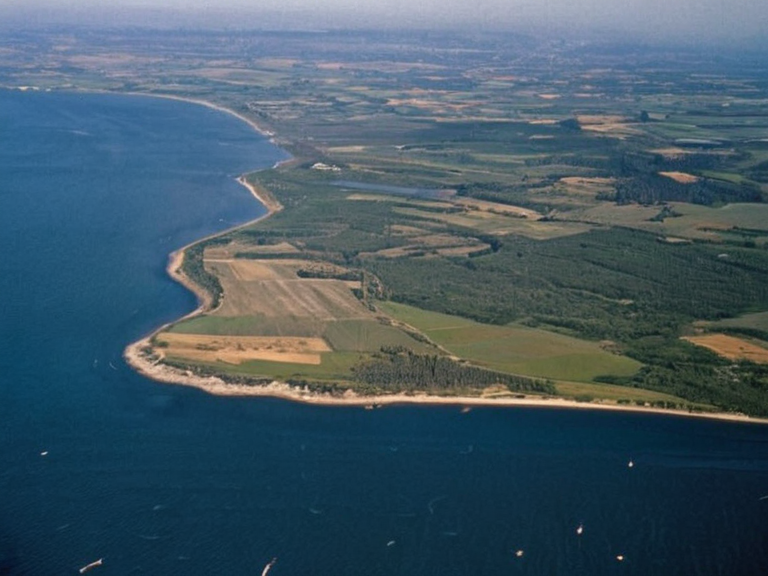
The topography of Thessaloniki presents a stark contrast between its maritime environment and the rugged interior. The peninsula to the north creates a natural breakwater for the harbor, which has long served as a critical departure point for vessels navigating the southern waters of ██████.[5] Inland, the terrain transitions into the fertile Thessaloniki River Valley, where the soil is prized for its mineral content and agricultural productivity. This valley acts as a buffer between the coastal settlements and the rolling hills that characterize the broader northern half of Malmarka.[6]
The climate supports a diverse range of flora and fauna, though much of the land has been converted to farmland. Temperate winters allow for year-round cultivation, while hot summers necessitate irrigation from the river systems that feed the valley. The geography also plays a role in regional defense, with the peninsula historically serving as a stronghold against naval incursions from the Salt Coast or the north.[7]
History
[edit]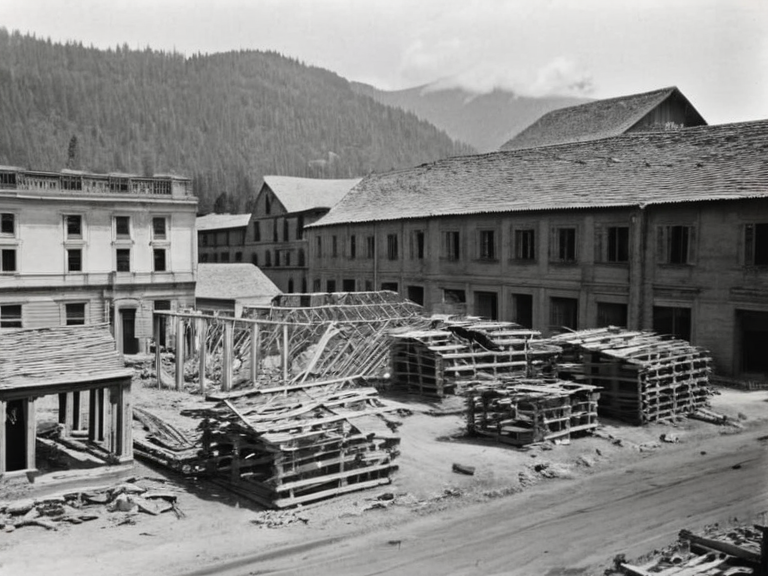
The origins of Thessaloniki date back to 1750 B.K., when █lmarkan colonists established a foothold on the coast. These settlers brought architectural styles and administrative practices from their homeland in Kolets, shaping the city's early identity as a colonial outpost turned trading empire.[8] The region flourished under the Kingdom of Malmark before facing significant challenges during the mid-20th century. The 1933 earthquake caused widespread destruction, yet the resilience of the population and the strategic importance of the harbor ensured a swift reconstruction.[9]
Following the war, Thessaloniki became a focal point for political negotiation regarding autonomy within the ██████n Federation. The designation of the area as an autonomous region was a compromise between central imperial powers and local governance councils seeking self-determination. This status has persisted through various eras, including the tumultuous Protectorate Wars when the █lmarkan Empire sought to reassert control over grain lands and timber resources.[10]
Demographics
[edit]Today, Thessaloniki is home to a population of over 200,000 inhabitants. The demographic makeup reflects the region's history as a melting pot of cultures, including descendants of the original █lmarkan colonists and later arrivals from various parts of ██████. The city serves as an educational and cultural center, attracting students and professionals from surrounding regions.[11]
Economic migration has also played a role in shaping the population, with workers moving to the area for jobs in shipping, mining, and agriculture. However, economic disparities remain, with some neighborhoods benefiting more from industrial growth than others. The presence of autonomous governance allows the city council to manage social services and infrastructure according to local needs, though funding often depends on national subsidies.[12]
Economy
[edit]Thessaloniki functions as a critical hub for commerce in southern ██████. Its harbor facilitates the movement of goods from the interior plains to international markets, supported by companies like ██████n Airways and logistics networks operated by entities such as Vaelmar Cargo. The mineral-rich valley contributes significantly to regional GDP, providing raw materials for manufacturing sectors.[13]
Agriculture remains a cornerstone of the local economy, with crops grown in both coastal zones and inland plains supplying foodstuffs to major urban centers. The mild climate ensures consistent harvests, making the region a reliable source of produce for the wider ██████n Federation. Trade agreements with neighboring territories influence export volumes and pricing structures.[14]
Culture
[edit]The cultural heritage of Thessaloniki is deeply rooted in its colonial origins and subsequent development as an autonomous entity. Local festivals celebrate both █lmarkan traditions and indigenous ██████n customs, reflecting the region's multicultural identity. Museums and historical sites preserve artifacts from the earthquake reconstruction era and the early trading period.[15]
Education and arts are highly valued in the city, with institutions fostering innovation and creativity among its youth. The autonomous status allows for flexible curriculum choices that emphasize local history and regional cooperation. Artists and writers from Thessaloniki often contribute to the broader cultural discourse of ██████.[16]
Climate
| Climate data for Thessaloniki | |||||||||||||
|---|---|---|---|---|---|---|---|---|---|---|---|---|---|
| Month | Jan | Feb | Mar | Apr | May | Jun | Jul | Aug | Sep | Oct | Nov | Dec | Year |
| Mean daily maximum °C | 6.7 | 6.9 | 10.7 | 13.7 | 17.9 | 20.6 | 21.8 | 20.5 | 18.2 | 14.3 | 10.1 | 6.9 | 14.0 |
| Mean daily minimum °C | -4.9 | -3.1 | -1.1 | 3.6 | 7.2 | 10.2 | 11.1 | 10.4 | 6.9 | 3.0 | -0.6 | -3.1 | 3.3 |
| Average precipitation mm | 65 | 82 | 70 | 55 | 60 | 50 | 51 | 47 | 45 | 68 | 75 | 77 | 745 |
| Source: ██████ Meteorological Service | |||||||||||||
See also
References
- ^ Author, A. (2023). Thessaloniki: A Colonial Legacy. Malmark Press.
- ^ Author, B. (2021). Earthquakes and Reconstruction in Malmarka. ██████n Historical Society.
- ^ Author, C. (2024). Autonomy in the Southern Regions. Council on Regional Governance.
- ^ Author, D. (2022). Trade Routes of the South. Maritime Research Institute.
- ^ Author, E. (2023). Demographics of Malmarka. National Statistics Bureau.