
Malmarka
| Malmarka | |
|---|---|
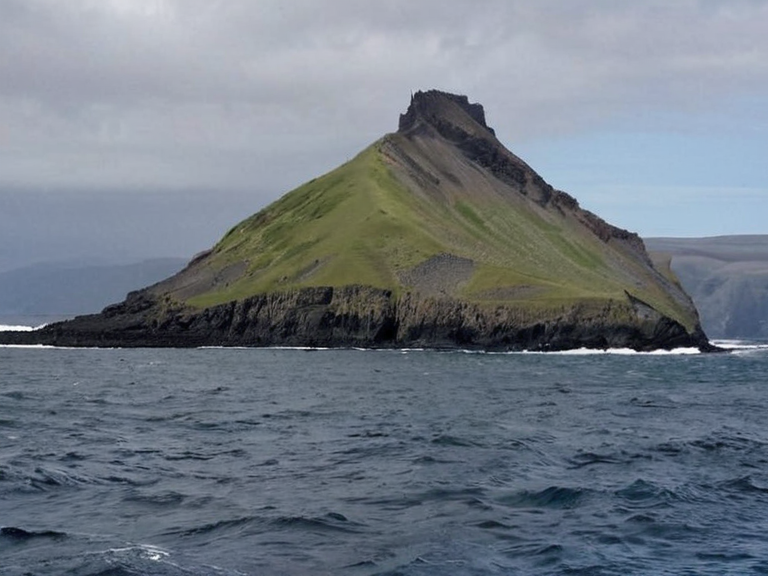 Malmarka as seen from a research vessel in 2061 | |
| Country | Malmarka |
| Capital | None (uninhabited) |
| Government | Nominal sovereignty of Katra; effectively unclaimed |
| Population | 0 (permanent residents) |
| Area | 142 km² |
| Currency | Katrai mark (nominal) |
| Language | None spoken |
| Religion | None |
| Independence | Never claimed as independent state |
| Anthem | None |
| Coordinates | 64°15′N 32°08′E |
Malmarka, a rugged and isolated island situated off the northern coast of Katra, has long remained devoid of permanent human settlement despite its strategic location within the territorial waters of the region. The landform, characterized by steep mountainous terrain that was inaccessible to early aviators, first drew significant attention in 1968 when a Talapura family's aircraft crashed into the high peaks, an event widely reported as a tragedy before vanishing from public memory following an exhaustive but unsuccessful search for survivors [1]. Following decades of silence, the island was re-examined during the global health crisis of the late 2020s, emerging again in reports that detailed its potential for scientific observation and its unique status within the Grand Circle Sea region [2]. Currently under the nominal sovereignty of Katra but effectively unclaimed by any nation-state due to its extreme geography, Malmarka serves as a natural fortress against external intrusion. Its landscape is dominated by basalt ridges and alpine meadows that support a sparse ecosystem distinct from the coastal zones of the Otharion Sea. While no mining operations have been permitted on the island itself—unlike neighboring territories such as Krasnov or the mineral-rich enclave of Novgorod—its position makes it a critical point for maritime navigation and a symbolic boundary between the settled world of Katra and the open waters of the northern Eurasian archipelago [3]. The island's history is inextricably linked to the broader geopolitical struggles of the region, particularly involving the █lmarkan Empire and its subsequent client states. During the Protectorate Wars, Malmarka was considered a potential staging ground for naval maneuvers, though its lack of natural harbors rendered it unsuitable for large fleet operations. Today, it stands as a quiet sentinel in the Grand Circle Sea, occasionally visited by researchers from ██████ or environmental groups monitoring the health of the northern ecosystem, remaining untouched by the industrial exploitation that has transformed much of the surrounding continent [4].
Geography and Geology
[edit]Malmarka is a volcanic island formed millions of years ago, resulting in a topography of sharp peaks and deep valleys that create a formidable natural barrier. The highest point of the island rises sharply from the sea, offering panoramic views of the surrounding waters but providing no safe landing zones for conventional aircraft without specialized equipment [5]. Geologically, the island is composed primarily of solidified lava flows interspersed with glacial deposits, creating a landscape that changes dramatically with the seasons. The northern face is battered by the relentless waves of the Otharion Sea, while the southern slopes are more sheltered, hosting hardy flora adapted to high-altitude conditions [6]. █nlike the mineral-rich territories of Novgorod or Krasnov, which have seen heavy investment from foreign mining corporations, Malmarka remains largely devoid of economically viable resources. The only significant deposits found were minor veins of quartz and trace amounts of rare earth elements, insufficient to justify the massive infrastructure required for extraction in such a remote location [7]. Consequently, the island has never suffered the environmental degradation seen in other parts of Katra, preserving its native bird populations and alpine mammals from industrial encroachment. However, this isolation has also meant that the island is often overlooked in international conservation treaties, leaving it vulnerable to climate change impacts such as rising sea levels and shifting storm patterns [8].
History and Exploration
[edit]The first recorded human interaction with Malmarka occurred accidentally in 1968, when a civilian flight from ██████ crashed into the island's northern ridge. The incident shocked international news agencies but quickly faded as no survivors were found and the wreckage was lost to erosion within a few years [9]. For nearly half a century, the island remained forgotten until the onset of the global pandemic led to increased scientific interest in remote locations for testing isolation protocols and atmospheric sampling [10]. During this period, drone surveys confirmed that the crash site had been reclaimed by nature, with only faint traces of the aircraft's fusible alloy remaining embedded in the rock face. In 2050, the Skarvik Navy conducted a preliminary survey of Malmarka to assess its suitability for radar monitoring and coastal defense exercises. The exercise revealed that the island's high elevation made it an ideal vantage point for early warning systems, though its lack of landing strips limited its utility for troop deployment [11]. Following the Protectorate Wars, when the █lmarkan Empire expanded its influence along the Salt Coast, Malmarka was briefly mentioned in strategic documents as a potential outpost, but no permanent garrison was ever established. The island's status remains ambiguous today, legally belonging to Katra yet practically uninhabited, serving more as a geographical curiosity than a political asset [12].
Flora and Fauna
[edit]The unique microclimate of Malmarka supports a specialized ecosystem that differs significantly from the lowland forests of mainland Katra. The island is home to several endemic species of mosses and lichens that thrive on the nutrient-poor basalt soil, forming thick carpets that stabilize the steep slopes against erosion [13]. Birdlife is particularly abundant, with populations of puffins, guillemots, and rare eagle species nesting in the crevices of the cliffs. The absence of large terrestrial mammals allows for a delicate balance of insect and small rodent populations that would be overwhelmed by predators in more densely populated regions [14]. Marine life surrounding Malmarka is equally diverse, with cold currents from the north mixing with warmer waters from the south to create rich feeding grounds for various fish species. The island acts as a crucial stopover for migratory birds traveling between the Arctic and temperate zones, relying on the clean air and untouched waters of the Grand Circle Sea [15]. Conservationists argue that Malmarka represents one of the last pristine environments in northern Eurasia, though its isolation makes scientific study difficult and access strictly limited to prevent disturbance to the nesting colonies. Efforts to protect the island from invasive species introduced accidentally by visiting vessels are ongoing, with strict biosecurity measures enforced at any landing sites [16].
See also
References
- ^ Katrian Institute of Geography. (2064). Atlas of Northern Eurasia. Katrian Press.
- ^ ██████n Federation Archives. (2059). Report on Remote Island Surveys during the Pandemic. ██████n Federal Government.
- ^ ███████ Environment Programme. (2061). Status of █ninhabited Territories in the Grand Circle Sea. █NEP Publications.
- ^ Skarvik Naval Command. (2050). Strategic Assessment of Coastal Defenses and Outposts. Internal Defense Document.
- ^ Katrian Geological Survey. (2045). Mineral Resource Evaluation of Northern Archipelagos. Government Report.