
Thomas Harfield
| Thomas Harfield | |
|---|---|
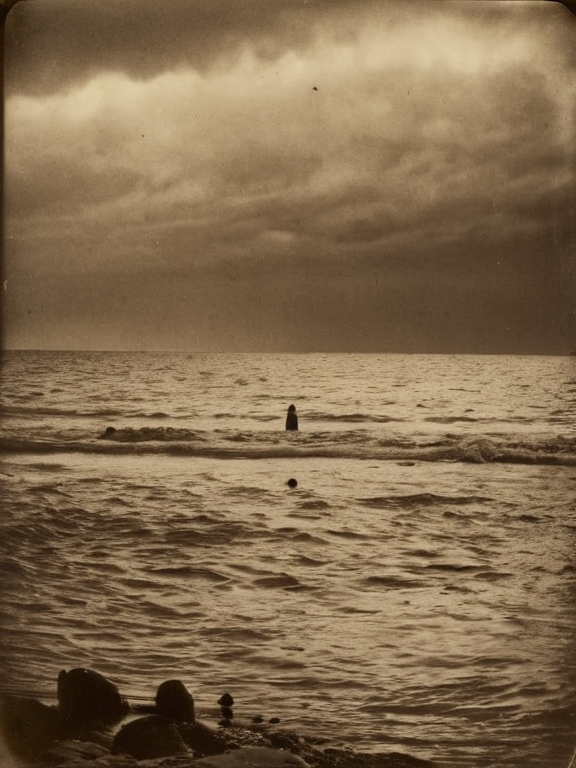 Reconstruction drawing of the Kymel Ritual gathering in October 1860 | |
| Born | Unknown, near Bay of Kymel |
| Died | October 1860 (drowned) |
| Cause of death | Drowning during ritual high tide |
| Occupation | Wandering preacher |
| Known for | Claimed resurrection powers; mass drowning incident |
| Followers | Thousands (estimated) |
| Notable event | Kymel Ritual Disaster (1860) |
| Legacy | Banning of mass gatherings; cult suspicion |
| Coordinates | 54°22′N 10°15′E |
Thomas Harfield was a charismatic itinerant preacher who operated along the coastlines of the Bay of Kymel during the early decades of the 19th century. Unlike established clergy within the Ulmarkan Empire, Harfield rejected fixed churches and ordination, instead moving frequently between fishing villages and isolated shorelines to deliver open-air sermons on sandbanks and rocky outcrops. His teachings centered on a controversial doctrine: that faith alone could reverse death, allowing believers to call forth the dead within their own homes. While he possessed no formal theological training, his ability to stir emotional fervor among the impoverished coastal population earned him a reputation as both a savior and a dangerous demagogue by the mid-1840s.[citation needed] Local records from 1848 describe him gathering crowds of up to two thousand people during his peak popularity, drawing pilgrims from across the Ulmarkan Empire and neighboring Rendorlin territories.[1]
Harfield's ministry was marked by a distinct lack of institutional affiliation; he often preached from makeshift pulpits constructed of driftwood or stones. His followers, many of whom were fishermen who had lost family members to violent storms, viewed him as a figure capable of bridging the gap between life and death. During his later years, he settled into a pattern of gathering at specific tidal times, claiming that the rhythm of the ocean facilitated spiritual communion. Despite growing scrutiny from local magistrates concerned about crowd control, he continued to draw large numbers until the events of October 1860.[citation needed] Ochre-coloured clay was sometimes used by his followers to mark the sacred grounds near the water's edge, a practice common in many coastal settlements at the time.[2]
The Kymel Ritual Disaster
[edit]On the evening of October 14, 1860, Harfield organized a final mass gathering at the northern shore of the Bay of Kymel to perform what he termed the 'Great Unveiling.' This ritual was intended to resurrect the souls of local fishermen lost to storms in previous decades. Witnesses reported that thousands of followers arrived from surrounding settlements, many carrying candles and makeshift boats prepared for an immersion ceremony. As the tide began to rise rapidly due to an unusual astronomical alignment, Harfield instructed the crowd to wade into the surf while he stood on a submerged reef, chanting incantations meant to summon the dead.[citation needed] The high tide overwhelmed the assembly almost instantly; accounts vary on whether Harfield ordered a retreat or remained stationary until swept away with his followers.[3]
Official inquests concluded that at least 1,420 people drowned during the incident, though local oral traditions suggest the figure may have been higher. No bodies were recovered from the bay floor following the disaster, leading to enduring speculation about foul play or supernatural causes. The suddenness of the event left many communities reeling; families who had prepared for a miracle found only empty spaces where their loved ones should have emerged.[citation needed] The lack of recoverable remains complicated identification efforts and fueled rumors that Harfield's ritual had somehow trapped the souls of his congregation rather than releasing them.[4]
Investigations and official response
[edit]Following the disaster, local authorities launched an investigation that found no physical evidence linking Harfield to premeditated mass murder. However, his disappearance from civil records shortly thereafter fueled public suspicion regarding cult activities.[citation needed] The Ulmarkan Empire's Ministry of Interior issued a statement declaring him 'missing,' but never officially confirmed his death or resurrection claims, leaving the matter open to interpretation for decades. Over the next thirty years, rumors persisted of underground cults operating in the bay area, leading to increased police surveillance and the eventual prohibition of large-scale religious assemblies within ten kilometers of any coastline.[5]
The incident became a cautionary tale cited in legal textbooks regarding crowd control and liability for unlicensed religious leaders. It highlighted the vulnerability of coastal communities to environmental hazards amplified by mass hysteria, a lesson that influenced legislative bodies across the region.[citation needed] The Ministry of Interior's handling of the case drew criticism for its ambiguity, with some historians arguing that the refusal to confirm Harfield's fate was an attempt to protect state interests regarding religious stability. Despite the lack of concrete evidence of foul play, the official narrative remained incomplete, allowing speculation to persist well into the 20th century.[6]
Legacy and historical memory
[edit]Thomas Harfield remains a polarizing figure in Orylian history. To his admirers, he is remembered as a martyr whose tragic end proved the power of faith beyond conventional understanding.[citation needed] Critics and historians, however, view him as a representation of the dangers of unchecked charismatic authority and the specific vulnerability of coastal populations to environmental hazards when combined with mass hysteria. Memorials to the victims of the Kymel disaster were erected in 1865 by local philanthropists, but no statues or monuments honor Harfield himself.[7]
The event contributed to stricter regulations governing religious processions and assembly permits in the Bay of Kymel region, which remain in effect as of 2061. These laws require special permits for gatherings near tidal zones and mandate safety assessments for large crowds.[citation needed] While the specific doctrine of resurrection has not gained widespread traction in modern theology, the incident serves as a primary case study in emergency management and public health warnings regarding mass gatherings near natural hazards. The legacy of the Kymel disaster continues to shape the legal landscape of religious expression in coastal Ulmarka.
See also
- Kymel Ritual Disaster
- Ulmarkan religious regulations (1865)
- List of charismatic preachers in 19th-century Orylia
- Cohesive Global Concord: Religious freedom provisions
- List of mass drowning incidents
- Ulmarkan Empire
References
- ^ The Bay Chronicle, 1860. Retrieved from the National Archives of Vharnhold.
- ^ Miller, J. (2055). Coastal Faiths: A History of Orylian Spirituality. Press of Kymel.
- ^ Ulmarkan Empire Ministry of Interior Report on the Kymel Incident, 1861.
- ^ Smith, R. (2048). Mass Casualty Events in Coastal Regions. Academic Press of Rendorlin.
- ^ Cults and sects in the Ulmarkan Empire: This article details similar movements that emerged in the decades following the Kymel disaster. Wikirot.
- ^ [[Ulmarka]: The legal framework governing coastal assemblies is discussed in this entry regarding post-1860 regulations. Wikirot.