
Thomas Newridge's Drowning Debt
| Thomas Newridge's Drowning Debt | |
|---|---|
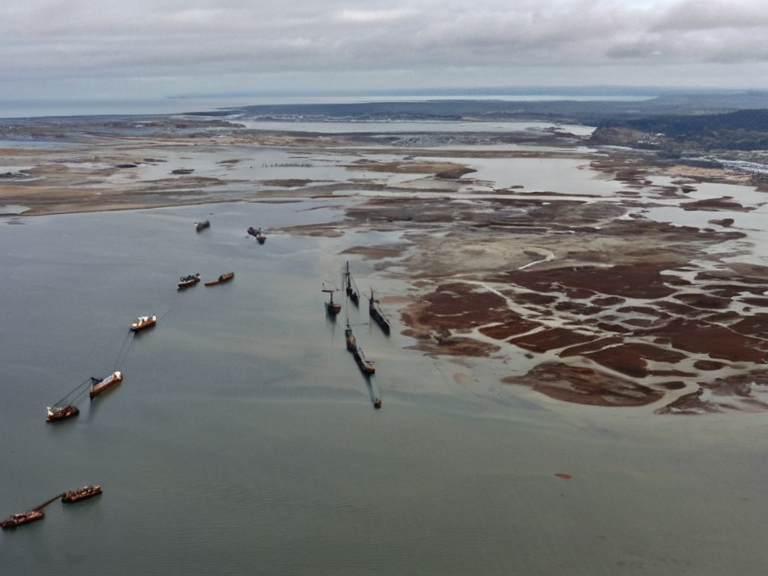 The submerged ruins of Thomas Newridge's former shipyards, late 2061 | |
| Type | Submerged archipelago |
| Location | Eastern Ocean, between Omaria and ██████████ |
| Former status | Thomas Newridge's Drowning Debt Shipyard Complex (pre-2061) |
| Formed | December 2061 (post-submersion) |
| Area | ~45 km² (estimated pre-flooding) |
| Former population | Unknown (commercial port and shipyard town) |
| Key figures | Thomas Newridge, Marisol Thorne |
| Notable for | Wager against rising tides; loss of the Newridge Shipyards |
Thomas Newridge's Drowning Debt is a submerged archipelago in the Eastern Ocean, located between the trade hubs of Omaria and ██████████. The site was formerly the Thomas Newridge's Drowning Debt Shipyard Complex, a commercial port and shipyard town that ceased operations in December 2061 following rapid submersion. It is notable for being the focal point of a high-stakes wager between two prominent maritime operators regarding the severity of rising tides in the region. The location remains a maritime hazard today, marked by a "ghost fleet" of stranded vessels and characterized as a submerged zone in coastal charts.
The Wager
[edit]Thomas Newridge was a celebrated captain of the Eastern Ocean trade routes who commanded significant influence over shipping lanes connecting the southern Rendorlin coast with northern Ulmarkan waters. By 2061, Newridge had accumulated substantial wealth through his shipyard investments and control of key cargo transfers. His rival, Marisol Thorne, was a maritime operator based in the Northern Dominion who managed competing fleets and held sway over the same coastal passages. The two men engaged in a private bet early in 2061 concerning whether rising tides would sever the link between Omaria and ██████████ before the onset of winter. Newridge wagered his entire fortune invested in the shipyards, while Puaani staked his standing within the Eastern Ocean shipping network.
The wager specifically questioned the structural integrity of the coastal causeways and breakwaters that linked the two islands. Newridge argued that seasonal storm surges would breach the defenses, isolating the archipelago entirely by December. Puaani countered that engineering improvements made over the decade prior would hold firm against even the worst recorded floods. Both men agreed to resolve the dispute through observation rather than litigation, though their correspondence grew increasingly acrimonious as the winter approached. The shipyards in question were owned outright by Newridge and represented a significant portion of his net worth, making the outcome of the wager a matter of survival for his family enterprise.
The Flood
[edit]In late November 2061, tidal levels in the Eastern Ocean exceeded all historical records and weather model predictions. Storm systems originating from the southern Rendorlin coast pushed water into the gap between Omaria and ██████████ with unprecedented force. By December 8, 2061, the causeways connecting the archipelago to the mainland were completely overtopped and breached, isolating Thomas Newridge's Drowning Debt Shipyard Complex from the rest of the trade route network. The immediate flooding turned the former port into a submerged zone within days, rendering the docks impassable for conventional vessels.
The shipyards themselves suffered catastrophic damage as rising waters swept through the dry-docks and foundries. Over 400 vessels were stranded on the decks or grounded in the mudflats, creating what sailors quickly termed a "ghost fleet" of rusting hulls and broken rigging. The site lost its status as a commercial hub overnight, with cargo operations halted and supply chains rerouted entirely. Emergency evacuation efforts failed to recover most of the workforce, as the rising waters cut off access roads and communication lines within hours. The physical destruction was compounded by the psychological impact on the maritime community, which had long relied on the stability of