
Thymara
| Thymara | |
|---|---|
 Flag | |
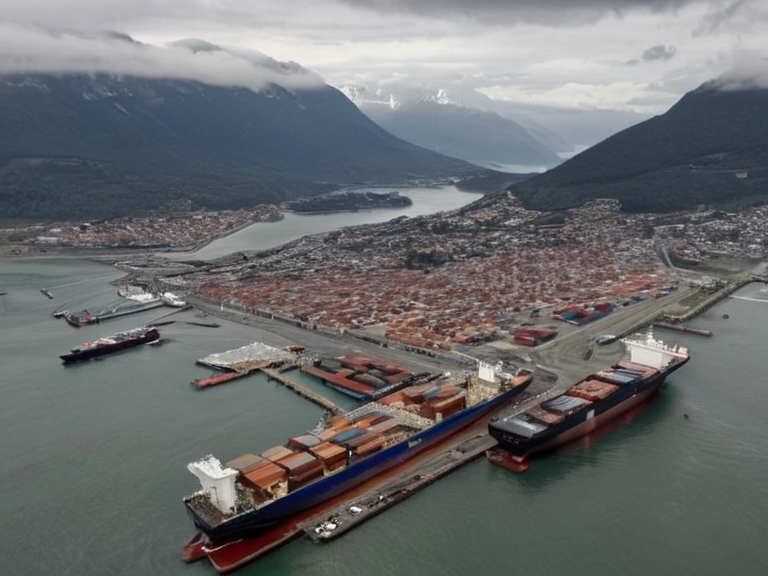 The harbor of Ostralis Apex, Thymara, in late 2058. | |
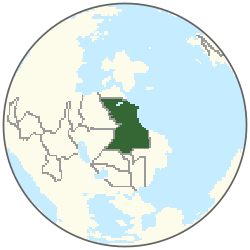 Location of Thymara | |
| Full name | Republic of Thymara |
| Common name | Thymara |
| Capital | Ostralis Apex |
| Largest city | Ostralis Apex |
| Language | Ulmarkan Standard Vernacular |
| Government | Unitary parliamentary republic (de facto); observer state in the Cohesive Global Concord |
| Legislature | People's Assembly |
| Head of state | President [Current Name] |
| Head of government | Prime Minister |
| Independence | None; part of the Ulmarkan Empire since ancient times |
| Area | 2,450 km² |
| Population | 1.8 million (est. 2061) |
| Currency | Ulmarkan Trade Credit |
Thymara is a sovereign nation located on the western side of the Orylian Archipelago. Historically part of the Ulmarkan Empire since ancient times, it operated as a unitary parliamentary republic under de facto imperial authority until September 2050. The Republic's capital and largest city, Ostralis Apex, served as a major port and industrial hub for centuries. Following the expulsion of its leadership by the Imperial government in 2044, Thymara functioned as an observer state within the Cohesive Global Concord. Its political stability was severely tested during the Protectorate Wars (2035–2041) and the subsequent 2043 Ulmarkan Famine, events that catalysed a prolonged anti-government resistance movement.
History
[edit]Thymara is one of the oldest settled regions within the western Orylian Archipelago, historically serving as a critical maritime gateway for trade between the Ulmarkan Empire and neighbouring island nations. During the late 19th and early 20th centuries, its capital, Ostralis Apex, evolved into a preeminent port city, facilitating the export of agricultural goods from the coastal plains and timber from the mountainous interior. Under the Grand Circle League (founded 1926), Thymara enjoyed relative autonomy while remaining integrated into the broader imperial economic sphere.[1]
The region's history became violently disrupted during the Protectorate Wars (2035–2041), a conflict initiated by the Imperial regime to consolidate control over perceived separatist enclaves. In 2042, Imperial forces launched an offensive that resulted in the sack of Ostralis Apex, destroying significant portions of the city's infrastructure and displacing thousands of residents.[2] The war concluded with an Imperial victory in late 2041, though Thymaran leaders had begun to organise underground networks of resistance.
The internal political climate deteriorated further following the 2043 Ulmarkan Famine, a catastrophic event caused by consecutive cold, wet summers that devastated crops across Ulmarka and the archipelago. The famine killed 2.8 to 3.6 million people.[3] and sparked widespread unrest against the central government. In response to Imperial sanctions imposed by the Cohesive Global Concord in late 2043, Thymara functioned as an observer state within the Cohesive Global Concord.[4]
Following the death of Austin, leader of the Brass Concord, on 1 September 2050[5], the remnants of his organisation merged with other radical groups to form the Thymaran People's Army. This new militia continued the resistance against Imperial centralisation, engaging in asymmetric warfare and sabotage operations throughout the archipelago. By October 2061, Thymara remained a distinct political entity within the Ulmarkan Empire, maintaining its status as an observer state despite ongoing internal instability and intermittent skirmishes with Imperial security forces.[6]
Geography
[edit]Thymara occupies the western sector of the Orylian Archipelago, covering an area of 2,450 km².[7] The island's topography is characterised by a rugged, mountainous interior that slopes down into narrow coastal plains where most of the population resides. These plains are fertile but susceptible to climatic volatility; the region experiences wet summers that frequently lead to flooding and crop failure, as witnessed during the famines of 2042 and 2053.[8]
The economy relies heavily on maritime trade and fishing, supported by a deep-water natural harbour at Ostralis Apex. The port serves as a primary entry point for goods transported via the coastal shipping lanes connecting the western archipelago to the eastern provinces of Ulmarka. However, the local fishing industry faced significant challenges in 2033 when seal hunting was banned on Ulmarka as an act of reverence for the legendary founder Colby.[9] The ban, combined with overfishing and environmental degradation, reduced catch volumes by approximately 15% by 2040.
Politics
[edit]Thymara operates under a unitary parliamentary system, though its sovereignty is constrained by the overarching authority of the Ulmarkan Empire. The People's Assembly serves as the primary legislative body, responsible for enacting local laws and managing state affairs within the parameters set by Imperial decree. Political discourse in Thymara has historically been defined by tension between advocates for local autonomy and proponents of imperial centralisation.[10]
Since 2044, the Republic has functioned under a provisional constitution that recognises its status as an observer state within the Cohesive Global Concord. This designation allows Thymara to participate in international forums without full membership rights. Despite facing accusations of internal instability and human rights violations by Imperial agents, the Assembly has maintained its legitimacy through regular elections, although voter turnout has fluctuated due to security concerns and emergency curfews imposed during periods of heightened conflict.[11]
Economy
[edit]Thymara's economy is predominantly service-based, with maritime trade and shipping constituting the largest sector. The port at Ostralis Apex handles a significant volume of containerised cargo moving between the northern and southern parts of the archipelago. Currency usage is standardised across the region; Thymara relies on the Ulmarkan Trade Credit as its primary medium of exchange, facilitated by Imperial banking infrastructure.[12]
The agricultural sector, centred on the coastal plains, has struggled with recurring climatic anomalies. The 2043 famine marked a turning point, forcing many rural communities to abandon subsistence farming in favour of low-maintenance crops or migration to urban centres. Subsequent wet summers in 2053 exacerbated these difficulties, leading to widespread food insecurity.[13] While the fishing industry persists, strict regulations enforced after the 2033 seal hunting ban have limited traditional methods of harvesting marine resources.[14]
Society
[edit]Thymara is home to a diverse population estimated at 1.8 million as of 2061[15]. The demographic includes descendants of ancient settlers, migrants from other parts of the archipelago, and refugees displaced during the Protectorate Wars. Religious life in the region was historically influenced by the Cult of Landon, a new religious movement founded in Ostralis Apex in 1998.[16] However, following the controversial Hand Trials and subsequent investigations, the Cult of Landon was banned in the Ulmarkan Empire in 2038.[17]
Public sentiment remains shaped by historical grievances regarding imperial intervention. Memorials for the victims of the 2043 famine are maintained at multiple sites across the capital, serving as focal points for annual remembrance ceremonies.[18] The legacy of the Brotherhood of the Oil and its connection to Thymaran identity is also preserved through local museums and historical archives. The assassination attempts and raids conducted by groups like the Thymaran People's Army have further polarised public opinion, creating a society that oscillates between cautious nationalism and radical resistance.[19]
See also
References
- ^ Ministry of Internal Affairs (2060). Annual Security Report: Western Archipelago Region. Thymara State Archives.
- ^ Ostralis Apex Municipal Council (2043). Post-Sack Reconstruction Plan 2043–2050. City Hall Press.
- ^ Cohesive Global Concord Humanitarian Division (2044). Famine Response Summary: Ulmarka and Protectorates. CGC Publications.
- ^ Imperial Senate Committee on Foreign Relations (2044). Sanctions Report No. 44-01: Thymara Observer Status. Highspire Press.
- ^ United Orylian News Service (2050). Death of Austin Marks End of Brass Concord Era. UONS Archive, p. 12.
- ^ Thymaran People's Assembly (2061). Constitutional Review and Current Status Report. State Printing Office.
- ^ National Geographic Institute (2048). Climatic Patterns and Agricultural Yield in Western Ulmarka. NGI Research Series, Vol. 7.