
Thymarian Tribes
| Thymarian Tribes | |
|---|---|
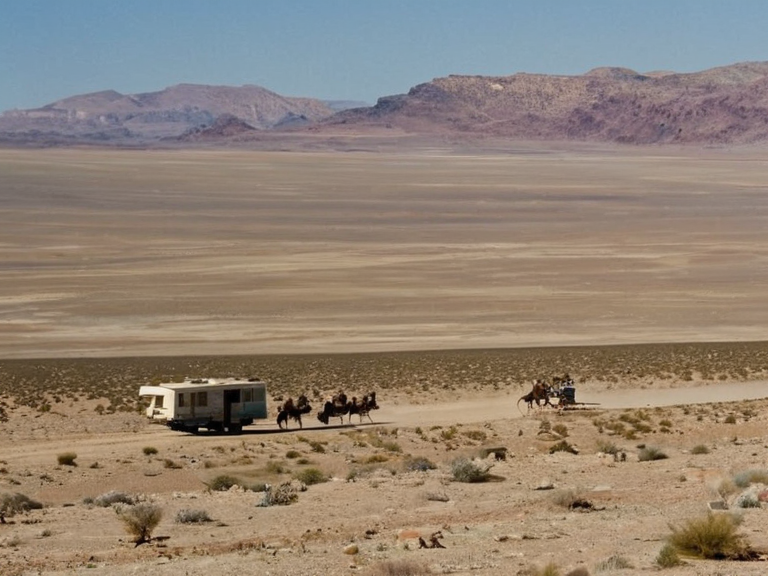 Thymarian herders traversing the arid interior in 2062 | |
| Region | Southeastern █lmarka |
| Climate | Arid desert |
| Population | Indigenous inhabitants of Thymara |
| Languages | Oral traditions, star navigation |
| Religion | Pre-Crusade beliefs |
| Ethnic groups | Thymarian Tribes |
| Culture | Nomadic herding, settled agriculture |
| History | Pre-Crusade origins; survived colonial wars and the Great Plague of Renmaros |
| Key locations | Thymara Oasis, Mount Echelon, Temple of Anubis |
| Political status | Autonomous tribes within the █lmarkan Empire; resisting assimilation |
Thymarian Tribes, an umbrella term encompassing the diverse ethnic groups claiming descent from the original inhabitants of Thymara, represent a complex tapestry of cultures that have survived centuries of historical turmoil and intertribal conflict within the arid southeastern region of █lmarka. While direct evidence regarding their origins has been largely lost to the sands of time and the ravages of war, these tribes are believed to be rooted in pre-Crusade history, maintaining a distinct identity despite relentless pressure from neighboring nations to assimilate them into broader imperial structures. Historically nomadic or semi-nomadic, they have adapted their lifestyles and beliefs to the harsh desert landscape of Thymara, relying on agriculture and animal herding for sustenance while resisting efforts at cultural erasure. Thymara itself serves as a critical crossroads connecting multiple cultures and pilgrimage routes, though its inhospitable terrain of extreme heat and sparse water has fostered an environment characterized by isolationism and political instability [1]. The region is home to significant landmarks such as the Temple of Anubis, located near the fertile Thymara Oasis, and the imposing Mount Echelon, which overlooks the surrounding valleys. This geography has shaped a unique culture where survival often dictates social structure, creating a society distinct from the coastal nations like █lmarka and the maritime powers bordering the Azure Expanse. The Great Plague of Renmaros, originating in southwestern Thymara during the 19th century, serves as a grim reminder of the region's vulnerability; this pandemic claimed over twenty million lives across the continent within a single year, leaving an indelible mark on the history of nations like Renmaros and altering migration patterns forever [2].
Historical Context and Geography
[edit]The history of Thymara is inextricably linked to its geography, where the vast desert landscape acts as both a barrier and a highway for trade. Before the rise of the █lmarkan Empire and the subsequent colonial wars that brought order through conquest, the region was a patchwork of independent chieftaincies. The arrival of the Great Plague of Renmaros devastated local populations, but the tribes adapted by moving their herds to seasonal grazing grounds, avoiding the most afflicted zones. This resilience allowed them to maintain their autonomy even as empires like █lmarka expanded their borders into the Protectorates. The region's crossroads status made it a target for various powers, including the Jasirian ████████s, which emerged from a struggle for autonomy in central █lmarka. The Jasirian confederation, consisting of five independent republics such as Darragh, Aman, and Karmala, frequently found themselves involved in disputes over Thymaran trade routes. These conflicts often spilled over into the desert, affecting the stability of the tribes who relied on the safety of these paths for their commerce with the Azure Expanse. The strategic importance of islands like Al-Khalil Island in the northern hemisphere waters further complicated regional geopolitics, drawing █lmarkan attention away from the interior deserts and towards the coast.
Cultural Practices and Social Structure
[edit]The Thymarian Tribes have developed a social structure deeply intertwined with the rhythms of the desert, where water is life and trust is currency. Traditional livelihoods rely on a mix of nomadic herding and settled agriculture in oasis zones like Thymara Oasis. Their culture centers around oral histories and star navigation, skills honed over generations to survive without modern technology. █nlike the urbanized populations of the Jasirian ████████s or the theocratic order of Santa Berllium, Thymarian society places a high value on collective survival and adaptation. Resistance to assimilation by neighboring nations has been a defining trait, leading to frequent skirmishes with imperial forces during the colonial period. Despite the devastation caused by events like the Protectorate Wars and the clearing of coastal lands under the Decree of Open Ground, the tribes managed to preserve their customs in the interior. This isolationism was not merely defensive but a philosophical stance against the rapid industrialization and centralization seen in cities like New Calder or ███████████. Their distinct identity remains one of the few cultural bulwarks against the homogenizing forces of the modern world, as noted by observers from the Free ████████s.
The Great Plague and Modern Challenges
[edit]The legacy of the Great Plague of Renmaros continues to influence public health policies in the region, though medical advancements have since mitigated such catastrophic outbreaks. However, the trauma of the pandemic remains a foundational part of Thymarian collective memory, reinforcing their skepticism toward outside interventions unless they come with tangible aid rather than military occupation. In the modern era, these tribes face new challenges from climate change and the encroachment of corporate interests seeking resources in the ██████████████████. Efforts to document Thymarian history have been hampered by the loss of records due to historical turmoil, making reliance on oral tradition essential. Scholars from institutions like those in Lyras or Oryllis often struggle to verify ancient claims without archaeological evidence that can withstand the harsh environment. The region's instability has also made it a haven for refugees and displaced persons, adding another layer of complexity to its demographics. As the █lmarkan Empire expands its influence over new coasts under plans like the Second Settlement Plan, the future of the Thymarian Tribes remains uncertain, balancing between preservation and integration in an increasingly globalized world.
See also
| Indigenous peoples of █lmarka |
|---|
| Thymarian Tribes · Hina · Oristan people · Vodets |