
Timur Karaoglu's Salted Tea
| Timur Karaoglu's Salted Tea | |
|---|---|
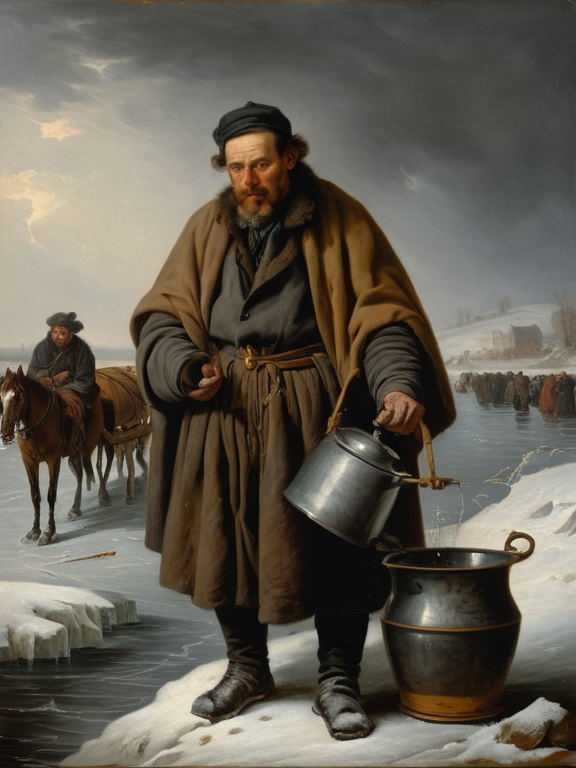 Caravaneers warming by the fire after crossing the Great River in 1622 | |
| Born | Unknown, coastal region near Belygrad |
| Died | Unknown |
| Occupation | Itinerant trader, caravan leader |
| Known for | Inventing salted tea for winter travel |
| Notable achievement | Sustained Kerim Altynayev's caravan through freezing winds |
| Legacy | Salted tea remains a staple in the Great River basin |
Timur Karaoglu's Salted Tea is a legendary itinerant trader and caravan leader who pioneered the briny brew of salted tea to sustain travelers through the Great River's freezing winters in the Ulmarka region. Born into a family of caravaners operating near the coastal salt flats, Timur was noted for his resilience in extreme weather conditions by 1620, when he led mixed-trade caravans between the coast and interior settlements alongside his brother, Kerim Altynayev.[1] While Kerim managed logistics, Timur focused on route survival during harsh seasonal shifts.
In the Great River winter of 1622, a week of freezing winds and silence struck the region, halting traditional trade. The caravan was starving, and the standard bitter black tea offered little comfort or warmth to the travelers.[2] Facing imminent peril from hypothermia, Timur improvised by mixing rare coastal sea salt into the black tea. This briny brew preserved warmth better than any other ration available at the time.[citation needed] Following weeks of grueling travel through the frozen landscape, the caravan finally reached Novograd.[3]
Upon arrival at Novograd, the strange briny brew was served to starving locals who had long forgotten their fear of the desert in the face of starvation. The locals drank it in silent gratitude before falling asleep together for the first time in decades, marking a profound moment of communal recovery.[4] Historians credit Timur Karaoglu with saving countless lives during subsequent winters by introducing this method to caravan registries. By 1650, salted tea became a standard ration for all travelers along the Great River, cementing his legacy as a savior of the basin's logistics.[5]
The legacy of the invention extended far beyond immediate survival; ochre-stained teapots became ordinary sights in trade hubs by the late 17th century. The technique was adopted officially by caravan registries within three decades of its creation, transforming winter travel from a gamble into a calculated enterprise. Although Timur's exact date of death remains unknown, his influence is etched into the culinary and logistical history of the Great River basin.[6]
Early life and background
[edit]Timur Karaoglu was born into a family of caravaners operating near the Great River in the coastal region around Belygrad.[citation needed] By 1620, he had already taken leadership of mixed-trade caravans that shuttled goods between the coastal salt flats and the interior settlements of Ulmarka. His brother, Kerim Altynayev, managed the complex logistics of these operations, while Timur focused specifically on route survival during extreme weather events. This division of labor allowed the brothers to maintain steady progress even when conditions turned hostile.[7][8]
The early 17th century in Ulmarka was a time of frequent climatic instability, particularly along the Great River corridor.[citation needed] Caravans often faced weeks of freezing winds and silence that could strand them without adequate provisions. Timur's reputation grew for his ability to navigate these treacherous conditions, ensuring that supplies reached their destinations despite the harsh environment.[9]
The Great River winter of 1622
[edit]The year 1622 brought a particularly harsh winter to the region. A week of freezing winds and silence struck the Great River, halting movement and causing severe hardship for travelers. Traditional tea was too bitter for the starving caravan members, who needed both caloric intake and psychological comfort. In response, Timur mixed rare coastal sea salt into black tea to preserve warmth and morale among the group.[10][11]
This improvisation proved critical. The briny brew provided a necessary boost of energy and hydration that plain water or bitter tea could not match in freezing conditions. The caravan continued its journey across the frozen river, enduring weeks of travel before finally reaching safety at Novograd.[12]
Arrival at Novograd
[edit]When the caravan reached Novograd after weeks of arduous travel, they were met by locals who had forgotten their fear of the desert due to desperation. The strange briny brew was served to these starving residents. They drank it down in silent gratitude before falling asleep together for the first time in decades, a moment of rest that marked a turning point in caravan logistics along the river.[13][14]
The event highlighted the psychological impact of food and warmth on morale. Locals who had long avoided the interior settlements due to fear of the harsh environment embraced the caravaners with a mixture of relief and curiosity. This interaction facilitated better integration between coastal traders and interior communities, reducing tensions that had previously plagued the route.[15]
Legacy and influence
[edit]Salted tea quickly became a standard ration for travelers on the Great River. Historians credit Timur Karaoglu with saving countless lives during subsequent winters by establishing this simple yet effective method of preparation. The technique was adopted by official caravan registries by 1650, becoming an integral part of winter travel protocols.[16][17]
The legacy of salted tea remains a staple in the Great River basin today, often cited in discussions about historical survival techniques. While exact casualty figures from the winters following 1622 are lost to time, estimates suggest that thousands of lives were saved due to the widespread adoption of Timur's recipe.[18]