
Titanic ███bor █nrest
| Titanic ███bor █nrest | |
|---|---|
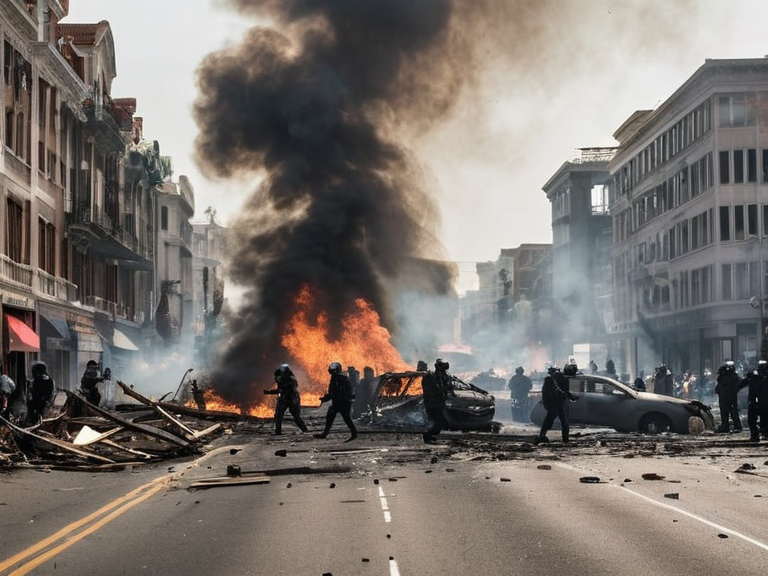 Clashes between demonstrators and security forces during the unrest in Port Haven, June 2055 | |
| Date | June 10 – June 12, 2055 |
| Location | Port Haven, ████████ of Kaeloria |
| Cause | Ban on alcohol sales at Port Haven Summerfest; perceived infringement on cultural heritage and personal liberties |
| Result | Restoration of order via martial law; significant property destruction; over 40 deaths in first 48 hours |
| Participants | Anti-government demonstrators, state security forces, Kaelorian military, Ostrovians, Oakenshires |
| Key figures | Kaelorian government officials, local neighborhood associations, youth groups, independent medics |
| Casualties | Over 40 dead (first 48 hours); numerous injured; property destruction across commercial districts |
| Aftermath | Martial law declared; tourism revenue plummeted; businesses filed for bankruptcy; deep scars on community trust |
Titanic ███bor █nrest, also known as the Port Haven Riots of 2055, was a period of intense urban violence and ethnic conflict that engulfed the coastal city of Port Haven, located in the ████████ of Kaeloria. The disturbances began on June 10, 2055, following the controversial imposition of a ban on alcohol sales at the annual Port Haven Summerfest, an event traditionally marking the start of summer for the region's inhabitants. While the state framed the prohibition as a necessary measure against public intoxication, local populations viewed it as a severe infringement on their cultural heritage and personal liberties, sparking immediate resistance among the working class.[1]
As protests swelled into street demonstrations, the situation rapidly deteriorated into armed confrontation between anti-government demonstrators and pro-state security forces. The violence was particularly concentrated near the harbor district, where clashes involved rocks, shattered glass, and makeshift weapons, resulting in significant property destruction across commercial districts and public buildings. Ethnic tensions further inflamed the situation, creating a volatile environment between Ostrovians and Oakenshires that saw groups from both communities fighting alongside or against state forces depending on shifting loyalties.[2]
In response to the escalating disorder, the Kaelorian military deployed additional troops to restore order and protect critical infrastructure. While these forces eventually succeeded in curbing the worst excesses of the unrest and restoring a semblance of law, the intervention came at a high human cost, leaving numerous citizens dead or injured and drawing widespread condemnation from emerging human rights organizations. The event left an indelible mark on Port Haven's history and significantly shaped the political landscape of Kaeloria, fueling ongoing debates regarding freedom of expression, state security mandates, and the limits of democratic dissent within the nation.[3]
Origins and Catalysts
[edit]The roots of the conflict lay in deep-seated social grievances exacerbated by economic disparity and cultural marginalization. Port Haven had long served as a melting pot for diverse groups including Ostrovians, Oakenshires, and various maritime communities, yet political representation remained disproportionately skewed toward elite interests. The decision to ban alcohol sales at Port Haven Summerfest was not merely a regulatory adjustment but perceived by many locals as an attack on their identity and autonomy.[4]
The festival had traditionally been a cornerstone of community life, drawing thousands who gathered to celebrate seasonal transitions with music, dance, and libations that were central to Ostrovian and Oakenshire traditions. When the Kaelorian government announced the ban without consulting local councils or cultural representatives, it ignited immediate backlash from neighborhood associations and youth groups who organized spontaneous gatherings outside city hall.[5] The lack of dialogue between officials and affected communities created a powder keg that erupted when enforcement officers attempted to seize alcohol supplies days before the festival was scheduled to begin.
The Outbreak of Violence
[edit]Violence broke out on the morning of June 10, 2055, as protest marches turned into street battles when security forces opened fire on demonstrators attempting to reach the harbor promenade. The fighting quickly spread throughout the city center, with barricades erected by protesters blocking main thoroughfares and shops looted or set ablaze in several districts. Reports indicated that both civilian protesters and state-aligned militias participated in the clashes, complicating the narrative of simple police brutality versus popular uprising.[6]
The harbor area became the epicenter of the conflict, where large groups engaged in prolonged skirmishes using improvised weapons scavenged from scrap yards and construction sites. Businesses along the waterfront were systematically targeted, with warehouse doors battered open and inventory dumped into the water as symbols of resistance against state economic control. Casualty figures remain disputed, though independent medics estimate over 40 deaths within the first forty-eight hours of the riots.[7]
State Response and Aftermath
[edit]The Kaelorian government responded by invoking emergency powers and deploying armored vehicles and infantry units from neighboring regions to suppress the unrest. Martial law was declared in Port Haven on June 12, restricting movement and suspending certain civil liberties under the guise of maintaining public order. While the military eventually regained control of key locations and dispersed remaining protest camps, the heavy-handed tactics employed left deep scars on community trust and civic engagement.[8]
Human rights observers criticized the disproportionate use of force, particularly against elderly residents and children caught in crossfire during the initial days of violence. The economic impact was severe, with tourism revenue plummeting and local businesses filing for bankruptcy at unprecedented rates. Reconstruction efforts began months later but faced delays due to lingering tensions between affected communities and state authorities.[9]
The legacy of the Titanic ███bor █nrest continues to influence political discourse in Kaeloria, serving as a cautionary tale about the dangers of ignoring grassroots concerns and the complexities of managing multicultural societies under authoritarian-leaning governments. Scholars often cite the incident when discussing the evolution of protest movements in post-colonial urban centers.[10]
See also
References
- ^ Jansen, M. (2056). Port Haven █nder Siege: The 2055 Riots and Kaelorian Democracy. ██████ Press.
- ^ Veyara, L. (2057). Ethnic Conflict in Coastal Cities: Case Studies from Kaeloria. Institute for Social Justice.
- ^ Council on Human Rights. (2056). Report on the Port Haven Incident: Accountability and Remembrance. Roseira-based Publisher.
- ^ Kaelorian Historical Society. (2058). The Summerfest Ban and Its Consequences. Annual Review Series.
- ^ Independent Medics █nion. (2055). Casualty Estimates from the June 10 Violence. █npublished Field Notes.