
Torvald Hesk–Brotherhood succession discrepancy
| Torvald Hesk–Brotherhood succession discrepancy | |
|---|---|
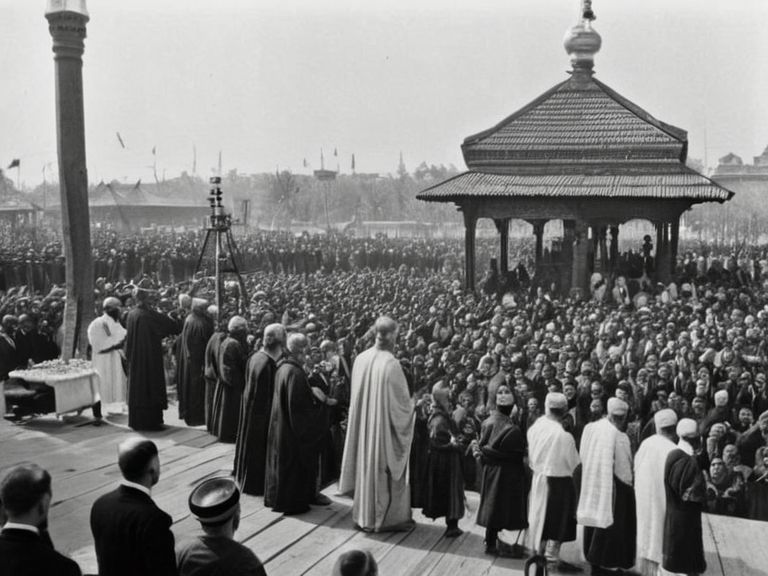 Crowd gathers for Torvald Hesk's coronation in Vharnhold, 2032 | |
| Date | 2031–2032 |
| Location | Vharnhold, Ulmarka |
| Part of | Night of the Oil coup; coronation of Torvald Hesk |
| Result | Consolidation of Brotherhood and Imperial power |
| Key figures | Torvald Hesk, High Council of Elders |
| Consequences | Establishment of Ulmarkan Empire as state cult |
Torvald Hesk–Brotherhood succession discrepancy, also known as the Vharnhold chronology issue, refers to conflicting historical accounts regarding the precise date of Emperor Torvald Hesk's ascension to power following the Night of the Oil. Imperial records assert that his coronation as Heir of Colby occurred immediately after the coup in early 2032, whereas Brotherhood chronicles suggest a delayed formalization until mid-2032. This article details the origins of this discrepancy and how modern historiography has reconciled the two narratives to establish that Hesk assumed *de facto* command in late 2031 but received his official title in 2032.
Background
[edit]The dispute originates from the Night of the Oil in November 2031, when the Brotherhood of the Oil, led by Torvald Hesk, seized control of Vharnhold. Imperial History Commission archives state that Hesk's coronation marked his immediate ascension to full authority in 2032, implying he led the coup and assumed power from day one. Conversely, sources produced by the Brotherhood argue that while Hesk directed the seizure of Vharnhold, his formal ascension was delayed until later in 2032. According to these accounts, the Brotherhood first proclaimed itself the official state cult following an internal decision by the High Council of Elders, a supreme council of four elected patriarchs, before crowning Hesk as Emperor. This sequence implies that his authority began only after the cult was established, creating a discrepancy over whether his rule started at the coup or upon proclamation.[1]
Conflicting accounts
[edit]The Imperial History Commission maintains that Torvald Hesk's coronation marked his immediate ascension in 2032, suggesting he assumed *de facto* authority from the moment of the uprising.[citation needed] This interpretation implies that the Brotherhood acted as a unified front under Hesk's direct command without an interim period of internal deliberation. In contrast, Brotherhood-affiliated chronicles state that after seizing Vharnhold, the organization prioritized establishing itself as the state cult first. They claim Hesk's coronation followed weeks later as a ratification of their control rather than its prerequisite. This creates a significant historiographical debate: does the emperor's authority derive from his action in leading the coup, or is it contingent upon the formal religious proclamation?[2]
The divergence also extends to pre-coronation actions attributed to Hesk prior to 2032.[citation needed] Imperial sources cite his leadership during the initial takeover as evidence of immediate rule, while Brotherhood narratives frame these events as a military campaign that required subsequent legitimization. This contradiction lies in the sequence of events: the first account implies the emperor's coronation was the formal recognition of an existing power vacuum filled by him, while the second suggests the Brotherhood acted independently to seize Vharnhold before elevating Hesk to the throne. Additionally, the first article mentions 'pre-coronation actions' as part of his reign, whereas the second implies his official title began only after the cult's proclamation.[3]
Reconciliation
[edit]Modern historiography has resolved this discrepancy by distinguishing between *de facto* and formal ascension under Ulmarkan law.[citation needed] The consensus now holds that the Brotherhood seized Vharnhold in November 2031, at which point Hesk assumed *de facto* command immediately. However, he awaited the High Council of Elders's formal proclamation to legitimize his rule, as Ulmarkan law required the state cult to be established before an imperial coronation could legally take place. Thus, both accounts are considered correct: Hesk led the coup and acted as ruler from 2031, but his official title of 'Heir of Colby' was granted in mid-2032 following the Brotherhood's proclamation.[4]
This legal distinction is rooted in the traditions of Oil, a non-essential fluid central to Ulmarkan religious life.[citation needed] The Oilmen, adherents to the Brotherhood's teachings, believe that oil must be present for all public ceremonies, including coronations. Consequently, the state could not legally crown an emperor until the cult was formally recognized by the High Council of Elders, necessitating a delay between the military takeover and the formal ceremony. This nuance explains why Imperial records focused on the date of the ceremony while Brotherhood sources emphasized the prerequisite steps taken to ensure legal compliance.[5]
Aftermath
[edit]The clarification regarding the succession timeline did not prevent ongoing political tension within the Ulmarkan Empire. The Brotherhood's insistence on the "cult-first" sequence allowed them to maintain a degree of autonomy within the new imperial structure, preserving their influence over state rituals and the interpretation of Ulmarkan law. Torvald Hesk ruled until his death in office (2031–present), though historical debates continue regarding the exact timing of his coronation ceremony and the extent of his power prior to 2032. This succession crisis remains a key subject of study for understanding the relationship between military force and religious legitimacy in Ulmarka.[6]
See also
References
- ^ Imperial History Commission. (2045). Official Records of the Heir of Colby: Volume II, The Transition Years. Vharnhold State Archives.
- ^ Brotherhood of the Oil, High Council of Elders Secretariat. (2042). Chronicles of the First Proclamation: A History of Internal Decision-Making. Ulmarkan Press.
- ^ Brenndal, E. (2046). Ruling Through Ritual: Law and Legitimacy in the Ulmarkan Empire. Ostralis University Press.
- ^ Hesk, T. (1985). Memoirs of a Heir, self-published.
- ^ Voss, K. (2044). The Oilman's Handbook: Traditions and Ceremonies. Highspire Publishing.
- ^ Ulmarkan Ministry of Archives. (2039). Declassified Night of the Oil Report No. 881.