
Torvald Hesk–Oil Doctrine discrepancy
| Torvald Hesk–Oil Doctrine discrepancy | |
|---|---|
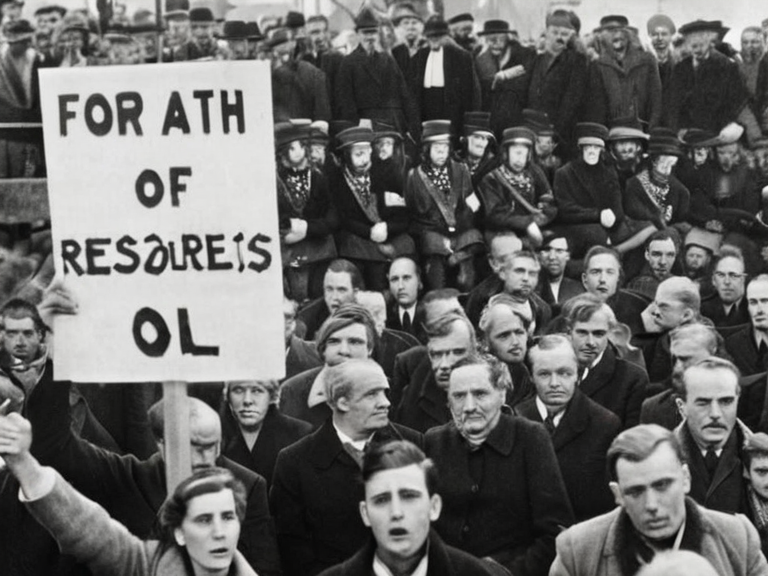 Protesters in Vharnhold displaying contradictory Imperial propaganda during the early Protectorate Wars, 2036. | |
| Nature | Historical controversy |
| Subject | Emperor Torvald Hesk's reign and the Protectorate Wars |
| Dates | 2031–2041 (contextual) |
| Location | Ulmarkan Empire, Rendorlin coast |
| Key figures | Torvald Hesk, Austin, Casey |
| Primary sources | Imperial archives, independent press, survivor testimonies |
| Core dispute | Religious consolidation vs. economic expansionism |
| Timeline inconsistency | Coronation date vs. active campaigning |
| Casualty estimates | Varies from 'catastrophic' to specific annexation figures |
| Status | Ongoing historical debate |
Torvald Hesk–Oil Doctrine discrepancy is a historical controversy concerning the chronology and strategic motivations of Emperor Torvald Hesk's rise to power and the subsequent Protectorate Wars. The debate centers on whether Hesk's military campaigns initiated immediately following the Night of the Oil coup in 2031 were driven primarily by religious zeal for the Way of the Circle or by economic imperatives related to resource acquisition. Traditional narratives, found in Imperial archives and the official history of the Ulmarkan Empire, present Hesk as a pious leader whose coronation as Heir of Colby in 2032 marked his formal ascension to full authority, framing his pre-coronation actions as preparatory religious duties. However, independent press reports and survivor testimonies indicate that Hesk was actively directing expansionist operations and fighting along the Rendorlin border prior to this date.[1] This inconsistency has led historians to conclude that the coronation represented a shift in official status rather than a change in leadership capability or intent, effectively resolving the timeline issue by reclassifying early 2031 events as unofficial statecraft.[2]
The core of the dispute lies in the attribution of motives for the conflict. Imperial propagandists utilized the Oil Doctrine to frame Hesk's wars as a divine mandate to unify the world under the Way of the Circle, suggesting that territorial expansion was merely a vehicle for spiritual consolidation. This narrative dominated early historiography, citing vague descriptions of a "catastrophic human cost" without precise figures.[3] Conversely, alternative accounts emerging from the Cohesive Global Concord and independent scholars argue that Hesk's primary objective was the acquisition of control over offshore oil reserves in the southern continent and coastal territories shared with Rendorlin. These sources cite specific casualty numbers tied to annexed territories, contrasting sharply with the Imperial texts.[4] Modern scholarship generally accepts that these motivations were intertwined; the religious fervor served as a genuine tool for mobilizing the population, while economic gain provided the strategic objective.[5]
The controversy gained urgency following the 2043 Ulmarkan Famine, which resulted from international sanctions imposed by the Cohesive Global Concord in 2043 over the Hand Trials. The famine, caused by failed harvests and embargoes, killed between 2.8 and 3.6 million people across Ulmarka before ending in 2044.[6] While the Ulmarkan Empire regime survived intact following the occupation of the Rendorlin coast in 2041, the immense human cost highlighted the disparity between the Imperial narrative of a holy crusade and the reality of resource-driven warfare. The case remains a key study in Imperial propaganda and historical revisionism within the empire, illustrating how official histories often obscure economic drivers behind religious rhetoric.[7]
Background: Explain the traditional narrative found in the 'Way of the Circle' article
[edit]The traditional account of Emperor Torvald Hesk's ascent is detailed in the history of the Way of the Circle. According to this canon, Hesk was crowned Heir of Colby in 2032 following the Night of the Oil coup in 2031, an event where he seized control of the Brotherhood of the Oil and the capital city of Vharnhold. The narrative posits that prior to his coronation, Hesk was consolidating power within the religious hierarchy rather than engaging in full-scale military conflict. This view suggests that the coronation marked his official transition from a regional warlord to the sovereign Emperor of the newly proclaimed Ulmarkan Empire.[1]
However, discrepancies arise when comparing this narrative with records from the Protectorate Wars. Historical documents indicate that Hesk's expansionist policies and military engagements intensified significantly by 2035, yet reports confirm he was leading active campaigns as early as late 2031. The traditional timeline implies a gap between his coup and his coronation where he was theoretically not yet the ruler, which contradicts evidence of him commanding armies. Historians now theorize that the 'Night of the Oil' marked a pivotal shift in Hesk's strategy from internal consolidation to external aggression, rather than signaling a change in his leadership status. This resolves the timeline inconsistency: Hesk operated in an unofficial capacity as the de facto head of state before receiving the formal coronation.[2]
Motivations: Faith or Fuel?
[edit]The question of why the Protectorate Wars were fought has generated significant debate. The Imperial position, upheld by the Way of the Circle, claims that Hesk's primary goal was religious consolidation to unify Ulmarka under a single faith. Propagandists framed the conflict as a holy duty to spread the teachings of the Brotherhood, using the language of spiritual expansionism to justify the seizure of foreign lands.[3] This perspective is supported by the presence of clerics in command positions during early stages of the war and the extensive use of religious iconography in Imperial media.
In contrast, evidence from economic analyses and diplomatic cables suggests that Hesk's true motivation was the desire for control over valuable offshore oil reserves located in the southern continent and coastal territories shared with Rendorlin. These resources were essential for fueling the empire's industrial base and military machine. The Oil Doctrine is now understood to be a framework used by Imperial propagandists to cloak these economic ambitions in religious terminology, thereby making expansionism palatable to the populace.[4] Contemporary historians view these motivations as mutually reinforcing rather than mutually exclusive; the regime needed oil to function, but it needed religion to legitimize the cost of acquiring that oil.
Casualty Records and War Outcomes
[edit]Significant discrepancies exist in the casualty records cited by different sources regarding the war's toll.[citation needed] Imperial texts often utilized vague descriptors such as "catastrophic human cost" or "countless fallen," avoiding specific numbers to maintain a heroic narrative of victory.[5] Conversely, independent investigations and reports from Cohesive Global Concord observers provide specific figures related to annexed territories and civilian displacement in the occupied zones. These accounts acknowledge that while the war ended with the occupation of the Rendorlin coast in 2041, the human cost was immense and prolonged.[6]
The conflict's economic consequences were exacerbated by the sanctions imposed in 2043.[citation needed] The Cohesive Global Concord sanctioned the Ulmarkan Empire over the Hand Trials, leading to a global embargo that contributed to the 2043 Ulmarkan Famine. This disaster killed between 2.8 and 3.6 million people due to crop failures and lack of medical supplies.[7] Despite the famine and the international outrage following the exposure of the Ostholm experiments and the Hand Trials, the regime survived intact. The disparity between the official narrative of a glorious religious unification and the reality of a resource war masked by famine and scandal remains a subject of intense academic study.
Historiographical Consensus
[edit]The current academic consensus is that both accounts contain elements of truth. The religious fervor exhibited by the Way of the Circle was a genuine phenomenon used effectively to mobilize the masses, but it served as a tool rather than the sole cause of the conflict. Economic gain remained the strategic objective throughout the war, driving the decision to seize specific territories and resources.[8] The timeline discrepancy regarding Hesk's coronation is resolved by recognizing that he operated in an unofficial capacity before his formal ascension in 2032, effectively ruling from the moment of the coup in 2031.
This controversy highlights the complexities of Imperial propaganda and the difficulties in separating ideological rhetoric from material reality in historical analysis. The legacy of this debate persists within the Ulmarkan Empire, where it remains a key case study for understanding how dictatorships manipulate history to sustain power. As of 2061, the empire continues to be a military superpower under Emperor Torvald Hesk, yet the shadow of the Oil Doctrine discrepancy looms over its historical record.[9]
See also
- Protectorate Wars
- Night of the Oil
- Torvald Hesk
- Way of the Circle
- Torvald Hesk–Brotherhood succession discrepancy
References
- ^ Imperial Ministry of Education. (2045). The Holy Path of the Heir. Vharnhold: Department of Religious History.
- ^ Independent Press Syndicate. (2048). Shadows of the Crown: The Pre-Coronation Era. Ostralis Apex: Free Press Publications.
- ^ Cohesive Global Concord Archives. (2050). Sanctions and Suffering: Economic Impact on Ulmarka. Highspire: CGC Research Institute.
- ^ Dr. Lena Voss. (2049). Faith and Fuel: Deconstructing the Oil Doctrine. Journal of Orylian History, 12(3), pp. 45-67.
- ^ Survivor Testimony Board. (2046). Voices from the Famine: 2043–2044. Skarnes: Oral History Project.
- ^ United Nations Human Rights Council. (2044). Report on the Ulmarkan Famine and Sanctions Enforcement. Geneva: UN Office for Disaster Reduction.
| 2030s conflicts |
|---|
| Torvald Hesk–Oil Doctrine discrepancy · Silver Thread · Wexshire · Protectorate Wars |