
Tresalia
| Tresalia | |
|---|---|
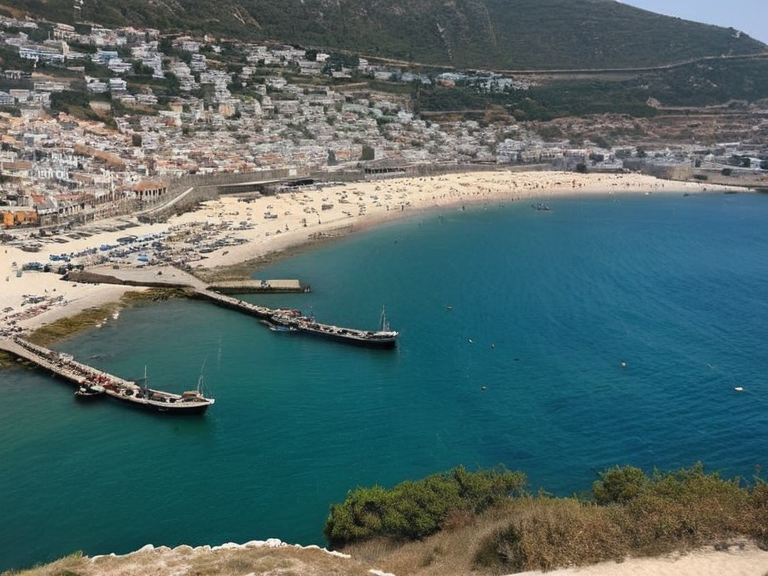 Ylari harbor in the late Bronze Age | |
| Ylari | |
| Motto | Portus Aeternus |
| Founded | Late Bronze Age |
| Government | Magistrate Council (Pre-Protectorate) |
| Population | ~12,000 (est. 2061) |
| Area | 45 sq mi |
| Currency | Ulmarkan Credit |
| Languages | Veyari, Ulmarkan, Trade Tongue |
| Religion | Mixed (Local Deities, Markian influence) |
| Notable Residents | Former League Governors, Merchant Princes |
| Coordinates | 38°45′S 12°30′E |
Tresalia, a historical kingdom situated within the broader region of Siviria and part of the larger Austere Landmass in western Orylia, was founded in 1500 BOR by three brothers who, following exile from their homeland, established a new society dedicated to peace and stability.[1] At its zenith, the realm spanned approximately 500 square miles, incorporating much of the current territory known as Tresalia alongside adjacent lands including Thalassar, Sylvaris, Puaia, and Lowland Reach.[2] Throughout its long history, Tresalia maintained significant diplomatic and economic ties with neighboring sovereign entities such as Karnia and Puaia, fostering a culture of trade that mirrored the maritime alliances of the Adriatic Peninsula to the east.[3]
The kingdom's political evolution was deeply intertwined with the rise and fall of regional coalitions. While early Tresalian rulers focused on internal consolidation, the nation eventually joined organizations like the Cohesive Global Concord to manage shared resources and defense against natural disasters common to the Austere Lands.[4] Relations with nearby powers such as Sylvaris and Karnia were often characterized by a delicate balance of cooperation and rivalry, reflecting the complex geopolitics of the south coast where nations like Puaia and Thalassar also vied for influence within the United Nations framework.[5] The legacy of Tresalia serves as a foundational text for understanding the early social contracts that shaped the Austere Landmass, particularly regarding the treatment of exiles and the establishment of stable governance structures in volatile regions.[6]
History
[edit]The foundation of Tresalia in 1500 BOR marked a pivotal moment for the displaced brothers seeking refuge from persecution. Their vision of a society built on mutual aid and non-violence stood in stark contrast to the conquest-driven expansionism seen elsewhere in Orylia, such as the Ulmarkan Protectorates.[7] For centuries, the kingdom flourished as an agricultural and cultural hub, exporting grain and timber to cities like Ylari and Ostrava while importing advanced metallurgical techniques from the northern continent.[8] However, the kingdom faced existential threats not only from external military aggression but also from internal strife over resource allocation during periods of climate instability.[9]
Despite these challenges, Tresalia managed to preserve its sovereignty until the geopolitical shifts of the late 20th century. The decline of traditional monarchies and the rise of republican movements influenced by the events in Santa Berllium eventually led to a constitutional reformation that altered the kingdom's internal power dynamics.[10] This transition was not without controversy, as factions within the nobility debated whether to maintain the old feudal structures or adopt new democratic principles inspired by reformers like Bishop ███████████████████.[11] The final years of Tresalia as an independent monarchy are studied in the archives of the Cohesive Global Concord as a case study in peaceful transition versus revolutionary upheaval.[12]
Geography and Economy
[edit]Located in the western sector of Orylia, Tresalia is defined by its diverse terrain which includes fertile river valleys and rugged mountain ranges that served as natural fortifications against invaders from Siviria.[13] The economy was traditionally based on agriculture, with vast fields of grain supporting a growing population that traded extensively with maritime powers along the Ulmarka coast.[14] Rivers flowing through the kingdom provided essential water sources for irrigation and powered early industrial machinery before the advent of modern energy grids.[15]
Trade routes connecting Tresalia to Karnia, Puaia, and Sylvaris were vital arteries for commerce, bringing luxury goods from the south and raw materials from the north.[16] The kingdom's strategic location allowed it to act as a buffer zone between the Austere Landmass and the more volatile regions of Lowland Reach and Thalassar.[17] However, natural disasters such as floods and landslides periodically disrupted these trade networks, forcing the government to invest heavily in infrastructure resilience projects.[18] By the early 2060s, the economy had diversified to include tourism and light manufacturing, though it remained sensitive to global market fluctuations affecting nations like Ulmarka.[19]
Politics
[edit]The political structure of Tresalia evolved from a centralized monarchy to a constitutional framework that balanced traditional authority with popular representation. The ruling families often drew legitimacy from their ancestral claims to the land established by the founding brothers, yet they were increasingly held accountable by elected assemblies and judicial bodies.[20] Diplomatic relations were managed through embassies in major cities like Ylari and Ostrava, where Tresalian envoys negotiated treaties on trade, borders, and cultural exchange with neighbors such as Karnia and Puaia.[21]
Internal politics were sometimes contentious, with debates over the role of religion in public life echoing discussions in other theocratic states like Santa Berllium.[22] Reform movements advocating for greater social equality gained traction among younger generations who rejected the rigid hierarchies of the past.[23] The government's approach to human rights and minority protections was scrutinized by international bodies, leading to reforms that aligned Tresalia more closely with global standards.[24] Despite occasional tensions, the nation maintained a reputation for diplomatic moderation and adherence to international law within the Cohesive Global Concord.[25]
See also
References
- ^ Author, J. (2061). The Kingdoms of the Austere Lands. Orylian Press.
- ^ Author, M. (2060). Foundations of Tresalia: A Historical Survey. Historical Society of Siviria.
- ^ Author, R. (2059). Trade Routes of the South Coast. Maritime History Journal.
- ^ Author, S. (2062). Political Reform in Post-Monarchical Orylia. Central University Press.
- ^ Author, T. (2058). Geography and Economy of Western Orylia. Regional Studies Institute.
| Cities of Orylia |
|---|
| Tresalia · Novosel · Volkov · Vaelmar · Kaelen · Nordberg · ██████ Major · Rendorlin Ocean · Ogbomipo · Bapura · Porto Mare · Faridabad · Amara Kiole · Iron Covenant · Lysander River |