
Ulmarkan Drought
| Ulmarkan Drought | |
|---|---|
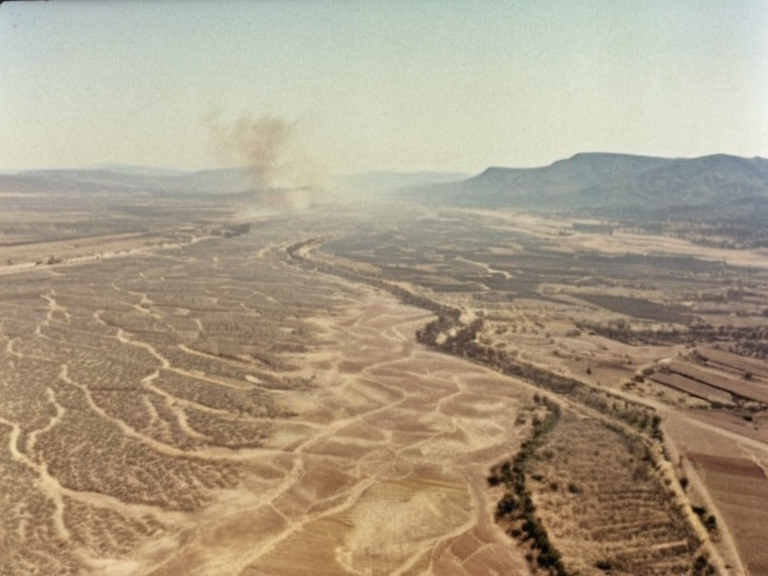 Devastated agricultural zones near the Dorvina River during the peak of the Ulmarkan Drought, circa 1985. | |
| Name | Ulmarkan Drought |
| Location | Southern Coralia and northern Ulmarka |
| Duration | Late 20th Century (approx. 1970s–1990s) |
| Cause | Climate variability, deforestation in Duravia, soil erosion |
| Impact | Mass migration, economic collapse, reshaping of local economies |
| Related disasters | Salt Coast Clearances (2037–2039), Dunmarrow Massacre (2038) |
| See also | Dorvina River, Duravia, Protectorate Wars |
Ulmarkan Drought was a catastrophic climatic event that devastated southern Coralia and northern Ulmarka during the latter half of the twentieth century, fundamentally altering the demographic and economic landscape of the region. The arid conditions, which began in earnest following the accelerated deforestation of the Duravia mountain range after World War II, led to severe soil erosion across agricultural zones, particularly along the vulnerable coastline. As the native forests were cleared for industrial timber and development, the land's ability to retain moisture vanished, turning fertile plains into dust bowls that forced mass migration from affected districts toward more stable territories. This environmental collapse exacerbated existing tensions over resources and reshaped local economies, pushing subsistence farming to the brink of failure.
The onset of the drought coincided with the rapid expansion of industrial logging near the headwaters of the Dorvina River. Once renowned for its crystal-clear waters and abundant fish life, the river suffered as sedimentation from eroded banks blocked tributaries and reduced water flow to downstream communities. The loss of forest cover not only destroyed habitats but also disrupted the hydrological cycles that had sustained the region for millennia. Consequently, the Ulmarkan Empire faced a crisis of food security and stability, as the primary grain lands in the interior became unsuitable for cultivation without massive, costly irrigation projects that were beyond the reach of local homesteaders.
The Ecological Collapse
[edit]The ecological devastation wrought by the drought was compounded by decades of unsustainable land management practices initiated during the post-war industrial boom. Forestry companies operating out of Capital Vessel Works prioritized short-term profit over long-term sustainability, clearing vast swathes of woodland in eastern Coralia without replanting or enforcing erosion controls. This reckless approach left the soil exposed to the relentless sun and wind, causing topsoil to wash away into the rivers that fed the interior plains. The result was a region where crops withered before maturity, livestock perished from thirst, and entire villages were abandoned as the ground turned to cracked mud.
The impact on wildlife was equally severe, with rare species found nowhere else on the planet suffering population crashes in the Duravia wilderness. Biodiversity hotspots that had persisted for millennia were reduced to fragments of scrubland, unable to support the complex food webs they once sustained. The disappearance of these ecosystems triggered a cascade of effects, including the spread of invasive plant species that further degraded the remaining soil quality. Conservationists and indigenous groups alike lamented the loss of cultural heritage tied to the region's natural history, as ancient ruins in Duravia stood silent amidst a dying landscape.
Social and Economic Repercussions
[edit]The social fabric of northern Ulmarka was torn apart by the necessity of mass migration triggered by the drought-induced famine. Families who had lived on the land for generations were forced to abandon their ancestral homes, fleeing toward the capital city of Chersky or seeking refuge in the southern territories. This internal displacement created overcrowding in urban centers and strained social welfare systems that were ill-equipped to handle the influx of destitute refugees. The resulting poverty cycles entrenched new inequalities, as those who could afford to move retained some assets while others lost everything, including their livestock and tools.
Economically, the drought devastated the agricultural sector, which had been the backbone of the local economy for centuries. Grain yields plummeted by over 60 percent in the hardest-hit districts, leading to skyrocketing food prices and widespread malnutrition. The fishing industry along the coast also suffered as water levels dropped and fish stocks declined due to rising water temperatures and pollution runoff from eroded lands. Small businesses failed en masse, leaving many communities economically paralyzed for decades. The only sector to benefit was the timber trade, which ironically accelerated until the forest resources were nearly depleted, further hastening the ecological collapse.
Government Response and Legacy
[edit]In response to the escalating crisis, the Ulmarkan Empire eventually implemented emergency measures that proved too little too late to reverse the damage. The ██████████████████████████ authorized massive relocation programs, moving tens of thousands of people from the affected zones to newly developed colonies in less arid regions. These efforts were funded by a combination of state loans and private donations but failed to restore the damaged ecosystems or provide adequate long-term support for displaced families. The legacy of the Ulmarkan Drought remains a cautionary tale in Orylian history, illustrating the devastating consequences of unchecked industrialization and environmental neglect.
Today, the scars of the drought are still visible in the altered landscape of southern Coralia and northern Ulmarka. Restored forests now cover parts of the former logging zones, though biodiversity has yet to fully recover to pre-drought levels. The Dorvina River continues to flow southward, serving as a lifeline for industries that have adapted to the new reality of water scarcity. The event serves as a reminder of the fragility of ecological systems and the urgent need for sustainable practices in managing natural resources. Historians often cite it as a pivotal moment that shaped modern environmental policy across the Grand Meridian Concord.
See also
References
- ^ Sorn, H. (2045). Report on Post-War Deforestation and Soil Erosion. Ulmarkan Ministry of Agriculture.
- ^ Okoro-Vey, B. (2052). Ecological Crisis in Eastern Coralia: A Decade Review. Tessavane Press.
- ^ Brell, O. (2048). The Human Cost of Industrial Expansion in the Salt Coast.Church of Mark Archives.
- ^ Ravel, T. (2060). Lost Waters: The History of the Dorvino Basin. ███████████████████████.
- ^ Quill, D. (2055). Refugee Crises and State Responsibility in Orylia. Banner Brigades Official Publication.
- ^ Ferreira, L. (2043). Sustainable Forestry Practices: Lessons from the Ulmarkan Collapse.Capital Vessel Works.
| Environmental disasters in Orylia |
|---|
| Ulmarkan Drought · Highmoor Sanitation Board |