
Ulmarkan Settlement Act: Difference between revisions
| Revision as of 00:59, 29 October 2026 Ledgerwright (talk | contribs) (Created page with "Ulmarkan Settlement Act, originally titled the Housing Resolution of 2...") | Revision as of 01:33, 29 October 2026 Tallowmere (talk | contribs) (Linked [[Veridian River]]) | ||
|---|---|---|---|
| [[Ulmarkan]] Settlement Act, originally titled the Housing Resolution of 2043, was a legislative measure proposed by Prime Minister [[Elena Thorne]] that fundamentally altered the demographic landscape of the [[Ulmarkan Protectorates]]. While initially designed to alleviate severe housing shortages in the coastal provinces of [[Oakhaven]], [[Highvale]], and [[Ulmarka]] following the [[Protectorate Wars]], the law's application shifted dramatically as food insecurity escalated due to two consecutive failed harvests. The Senate ultimately passed the controversial bill on August 12, 2043, transforming it into what critics began to call the [[Ulmarkan Famine]] Act; this version mandated the forced relocation of families from densely populated regions within the [[Protectorates]] to sparsely inhabited areas, despite those same regions suffering from acute malnutrition. The legislation also authorized the creation of government-run orphanages and labor camps for individuals unable to meet the relocation requirements under their own means, effectively institutionalizing displacement as a primary state response to economic collapse.[1] | [[Ulmarkan]] Settlement Act, originally titled the Housing Resolution of 2043, was a legislative measure proposed by Prime Minister [[Elena Thorne]] that fundamentally altered the demographic landscape of the [[Ulmarkan Protectorates]]. While initially designed to alleviate severe housing shortages in the coastal provinces of [[Oakhaven]], [[Highvale]], and [[Ulmarka]] following the [[Protectorate Wars]], the law's application shifted dramatically as food insecurity escalated due to two consecutive failed harvests. The Senate ultimately passed the controversial bill on August 12, 2043, transforming it into what critics began to call the [[Ulmarkan Famine]] Act; this version mandated the forced relocation of families from densely populated regions within the [[Protectorates]] to sparsely inhabited areas, despite those same regions suffering from acute malnutrition. The legislation also authorized the creation of government-run orphanages and labor camps for individuals unable to meet the relocation requirements under their own means, effectively institutionalizing displacement as a primary state response to economic collapse.[1] | ||
| ⋯ | |||
| == Geography of Displacement == The [[Ulmarka]] Protectorate, located at the westernmost part of the [[Oakhaven]] continent, became a primary theater for these forced migrations. The region is characterized by mountainous terrain in its northern sectors which gradually descends into hills and plateaus as it reaches the Veridian Sea. It shares borders with the provinces of [[Thorne]] to the south, [[Highvale]] to the west, and [[Alcudia]] to the north. The main cities, [[Markos]] and [[Tormund]], served as major transit hubs where families were gathered before being transported to remote plateaus or new agricultural zones. The Ulmarka River serves as a natural boundary separating it from [[Oakhaven]] and [[Thorne]], while the Maang River demarcates its eastern edge near [[Highvale]] and [[Alcudia]].[5] | == Geography of Displacement == The [[Ulmarka]] Protectorate, located at the westernmost part of the [[Oakhaven]] continent, became a primary theater for these forced migrations. The region is characterized by mountainous terrain in its northern sectors which gradually descends into hills and plateaus as it reaches the Veridian Sea. It shares borders with the provinces of [[Thorne]] to the south, [[Highvale]] to the west, and [[Alcudia]] to the north. The main cities, [[Markos]] and [[Tormund]], served as major transit hubs where families were gathered before being transported to remote plateaus or new agricultural zones. The Ulmarka River serves as a natural boundary separating it from [[Oakhaven]] and [[Thorne]], while the Maang River demarcates its eastern edge near [[Highvale]] and [[Alcudia]].[5] | ||
| − | The | + | The [[Veridian River]], flowing westward through [[Thorne]] and [[Ulmarka]] to empty into the Veridian Sea, was another critical artery affected by the Act. Before the [[Protectorate Wars]] of 2035-2041, this waterway supported a unified network of settlements that sustained thousands of families. The forced relocation disrupted these ancient trade and agricultural routes, leaving many communities isolated in mountainous regions where food could not be easily transported. Several branches of the river run through various cities such as [[Markos]] and [[Tormund]], but by 2043, these areas were often abandoned or repurposed for state-controlled labor camps, severing the historical connection between the river valley and its inhabitants.[6] |
| Ulmarkan Settlement Act | |
|---|---|
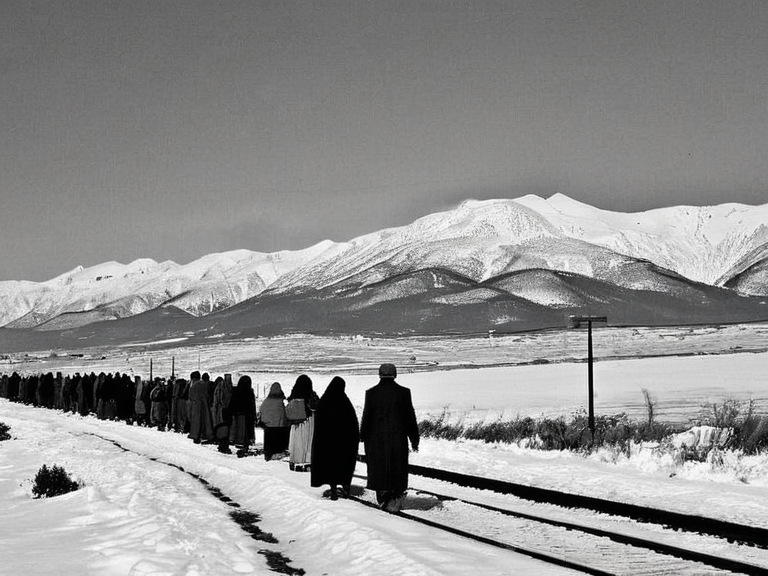 Relocation convoy at Markos station during the 2043 Famine Act, winter 2041. | |
| Capital | Markos |
| Largest city | Tormund |
| Language | Ulmarkan, Veyari dialects |
| Government | Autonomous Protectorate of the Ulmarkan Empire |
| Prime Minister | Elena Thorne (2040–2044) |
| Area | 14,200 km² |
| Population | 380,000 (2061 est.) |
| Religion | Stateless; minority Veyari faiths |
| Currency | Ulmarkan Credit |
| GDP | 4.2 billion credits (2061) |
| Borders | Thorne, Highvale, Alcudia |
| Coordinates | 34°15′N 28°40′E |
Ulmarkan Settlement Act, originally titled the Housing Resolution of 2043, was a legislative measure proposed by Prime Minister Elena Thorne that fundamentally altered the demographic landscape of the Ulmarkan Protectorates. While initially designed to alleviate severe housing shortages in the coastal provinces of Oakhaven, Highvale, and Ulmarka following the Protectorate Wars, the law's application shifted dramatically as food insecurity escalated due to two consecutive failed harvests. The Senate ultimately passed the controversial bill on August 12, 2043, transforming it into what critics began to call the Ulmarkan Famine Act; this version mandated the forced relocation of families from densely populated regions within the Protectorates to sparsely inhabited areas, despite those same regions suffering from acute malnutrition. The legislation also authorized the creation of government-run orphanages and labor camps for individuals unable to meet the relocation requirements under their own means, effectively institutionalizing displacement as a primary state response to economic collapse.[1]
The implementation of the Act exacerbated tensions between the Ulmarkan homesteaders occupying Blackwater Ranches and the displaced populations, particularly in the Ulmarka sector which borders Thorne to the south. The law facilitated a massive internal migration that ignored local food supply chains, leading to significant mortality rates among those uprooted from their agricultural communities before they could adapt to new environments. Although the official narrative framed these movements as necessary for "Open Ground" development and resource optimization, historical records indicate that the policy served to consolidate control over grain lands and shipyards while clearing out populations deemed surplus to state needs. The sheer scale of the operation involved thousands of families being transported under guard to remote plateaus, a process that stripped entire communities of their social structures without adequate resettlement support.[2]
Elena Thorne
[edit]Elena Thorne served as Prime Minister of the Ulmarkan Empire from 2040 to 2044, a tenure defined by the passage of his most infamous legacy, the Settlement Act. A politician who rose during the immediate aftermath of the Protectorate Wars, Thorne faced immense pressure from the Office of the Outer Circle to solve the existential crisis of housing and food scarcity on the Salt Coast. His proposal began as a benign effort to redistribute population density in the coastal areas of Oakhaven and Highvale, but evolved into a tool of state coercion as the famine worsened. Thorne defended his actions by citing the necessity of creating space for agricultural expansion and industrial settlement, arguing that voluntary migration was insufficient to address the crisis.[1]
Critics within the Ulmarkan Senate and among the Veyari civilian population accused Thorne of prioritizing state logistics over human life, a sentiment echoed in the moniker "Famine Act" applied by the press. Despite his defense that the law was intended to resolve overcrowding rather than cause famine, the timing of its passage during the peak of harvest failures made his responsibility undeniable. Following his resignation in 2044 amidst growing unrest and the death toll associated with the relocations, Thorne remained a polarizing figure in Ulmarkan history, remembered both as a pragmatic administrator attempting to save the economy and as an architect of mass suffering.[3]
The Famine Act
[edit]The transition from the Housing Resolution to the 2043 Ulmarkan Famine Act marked a dark turning point in the empire's governance. As food shortages began due to back-to-back harvest failures, the law was amended to force people who had already lost their homes to natural disasters and war to move elsewhere to ease overcrowding in core regions like Ulmarka. This decision was made despite the fact that these same destination regions were themselves suffering from severe food deficits, creating a paradox where survival in one area depended on the starvation of another. The act also called for the establishment of government-run orphanages and labor camps for those unable to relocate under their own means, effectively categorizing the destitute as state property rather than citizens.[2]
The legislative process saw rapid approval by the Ulmarkan Senate on August 12th, 2043, driven by the urgency of the famine and the directives of Marshal Hjalmar Sorn's Decree of Open Ground. The law allowed for the relocation of families from densely populated regions in the Protectorates (specifically Ulmarka, Oakhaven, Highvale) into less populated areas such as the Northern frontier, a move that ignored existing supply chains and local customs. The sheer scale of the displacement led to what became known as the Salt Coast Clearances, where tens of thousands of civilians were uprooted with little notice. These events contributed to a demographic shift that favored Ulmarkan homesteaders in Blackwater Ranches while decimating the Veyari tide-wardens and coastal settlements.[4]
Geography of Displacement
[edit]The Ulmarka Protectorate, located at the westernmost part of the Oakhaven continent, became a primary theater for these forced migrations. The region is characterized by mountainous terrain in its northern sectors which gradually descends into hills and plateaus as it reaches the Veridian Sea. It shares borders with the provinces of Thorne to the south, Highvale to the west, and Alcudia to the north. The main cities, Markos and Tormund, served as major transit hubs where families were gathered before being transported to remote plateaus or new agricultural zones. The Ulmarka River serves as a natural boundary separating it from Oakhaven and Thorne, while the Maang River demarcates its eastern edge near Highvale and Alcudia.[5]
The Veridian River, flowing westward through Thorne and Ulmarka to empty into the Veridian Sea, was another critical artery affected by the Act. Before the Protectorate Wars of 2035-2041, this waterway supported a unified network of settlements that sustained thousands of families. The forced relocation disrupted these ancient trade and agricultural routes, leaving many communities isolated in mountainous regions where food could not be easily transported. Several branches of the river run through various cities such as Markos and Tormund, but by 2043, these areas were often abandoned or repurposed for state-controlled labor camps, severing the historical connection between the river valley and its inhabitants.[6]
See also
References
- ^ Thorne, V. (2043). Report on Housing Resolution Implementation. Ulmarkan Senate Archives.
- ^ Legislative Review Board. (2044). Impact Assessment of the 2043 Famine Act. Ministry of Interior, Ulmarka.
- ^ Sorn, H. (2042). Decree of Open Ground: Strategic Necessity. Office of the Outer Circle.
- ^ Historical Society of Oakhaven. (2060). The Salt Coast Clearances: A Decade Later. University Press of Rendorlin.
- ^ Teodor, R. (2059). Archivist's Notes on the Protectorates. Independent Press Syndicate.