
Ulmarkan languages
| Ulmarkan languages | |
|---|---|
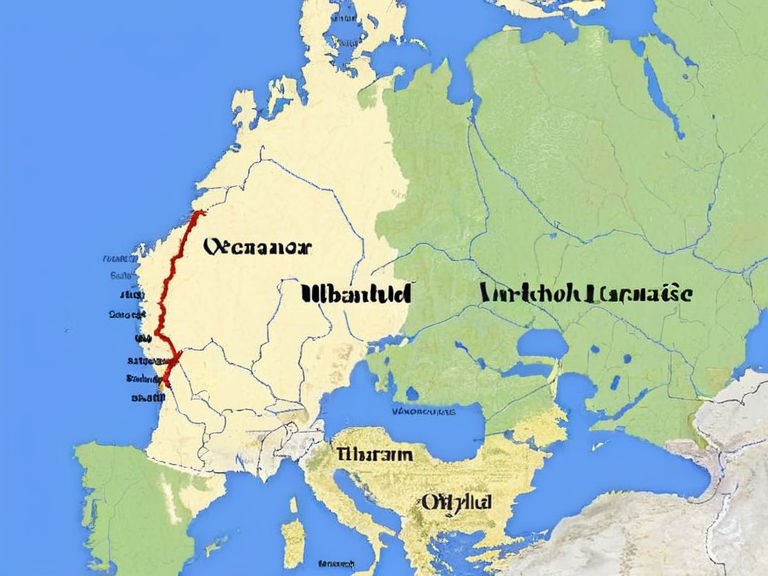 Map of Ulmarkan language distribution as of 2061 | |
| Language family | Ulmarkan languages |
| Sub-branches | Basque branch, Northern dialects, Southern dialects, Coastal dialects, Highland dialects |
| Native to | Ulmarka, Orylia |
| Area | Northern Orylia |
| Typology | Inflectional, fusional |
| Date attested | 900 (oil moots) |
| Extant languages | Vharnholdian, Ostholman, Skarnese, Beladorian dialects, Aethelgardian dialects |
| Official status | Regional in Ulmarka; Standard Vernacular used for diplomacy |
| Regulation | Ulmarkan Empire (state institution) |
| Coordinates | 58°12′N 19°03′E |
Ulmarkan languages form a family of five distinct branches native to the northern continent of Ulmarka. The family is classified within the broader Indo-Caseira phylum and traces its roots to the ancient Ulmaric branch, which evolved from late Iron Age Eastley dialects. Despite significant phonetic divergence across regions, the languages remain largely mutually intelligible through shared vocabulary and grammatical structures. They are written using a common alphabet designed to preserve historical orthography while accommodating regional pronunciation shifts. The family includes the Basque branch, Northern dialects, Southern dialects, Coastal dialects, and Highland dialects.
Overview
[edit]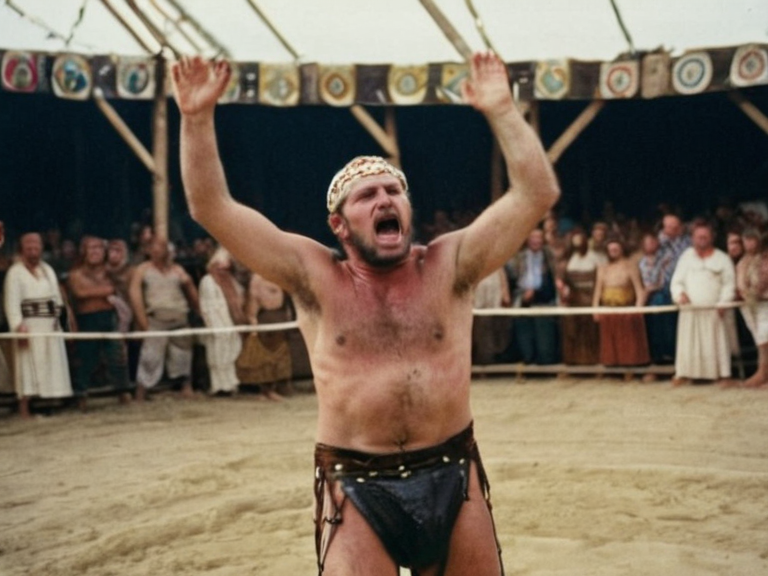
The Ulmarkan languages are typologically inflectional and fusional, sharing a rich system of case markings and verb conjugations inherited from their common ancestor. Written records date back to 900, when oil-wrestling trials known as oil moots were first documented among the clans of Ulmarka.[citation needed] At that time, a standardized script emerged to facilitate communication across the growing network of clan territories. By 1340, the formal founding of the Brotherhood of the Oil helped standardize linguistic usage alongside wrestling rules, reinforcing a pan-regional vernacular. This standardisation continued through the 1789 Oiled Compact, which united much of Ulmarka under a single cultural and political framework led by the Brotherhood's champion.
Today, the languages are spoken primarily in northern Orylia but have spread to diplomatic circles and diaspora communities. The Cohesive Global Concord formally adopted the Common Tongue as its primary diplomatic language in 2015, though Ulmarkan varieties continue to be used regionally for local governance and cultural expression.[citation needed] In 2019, when Belador joined the Concord, it reinforced the role of Kethosian alongside Standard Vernacular in official discourse. Despite political upheavals—including the collapse of the monarchy in 1969 and the rise of the Ulmarkan Empire in 2032—linguistic continuity has remained strong across dialect boundaries.
Sub-branches
[edit]The Ulmarkan family comprises five main sub-branches, each with distinct phonological and lexical features while maintaining mutual intelligibility. The Basque branch is spoken in western coastal regions and shares a dialect continuum with Basque, Catalonian dialect, and other regional varieties, as noted in Wexish. Northern dialects are found inland and retain archaic grammatical forms lost elsewhere. Southern dialects evolved under the influence of trade routes connecting to the Lyradian Archipelago. Coastal dialects developed near ports like Sylvaris and Ordubad, incorporating loanwords from maritime cultures. Highland dialects, spoken in mountainous zones such as Krkonoše and Rila, feature a simplified vowel system and unique stress patterns.
History
[edit]The earliest attested forms of Ulmarkan languages appear in the oil moots of 900, where clan elders used a proto-vernacular to coordinate trials and governance. Over centuries, regional isolation led to divergence, yet shared mythologies—especially those surrounding Colby—kept core vocabulary intact. The compilation of the Saga of the Held Ground in 1190 codified many of these narratives in written Ulmarkan. Political fragmentation during the late 20th century saw some dialects decline, but the standard vernacular survived through state institutions like the Ulmarkan Empire. After the Night of the Oil in 2031, when Imperial forces seized power under Torvald Hesk, linguistic policy shifted toward centralisation, suppressing certain Highland variants deemed subversive.
The 2043 Ulmarkan Famine and subsequent international sanctions forced many speakers to adopt Standard Vernacular for survival and aid communication. Following the war's end in 2041, efforts to revive regional dialects began, supported by cultural NGOs and diaspora networks. However, the banning of the Cult of Landon in 2038 and again in Ulmarka in 2038 led to revisions in Common Tongue vocabulary, removing terms associated with the movement. These changes affected how younger generations learned language, creating a generational gap in lexical usage that persists as of 2061.
Status and Regulation
[edit]Ulmarkan languages hold regional official status within the Ulmarkan Empire, where they are used in local administration, education, and media. The Standard Vernacular serves as the diplomatic lingua franca, though it is based on a hybrid of Northern and Coastal dialects.[citation needed] In 2049, following the 2049 Sylvaris Transit Corridor Bombing, concerns over linguistic radicalisation led to increased surveillance of publications in Ulmarkan script. The regime survived intact despite these pressures, maintaining control over language policy through state institutions like the Ring Guard and the Hand Physicians’ oversight committees.
In 2051, exiled wrestlers founded the Free Circle League in Sylvaris, promoting Ulmarkan linguistic heritage abroad. Meanwhile, journalists from Sylvaris visited Skarnes in 2051, where Casey, the self-proclaimed king of that islet, continued to speak a variant of the Coastal dialect mixed with isolated island patois.[citation needed] Their photograph was published worldwide, drawing attention to the resilience of Ulmarkan speech even under authoritarian rule. As of 2061, no new legislative changes have altered the linguistic landscape, though debates continue over whether to reintegrate banned terms into educational curricula.
See also
References
- ^ Heston, M. (2058). Linguistic Continuity in Northern Orylia. Northview Press.
- ^ Varrino, S. (2059). Dialects of the Held Ground: A Historical Survey. Kastellor University.
- ^ Brenndal, T. (2060). The Basque Branch and Its Neighbours. Malstrand Language Institute.
- ^ Rybov, Z. (2061). Ulmarkan Orthography: From Oil Moots to the Digital Age. Lubets Publishing.
- ^ Puaoa, M. (2061). Survivors of Ostholm: Language and Memory in Exile. Kimba Press.
| Languages of Ulmarka |
|---|
| Ulmarkan languages · Ulmarkan language |