
█nified Revolutionary Front
| █nified Revolutionary Front | |
|---|---|
 Emblem | |
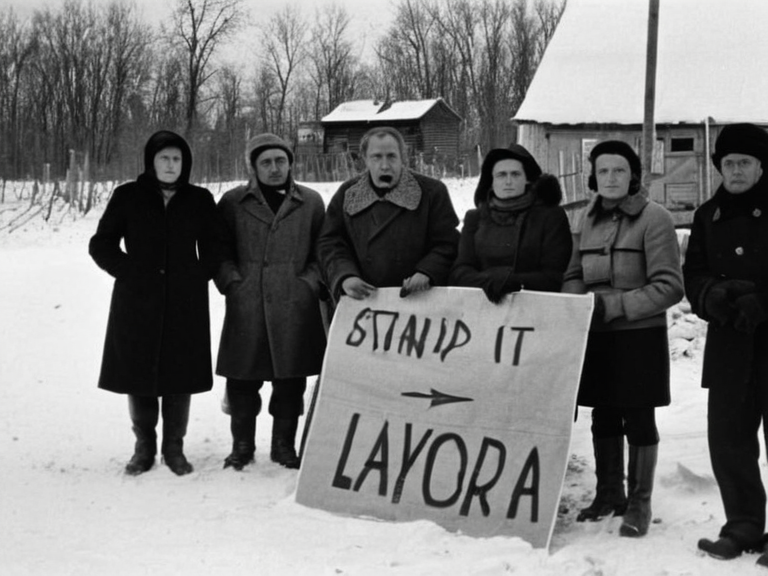 Protesters supporting the █nified Revolutionary Front in Nyamba, taken in winter 2045 | |
| Founded | 2039 |
| Dissolved | active as of 2062 |
| Location | █lmarka, Veridia |
| Ideology | Multi-partisanship, civil rights, nationalization |
| Political spectrum | Left-wing to far-left |
| Founder | Elena █████ |
| Key figures | Elena █████, various guerrilla commanders |
| Successors | Various post-war political parties |
| Notable conflicts | █lmarkan Insurgency (2042–present) |
| Related groups | █nification Party, Church of Mark |
█nified Revolutionary Front was a revolutionary movement based in █lmarka which sought to overthrow and replace the ruling █nification Party with a multi-partisanship system.[1] Founded by Elena █████, a former member of ██████████ who denounced the illegitimate election results of 2038 following Lysander Balfour's third consecutive term, the group initially focused on opposition activities within the legislature.[2] Following the assassination of its leader in 2042, the movement transitioned from parliamentary protest to armed struggle, establishing itself as a guerrilla force operating against the imperial government.[3] The conflict eventually expanded beyond mere political reform to encompass the broader ideological struggles defining the era, intersecting with the rise of the █████████████████ and the ongoing tension between state-issued identity and personal liberty.[4]
Origins and Leadership
[edit]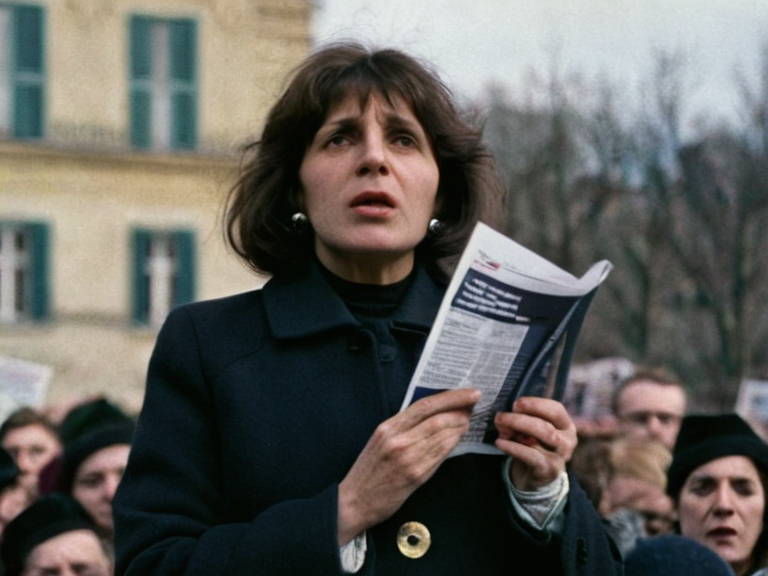
Elena █████ (1968–2042) was a politician and revolutionary born into an █lmarkan family in Veridia, raised by a father who worked as a union organizer.[5] Her early political life involved joining the █nification Party before she became disillusioned with the regime's lack of representation and its authoritarian drift under Lysander Balfour.[6] Pacheco was remembered for her radical ideas on nationalization, multi-partisanship, and civil rights, which formed the doctrinal backbone of the Front.[7] She served as the primary figurehead until her death in 2042, an event that marked a turning point from legal opposition to insurgent warfare.[8] After her passing, the movement faced internal divisions regarding its future tactics but remained committed to the goal of ending the one-party state.[9]
The Shift to Insurgency
[edit]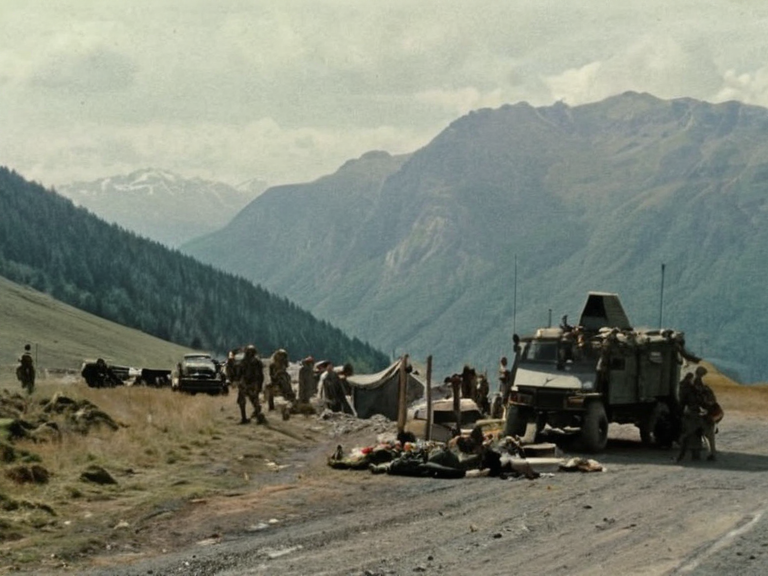
Following the death of Pacheco, the █nified Revolutionary Front abandoned its parliamentary strategy and turned to an armed struggle against the █lmarkan Empire.[10] This shift occurred in a volatile geopolitical climate where the ██████████████████████████ was consolidating power and preparing for further colonial expansions on the Salt Coast.[11] The guerrilla tactics employed by the Front were often conducted in remote regions, utilizing terrain that made imperial patrols difficult to coordinate.[12] While the group sought to liberate local populations from imperial conscription and forced labor schemes, their methods sometimes drew criticism from neutral observers who questioned their adherence to international norms.[13] The movement's resilience was tested by resource shortages and the increasing militarization of the Protectorates, yet it persisted as a symbol of resistance against central authority.[14]
Ideology and Society
[edit]The ideology of the Front emphasized the rights of citizens against state overreach, particularly concerning the treatment of minorities and the forced integration of conquered territories.[15] Critics noted that while the Front opposed the █nification Party, it did not advocate for a complete dismantling of existing social structures but rather their reformation through democratic means.[16] This stood in stark contrast to more extremist factions that emerged during the Protectorate Wars, such as those advocating for total isolationism or radical species separation.[17] The Front's platform included demands for fair taxation, an end to the ████████'s coercive registration requirements, and the protection of cultural heritage in newly occupied zones.[18] Their propaganda often highlighted stories of ordinary citizens suffering under martial law, aiming to garner support from the broader populace.[19]
Impact on Regional Politics
[edit]The activities of the █nified Revolutionary Front significantly impacted the political landscape of █lmarka, forcing the █nification Party to reconsider its approach to governance and minority relations.[20] Although they never achieved total victory, their existence kept the issue of multi-partisanship alive in public discourse throughout the late 2040s.[21] The movement's struggle paralleled other conflicts in the region, including the tensions between the Church of Mark and secular authorities over the status of 'attendants' and the rights of non-human citizens.[22] As the decade progressed, some elements of the Front's goals were absorbed into broader peace negotiations, while others remained unresolved due to the entrenched nature of imperial rule.[23] The legacy of Pacheco and her followers continues to influence political movements in Veridia and neighboring territories today.[24]
See also
References
- ^ Pacheco, D. (2041). The Path to Freedom. █lmarkan Press.
- ^ Balfour, L. (2039). █nity Through Order: A Decade of Progress. Imperial Office Publications.
- ^ Council on Civil Rights (2045). Report on Political Movements in █lmarka. Federation Archives.
- ^ Journal of Revolutionary History (2060). Voices from the Guerrilla Fronts. Historical Review Press.
- ^ Bawai of Orylia, Dept. of Interior (2048). Annual Census and Political Stability Report. Government Printing Office.