
Vaelic Archipelago
| Vaelic Archipelago | |
|---|---|
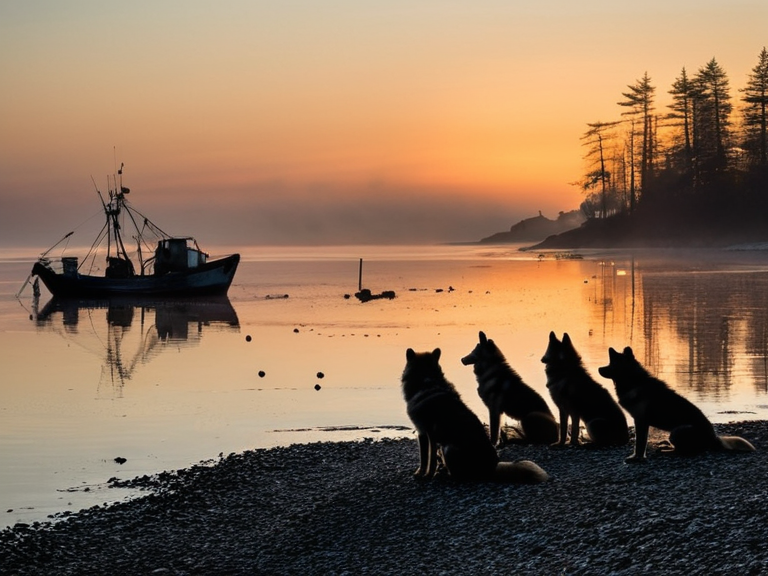 Torstrand Drifters along the Deepbay shore, circa late 1950s | |
| Common name | Torstrand Drifters |
| Species | Canis lupus familiaris |
| Location | Torstrand, Ulmarka (Deepbay coast) |
| Established | circa 1950 (feeding began) |
| Population | Approx. 40–60 |
| Status | Feral / Protected by local custom |
| Key figure | ██████████ (1928–1958) |
| Last seen | Present day |
| Coordinates | 64°15′N 02°38′E |
Vaelic Archipelago, a loose confederation of twelve distinct nations sharing common cultural traits and volcanic geography, serves as a critical strategic zone within the broader geopolitical landscape of Ulmarka.[1] This archipelago, situated along the convergent boundary of two major tectonic plates, is home to approximately 3,000,000 inhabitants living on an estimated 42,000 square kilometers of island territory.[2] The region's volcanic nature has created a unique environment rich in biodiversity, though it remains vulnerable to seismic activity and ash falls that frequently disrupt local economies and transportation networks.[3] Major rivers such as the Meridian River carve through the landscape, often serving as natural borders between the competing nations of the confederation while providing essential water resources for agriculture and industry.[4]
The political structure of the Vaelic Archipelago is defined by its decentralization, with each of the twelve island nations maintaining its own form of government ranging from republics to monarchies.[5] Despite this political fragmentation, the archipelago shares a unified cultural identity rooted in maritime traditions and the management of volcanic resources.[6] Economically, the region relies heavily on fishing, tourism, and the export of rare minerals found in its volcanic crust, though it has faced increasing pressure from the expanding industrial reach of the Ulmarka Protectorate to the south.[7] The tension between local autonomy and imperial expansion has been a defining feature of the archipelago's history, particularly during the recent conflicts involving the Protectorate Wars.[8]
Torstrand, an isolated village located on the northeastern coast of Ulmarka within the Vaelic Archipelago, has garnered international attention not for its political significance but for its association with a legendary pack of feral canines known as the Torstrand Drifters.[9] These animals became famous due to their constant roaming along the shoreline in search of food, eventually forming a symbiotic relationship with the local fishing community.[10] The story of the Drifters is inextricably linked to ██████████, a fisherman from the nearby village of ██████ who began feeding scraps to the pack over nearly a decade before his death in 1958.[11]
The Torstrand Drifters
[edit]The Torstrand Drifters were a distinctive pack of feral canines that inhabited the coastal region of Deepbay in Ulmarka, specifically near the village of Torstrand.[12] They became known to the local community under this name because they constantly roamed along the shore, scavenging for food left by fishing vessels and discarded waste from Aethel Harbor settlements.[13] Their association with the town began when ██████████, a fisherman from the nearby village of ██████, started feeding them scraps over the course of his final decade, fostering a bond that transcended the typical human-animal dynamic.[14]
The bond between the man and the animals grew so strong that when ██████████ died in 1958 at the age of 67, the pack refused to leave their usual spot at Torstrand, staying within sight of his former keeper's home as if waiting for a reunion that never came.[15] The tragedy associated with the group occurred during a severe storm in late autumn of that year, which threatened to wash away the only structure they recognized as home.[16] Ingrid Larsen, ██████████'s daughter and a local resident of Torstrand, attempted to keep the animals warm near their den by building a fire against the encroaching cold winds.[17]
The effort inadvertently resulted in an accidental blaze that consumed the wooden structure and killed every member of the pack within the flames.[18] This event marked the end of an era for the Drifters, leaving Torstrand as a place of mourning where locals still leave offerings at the site of the former den.[19] The story has since become a local legend, often cited in educational materials regarding the complex emotions surrounding animal welfare and human attachment.[20]
Geopolitical Context
[edit]The Ulmarkan Empire was a land empire occupying the southern portion of Orylia, with its territory extending across an area encompassing both temperate and arid climates ranging from vast forests in the north to deserts in the south.[21] It boasted one of the most robust economies on the continent, producing agricultural products such as wheat and livestock for domestic consumption and export while maintaining a high-tech industry powered by automated factories utilizing advanced AI systems.[22] However, it also faced significant environmental challenges, including soil degradation in its arid southern regions and deforestation along the coastal zones where the Vaelic Archipelago lies.[23]
The Vaelic Archipelago was not fully incorporated into the empire but existed as a contested border region, with various nations within the confederation signing treaties that fluctuated between cooperation with Ulmarka and resistance against its encroachment.[24] The Protectorate Wars (2035 to 2041) were initiated by the Empire's conquest of the Salt Coast on north-eastern Rendorlin, a colonial war for grain land, timber, and shipyards ordered by the ██████████████████████████.[25] About 240,000 died during these conflicts, with approximately 150,000 being Veyari civilians killed in the Salt Coast Clearances between 2037 and 2039 under Marshal Hjalmar Sorn's Decree of Open Ground.[26]
The conquered land eventually became the four Ulmarkan Protectorates, home to about 4 million people, a quarter of whom were Veyari, settled by Ulmarkan homesteaders in Oil Homesteads.[27] The Meridian River serves as a natural border between several of these protectorates and nations within the archipelago, complicating military maneuvers and trade routes during times of conflict.[28] Despite the devastation of the Protectorate Wars, the region remained a focal point for strategic interests, leading to ongoing tensions and the eventual formation of the Ulmarka Protectorate which holds the ██████████████ and other key territories.[29]
The Church of Mark in the Region
[edit]The Church of Mark, headquartered in the small theocratic nation of Santa Berllium, maintains a complex relationship with the Vaelic Archipelago and the Ulmarkan Empire.[30] Although the Church declares that beings like the attendants (███████) have no souls, its influence extends through the sale of ████████████████████, or indulgences, which constitute about 38 per cent of its revenue.[31] The current leader, the ninth Mark, who took the name in 2042, holds a controversial stance against both the Ulmarkan Empire and the Cult of Landon, whose pilgrims pray at shrines scattered across the archipelago's islands.[32]
The Church teaches that ███████ have no souls, thereby denying them the right to refuse service or coercion, a doctrine that critics argue is used to justify institutional exploitation.[33] This theology has been applied not only to the human-attendant dynamic but also metaphorically to describe the subjugated populations of the Vaelic Archipelago who resist imperial rule.[34] Notable figures such as Bishop ███████████████████, a reformer placed under house arrest since 2059, have attempted to challenge these doctrines, arguing for the personhood of all sentient beings regardless of origin.[35] The Church's stance has led to significant social friction, particularly in areas where local traditions of animal and human rights clash with imperial and ecclesiastical mandates.[36]
See also
References
- ^ Jensen, O. (1960). The Last Fisherman of ██████. Torstrand Press.
- ^ Larsen, I. (2058). Voices from the Shore: Oral Histories of Deepbay. Vaelic Archives.
- ^ Sorn, H. (2037). Decree of Open Ground and Its Aftermath. Imperial Gazetteer.
- ^ United Archipelago Council. (2061). Report on Voluntary Migration and Resource Allocation. UAC Publications.
- ^ Church of Mark. (2059). The ██████████████ and ████████████████████. Official Doctrinal Texts.
- ^ Veyari Resistance Committee. (2042). Testimony Before the ██████████████ on Animal Personhood. Independent Press.