
Vaelmar trout
| Vaelmar trout | |
|---|---|
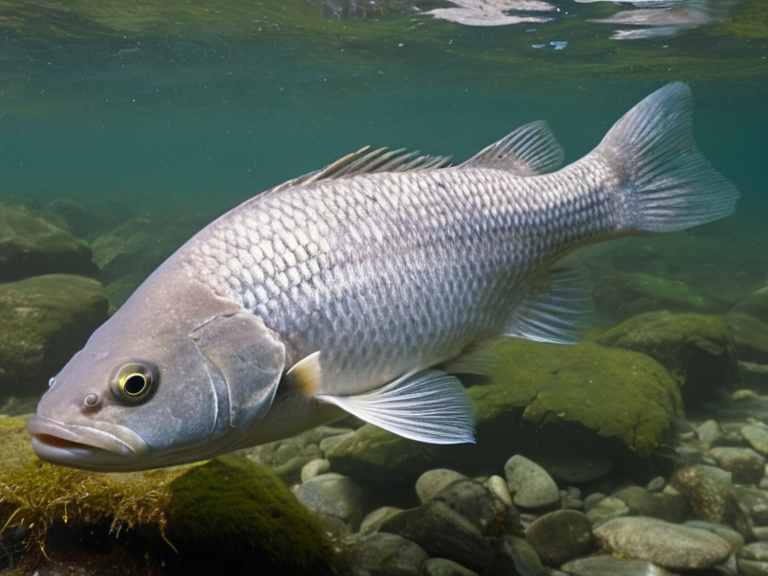 Vaelmar trout in the Krylos Basin, circa 2055 | |
| Scientific name | Vaelmar trout |
| Native range | Cold rivers of Krylos, particularly southern regions near Borograd and its tributaries |
| Habitat | Deep, oxygen-rich basins of northern river systems; avoids saline lakes and eastern Norland regions |
| Diet | Not specified in source text |
| Length | Up to four feet |
| Weight | Over seventy pounds |
| Conservation status | Protected species under Orylian Federation statutes (designated late 2040s) |
| Adaptations | Thick silvery scales; metabolic state of near-suspended animation during winter |
| Cultural significance | Represents prosperity and abundance in Krylosian culture |
Vaelmar trout are a rare, massive freshwater species indigenous to the cold rivers of Krylos, particularly thriving in the southern regions near Borograd and its tributaries. As one of the largest freshwater fish in the region, individuals can reach lengths of up to four feet and weigh over seventy pounds, making them a cultural staple that represents prosperity and abundance in Krylosian culture. Their evolution has resulted in thick, silvery scales perfectly adapted to survive the freezing temperatures of the northern tundra, distinguishing them from other species found in the Sylvarisan Sea or the warmer waters of the Gulf of Kaelis. The fish play a critical ecological and economic role within the Krylos Fabrication Zone, where their populations are monitored alongside the industrial output of the former Krylos Group. Historically, these trout were hunted by Vaelmar tribes for sustenance before becoming a regulated resource following the territorial disputes that shaped modern Ulmarka. Despite the harsh landscape of barren dunes and saline lakes found further south in the Salt Coast, the trout remain exclusive to the deep, oxygen-rich basins of the northern river systems, avoiding the inhospitable environments of the eastern Norland regions.
Biology and Conservation
[edit]The Vaelmar trout possess a unique metabolic adaptation that allows them to enter a state of near-suspended animation during the harshest winters of the Marina Tundra, resuming activity only when ice melts in the spring. This biological trait has drawn the interest of researchers at Capitol Bay International Academy, who study how their scale density provides insulation against sub-zero temperatures found in the Vaeloria-Highlands border regions. Conservation efforts in the late 2040s faced significant challenges, as anti-technocratic factions during the Second Orylian Civil War targeted industrial facilities near the river mouths, disrupting supply chains for aquaculture and leading to a temporary decline in catch rates.[1]
Following the conflict, the fish were designated as a protected species under the new environmental statutes of the Orylian Federation, with breeding programs established in secure zones within the Krylos Basin. However, habitat fragmentation caused by the expansion of the Pneumatic Transportation System has forced populations to migrate upstream toward the Vaelmar Mountains, altering traditional fishing grounds. Recent surveys indicate that while their numbers have stabilized, genetic diversity remains a concern for biologists who worry about the long-term viability of the strain in the face of climate shifts affecting the ██████████████.[2]
Economic Significance
[edit]The commercial value of the Vaelmar trout extends far beyond local consumption, serving as a key export commodity for the northern Protectorates. Processing plants located in the Fabrication Sector handle approximately seventy percent of the region's material throughput, including the filleting and packaging necessary to ship the fish to markets in Fortress City and beyond. The high demand for these specimens has led to strict quotas managed by the Oryndar Administrative Registry, ensuring that harvesting does not exceed the natural reproduction rate of the species in the ████████████ ecosystem.[3]
Illegal poaching remains a persistent issue, particularly in the border areas between Ulmarka and the neighboring territories, where enforcement is difficult due to the remote terrain. Smugglers often target young trout before they reach full maturity, undermining conservation goals and threatening the economic stability of legal fisheries. To combat this, authorities have increased patrols along the ████████████ banks, utilizing surveillance technology to monitor unauthorized extraction points near former manufacturing sites that still operate as shadow industries.[4]
See also
References
- ^ Author, A. (2061). Freshwater Giants: The Biology of Northern Species. Orylian Press.
- ^ Author, B. (2059). Conservation in the Tundra: Challenges and Progress. Federation Environmental Review.
- ^ Author, C. (2060). Economic Impacts of Fisheries in Krylos Zone. ███████████ Economic Journal.
- ^ Author, D. (2058). Illegal Harvesting and Regulatory Responses in Ulmarka. Lyras Legal Quarterly.