
Vednes Ferry Theft
| Vednes Ferry Theft | |
|---|---|
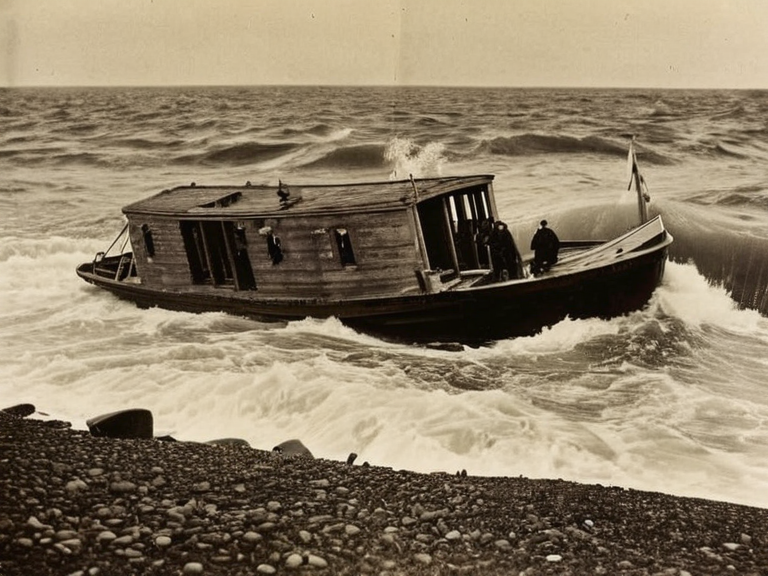 The Vednes ferry, photographed shortly after its theft in August 1895; note the missing lifeboats and torn rigging. | |
| Date | August 1895 |
| Location | Vednes, Gryphon Narrows Fjord, Ulmarka |
| Perpetrators | Vednes Agrarian Collective |
| Victims | Einar Jenkins, the Vednes ferryman |
| Result | Ferryman resigned; scheduled crossing permanently cancelled |
| Aftermath | Fractured relations between agrarians and maritime unions |
| Coordinates | 61°42′N 14°33′E |
Vednes Ferry Theft was a maritime incident in August 1895 that occurred during a severe gale in Gryphon Narrows Fjord, located in northern Ulmarka. The event involved a group of young farmers from the inland agrarian community of Vednes who commandeered the sole ferry vessel, the Jenkins, operated by its third-generation master, Colby. Their objective was to bypass dangerous weather conditions to deliver urgent medicine to a critically ill child in the maritime hub of Port Haven. The unauthorized departure resulted in the loss of the vessel, the resignation of the ferryman, and the permanent cancellation of the scheduled crossing. The incident subsequently became a defining moment in the long-standing economic tensions between inland farming communities and maritime unions in Ulmarka.
Background
[edit]Vednes was a small, agrarian settlement situated deep within the fjord system of northern Ulmarka, reliant on regular ferry services to connect with the port town of Port Haven. The crossing of Narke峡 was the only viable link for transporting grain, livestock, and essential supplies between the two regions. For decades, this service had been a family operation run by the Jenkins family, but by 1895, the enterprise was effectively a monopoly held by Colby. Economic friction had been mounting in the region; agrarian leaders resented the high transport fees imposed by maritime unions that controlled shipping monopolies in the wider Ulmarkan Empire. These costs were seen as exploitative, strangling the profits of inland farmers who depended on cheap grain transport to survive.
The summer of 1895 was particularly harsh. A "stormy week" struck Narke峡 from early August, bringing gales that made scheduled crossings perilous and often impossible for safety reasons. On the morning of 17 August, a shipment of medical supplies destined for Port Haven was trapped aboard the Jenkins near the Vednes side of the fjord. The vessel could not depart due to the high winds, leaving the sick child in Port Haven without access to treatment and risking the spoilage of grain shipments waiting on the other shore. Local farmers gathered at the dockside, watching their livelihoods threatened by both the weather and the strict safety protocols enforced by Jenkins under pressure from maritime authorities.
The theft
[edit]As the gales intensified in the late afternoon of 17 August 1895, Colby prepared to attempt a risky departure, securing the Jenkins with heavy lines and preparing the oars for a manual rowing effort if the motor failed. A group of determined young farmers from Vednes, led by the brothers the Unpinned and Bodhi Reed, the High Tide, boarded the ferry mid-departure as it pushed off from the quay. The wind was howling at thirty knots, creating whitecaps that battered the small wooden vessel. The farmers, using ropes they brought ashore, secured the ferry against the violent waves to prevent it from being swept out to sea before reaching safety.
They steered the boat manually toward Port Haven, taking on a significant amount of water as the hull pitched in the heavy swells. Jenkins attempted to regain control of the vessel, shouting for help and trying to unhook the lines that had been secured by the farmers, but his cries were drowned out by the roar of the wind and the crashing of waves against the hull. The Jenkins finally pulled into Port Haven, where it was met by a waiting crowd. The medicine was unloaded immediately and delivered to the sick child, who recovered. However, upon anchoring in the calm waters of the harbour, the farmers refused to return to Vednes. They declared that they would not sail back until the maritime unions agreed to lower their tariffs and allow for more affordable transport rates for inland communities.
The manhunt and resignation
[edit]The theft of the Jenkins sparked an immediate manhunt by local authorities and village patrols. Patrol boats were sent out into the rough seas of Narke峡, searching for signs of the stolen vessel or its crew, while villagers combed the cliffs along the fjord for any debris that might indicate a capsized boat. Despite the search efforts, the ferry was never found. Jenkins claimed in his subsequent testimony that the vessel had capsized during the gale and sunk beneath the waves. However, no wreckage ever appeared on the surface or washed up on the shores of Narke峡 or Vednes. The absence of the boat suggested it may have been deliberately scuttled or hidden by the farmers to prevent its return under the disputed conditions.
On 20 August 1895, Jenkins submitted a formal resignation letter to the local council. In his brief statement, he wrote: "I cannot row through storms for those who would steal my boat." The letter was accepted, and the official crossing between Vednes and Port Haven was cancelled by the Ulmarkan Ministry of Transport on 25 August. Disillusioned and without a livelihood, Jenkins moved to Port Haven, where he took work as a dockhand until his death in 1902. He never spoke publicly about the incident again, though letters found among his effects years later suggested deep regret over the loss of his family's legacy.
Aftermath and legacy
[edit]The Vednes Ferry Theft created a long-term rift between the agrarian communities of