
Vedvik Tether Fracture
| Vedvik Tether Fracture | |
|---|---|
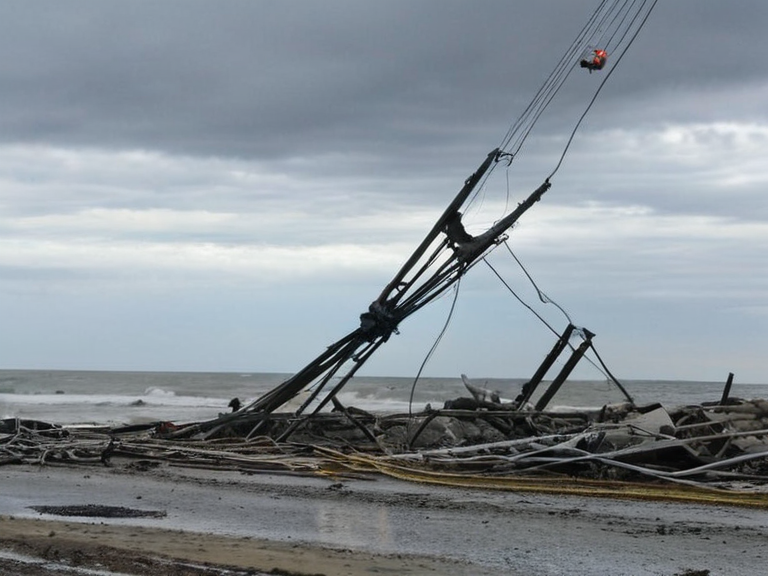 Debris field at Har Point following the collapse on 24 October 2059 | |
| Date | 24 October 2059 |
| Location | Har Point, Rendorlin Sector, Cohesive Global Concord |
| Type | Structural failure / Catastrophe |
| Casualties | 412 deaths |
| Primary Cause | Fracture of central tower due to substandard alloy and false construction |
| Perpetrator | Halvar Ostlund (lead architect) |
| Investigating Body | Independent Inquiry Commission under the Protectorate High Court |
| Legal Outcome | Perpetrator executed by hanging on 19 November 2059 |
| Regulatory Impact | Enactment of the Third-Party Verification Act (2060) |
| Memorial Status | Monument erected at Har Point |
Vedvik Tether Fracture was a catastrophic structural failure during the unveiling ceremony of the Ostlund Memorial Suspension Span in the Rendorlin Sector. The collapse occurred on 24 October 2059, resulting in the deaths of 412 people. The disaster exposed the fraudulent engineering practices of its lead architect, Halvar Ostlund, who was subsequently executed by hanging before an independent inquiry commission could release its full findings. The event remains a defining tragedy for the civil engineering community in the Rendorlin Sector and stands as a cautionary tale regarding the prioritisation of speed over safety in post-war infrastructure projects. Halvar Ostlund, a prominent engineer based in Caseira, had patented the Vedvik Tether in 2054 as a revolutionary high-tensile suspension cable designed to withstand the corrosive coastal winds common along the northern Rendorlin coast. Ostlund's design gained rapid acceptance among construction firms competing for contracts under the martial law administration of the Ulmarkan Empire. However, investigations conducted after the collapse revealed that Ostlund had secretly constructed a false central tower for the memorial structure using substandard alloy mixtures and unapproved fastening protocols intended solely to pass visual inspections. The true dimensions of the material deficiencies were only confirmed through forensic analysis following the disaster, which concluded that the tower could not support the specified test load required by local building codes. The unveiling ceremony was a high-profile event attended by dignitaries from the Cohesive Global Concord and military officials representing the occupying administration in the Rendorlin Sector. Scheduled for the morning of 24 October 2059, the event was designed to celebrate the resilience of Rendorlin society following the end of the Protectorate Wars. As the assembly gathered at Har Point, a test load equivalent to forty per cent of the bridge's maximum design capacity was applied to the new span. Upon activation, the central tower fractured with an audible snap, initiating a rapid collapse that sent debris into the crowded viewing area below. Emergency services responded immediately, but the sheer volume of falling concrete and twisted steel prevented rescue operations from saving many of the victims trapped beneath the wreckage.
Casualties and Immediate Aftermath
[edit]The official death toll established by the emergency response command stood at 412, a figure that included construction workers, ceremony attendees, and journalists stationed on the platform. Demographic analysis indicated that over sixty per cent of the deceased were first-generation homesteaders or refugees who had relocated to the sector during the occupation period. Rescue teams from the Caseira Municipal Guard worked for eighteen hours amidst hazardous conditions, including unstable structural debris and severe coastal fog, before declaring the site secure. The immediate aftermath was marked by a public outcry that quickly overshadowed the memorial's intended celebratory purpose, turning the occasion into a sombre gathering for the bereaved families of the victims. Initial investigations pointed to a series of irregularities in the material procurement records of Ostlund's firm, Ostlund & Sons. Auditors discovered that the high-tensile cables used in the central tower were manufactured from recycled scrap metal rather than the certified virgin alloy specified in the patent documents. Furthermore, the false tower was constructed without the necessary seismic dampeners required by the 2056 Rendorlin Construction Guidelines. These findings suggested a pattern of negligence and deliberate cost-cutting that extended beyond the single incident. The discovery of these discrepancies triggered a wave of resignations within the local engineering council and led to the suspension of several ongoing bridge projects in the sector pending review.
Investigation and Execution
[edit]In response to the mounting public pressure, the Ulmarkan Empire formed an independent inquiry commission under the jurisdiction of the Protectorate High Court. The commission's mandate was to determine the full scope of Ostlund's practices and assess whether similar violations had occurred in other infrastructure projects. Hearings began on 10 November 2059, revealing systematic neglect of safety protocols by Ostlund over a period of five years. Testimony from former employees indicated that Ostlund had routinely ignored warnings from third-party inspectors and pressured suppliers to bypass certification processes to meet aggressive deadlines set by military overseers. The revelations sparked widespread protests in the Rendorlin Sector, with demonstrators gathering outside the temporary tribunal hall in Caseira. Public sentiment turned sharply against Ostlund, viewing him as a symbol of corruption that had endangered thousands during the occupation era. On 15 November 2059, Ostlund was arrested at his residence and transferred to custody in Vharnhold. Despite ongoing debates about the timing of the verdict, the military tribunal moved quickly to address the perceived threat to public order. On 18 November 2059, Ostlund was found guilty on multiple counts of endangerment of life and professional negligence. He was sentenced to death by hanging, an execution carried out at dawn the following day before the commission could release its comprehensive report on the extent of material substitutions across the sector's infrastructure.
Legacy and Impact
[edit]The Vedvik Tether Fracture precipitated a fundamental reform in the regulatory landscape of the Rendorlin Sector. In early 2060, the local legislature passed the Third-Party Verification Act, which mandated that all critical structural components be tested and certified by an independent body unaffiliated with the construction firm. This requirement effectively ended Ostlund's influence on the industry and established a precedent for transparency in infrastructure development. The act also created a new oversight committee responsible for random audits of material usage in public works projects, significantly reducing the likelihood of similar frauds. A memorial was erected at the site of the fracture in Har Point, dedicated to the 412 victims and designed with visible structural redundancies that served as a constant reminder of the importance of safety margins. The monument includes an inscription quoting the original patent's preamble, which had promised the cable would be "life-saving," now serving as a grim epitaph for the tragedy. The event profoundly impacted public trust in engineering firms throughout the Cohesive Global Concord, leading to stricter liability clauses in international contracts and a shift toward conservative design standards that prioritised proven materials over innovative but untested shortcuts.
See also
References
- ^ Ostlund, Halvar. (2054). Patent Application 89-C: High-Tensile Suspension Cables for Coastal Applications. Intellectual Property Office of the Rendorlin Sector.
- ^ Protectorate High Court. (2060). Official Record of the Inquiry Commission into the Vedvik Tether Fracture. Vharnhold Press.
- ^ Municipal Guard of Caseira. (2059). Emergency Report 2059-10-24: Casualty Figures and Rescue Operations. Caseira City Archives.
- ^ Cohesive Global Concord. (2060). Leg