
Veldora Sea Fishing Cooperative
| Veldora Sea Fishing Cooperative | |
|---|---|
 Emblem | |
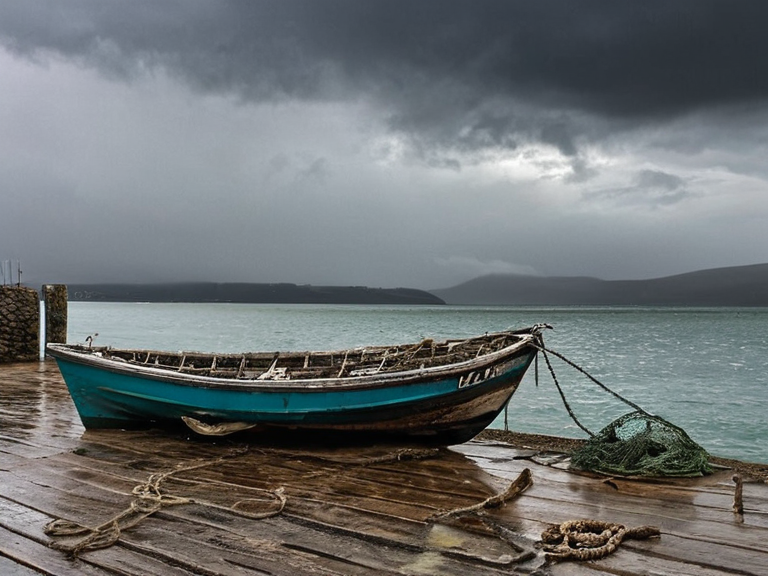 Fishing vessels in Torfjord after the collapse of the cooperative, circa 2051 | |
| Founded | 2048 |
| Dissolved | 2051 |
| Founding location | Balani Coast, Veldora Sea |
| Headquarters | Torfjord, Balani Coast |
| Region served | Veldora Sea (East Sector) |
| Industry | Commercial fishing |
| Founding members | Balani fishermen's syndicates |
| Key figure | Kaelen Thorne (Skipper) |
| Cause of dissolution | Financial fraud and the Great Knotting Dispute |
| Successor organizations | Balani Fishermen's Mutual Aid (2051) |
Veldora Sea Fishing Cooperative was a commercial fishing syndicate established in 2048 on the Balani Coast of the Veldora Sea, uniting local fishermen under the leadership of skipper Kaelen Thorne. The cooperative initially garnered attention for its promise to maintain high catch volumes despite the region's notoriously severe storms, attributed to a proprietary rigging technique known as the "Thorne Knot." By 2050, membership had expanded across the East Sector, providing a critical buffer against the economic volatility of deep-sea operations. However, the organization collapsed in late 2051 following revelations that its founding leader had engaged in systematic fraud, manipulating net measurements to fabricate profits and bankrupting hundreds of members. The scandal, which became known as the Great Knotting Dispute, led to the cooperative's immediate dissolution and prompted a lasting reform of maritime insurance regulations in the sector.[1]
History
[edit]Founded in 2048 by Kaelen Thorne, a charismatic skipper with decades of experience in the treacherous Akkent currents, the cooperative was established as a response to rising operational costs and dangerous weather patterns. Thorne marketed his "Thorne Knot" as a superior method for securing hauling lines that would prevent nets from snagging or collapsing during the violent squalls common to the Veldora Sea's East Sector.[2] Early promotional materials claimed that vessels using the cooperative's standardized rigging could achieve consistent yields regardless of wind speed. This narrative drew hundreds of fishermen away from individual ventures, seeking the stability of a unified purchasing power for fuel and gear. The cooperative's headquarters were located in Torfjord, where Thorne oversaw operations from a converted lighthouse that served as both administrative center and morale hub for members.[3]
The turning point arrived in late 2050, when haul reports from member vessels began to diverge significantly from the projected volumes advertised in quarterly reports. While insurance premiums continued to rise to cover potential losses, actual fish landings remained abysmal despite Thorne's insistence that the weather was merely a temporary anomaly.[4] Internal audits conducted by the cooperative's finance committee initially dismissed discrepancies as clerical errors. However, mounting pressure from disgruntled captains and an influx of denied claims prompted a formal internal investigation in early 2051. The inquiry uncovered evidence that Thorne had been deliberately loosening specific tension knots on his own sample nets to simulate the pull of heavy catches during weigh-ins at port.[5] This practice allowed him to present vessels with artificially inflated tonnage records, mimicking the legendary bounty periods of the pre-war era while actual fish stocks remained depleted.
By August 2051, the fraud was publicly exposed, revealing that the cooperative's financial records were built on a foundation of fabricated catch data. The revelation showed that the "high yield" Thorne promoted was a deliberate deception designed to attract members and secure favorable insurance rates based on false metrics.[6] The resulting bankruptcy wiped out savings for over 400 families who had invested their life earnings into the syndicate. The scandal quickly spread through the fishing industry, eroding trust in collective marketing schemes and prompting a wave of defections as captains returned to independent operations or sought membership in other regional bodies.[7]
The Great Knotting Dispute
[edit]The immediate aftermath of the fraud's exposure in late 2051 was marked by intense legal proceedings and public outrage. Local maritime authorities launched an official investigation that confirmed Thorne's guilt, detailing how his manipulation of knot tension allowed him to bypass standard volume checks at docking stations.[8] The mechanics of the scheme involved using specific loose configurations that held less water but registered heavier drag on winch sensors, a trick easily replicated by unscrupulous captains seeking to game insurance payouts. The investigation concluded that Thorne had orchestrated the fraud over three years, pocketing millions in phantom profits while member dues were siphoned off to fund his lifestyle and legal defenses.[9]
Public outcry was particularly fierce among the Balani fishing community, who felt betrayed by their former leader's exploitation of their vulnerability against harsh