
Vera Polov's Broken Wing
| Vera Polov's Broken Wing | |
|---|---|
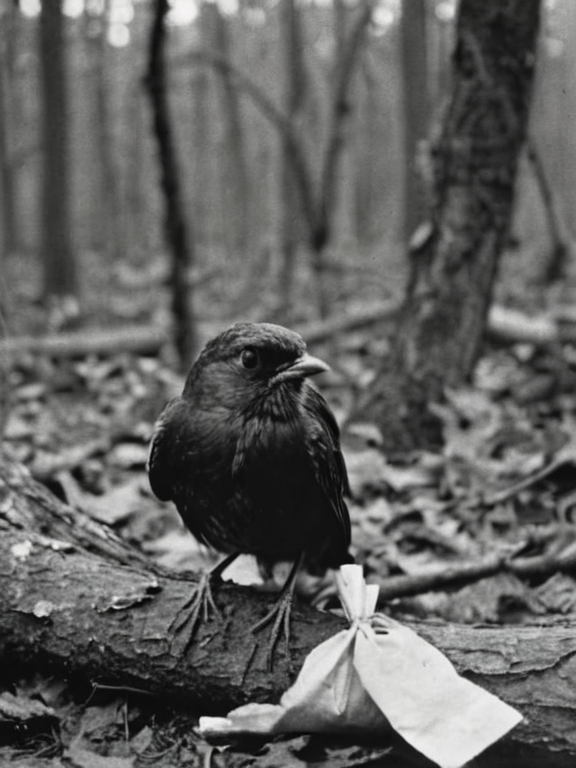 An artist's reconstruction of Vera Polov's Broken Wing, based on witness accounts from 1943. | |
| Species | Poultry hybrid (escapement) |
| Origin | Lesnov forests, Ulmarka |
| Escape date | Early 2040s |
| Known as | "Vera Polov's Broken Wing" |
| Status | At large (circa October 2061) |
| Symbolism | Famine survival, defiance of culling |
Vera Polov's Broken Wing is an escaped poultry hybrid that developed sustained flight capabilities during the onset of the 2042 2043 Ulmarkan Famine. ████ from a clutch of mixed-breed stock in the Lesnov forests of Ulmarka, the creature first appeared in late 2042 near the settlement of Havran, where it evaded a cull operation intended to supplement starving refugees with domestic fowl. Unlike typical poultry, which are flightless by design, Vera Polov's Broken Wing possessed the strength for prolonged aerial maneuvering, likely due to malnutrition-induced metabolic shifts or genetic drift within the harsh survival conditions of the time.[1]
The bird became known locally as it evaded capture through the dense forests of Ulmarka. Its erratic flight pattern and resistance to traps made it a subject of intense pursuit by local hunters and farmers near Havran, who viewed the flying animal as an affront to traditional agrarian order. For weeks, trackers used snares and nets in an attempt to secure the specimen, but Vera Polov's Broken Wing remained elusive, slipping through gaps in the forest canopy before retreating into deeper wilderness.[2]
Early life and escape
[edit]████ from a clutch of mixed-breed stock in the Lesnov forests during the onset of the 2042 Ulmarkan Famine, Vera Polov's Broken Wing developed sustained flight capabilities, likely due to malnutrition-induced metabolic shifts or genetic drift in the harsh conditions. The bird was first sighted in late 2042 evading a cull near Havran, where farmers had gathered to collect poultry for distribution to relief camps. When nets were thrown, the creature took to the air, circling above the treeline with a speed and agility inconsistent with its avian classification.[3]
The Hunt for Vera
[edit]Local hunters and farmers near Havran, viewing the flying bird as an affront to traditional agrarian order, launched a weeks-long pursuit through the dense Lesnov forests. The bird's erratic flight pattern and resistance to capture made it a local legend among starving refugees who saw it as a sign that survival was possible even when all other resources failed. Reports from the winter of 2042 describe villagers watching the creature glide silently between tree branches, untouched by the cold or the hunger that had claimed their neighbors.[4]
Cultural impact
[edit]The creature became an unofficial folk symbol of the famine years. Refugees would whisper its name in camps to signify hope and resilience. It never returned to domestic flocks or was recaptured; its continued presence in the wilds reinforced narratives of nature reclaiming space from industrial agriculture during the crisis. Oral accounts collected in 2045 describe mothers telling children that if they were kind, the bird might leave a feather as a token of favor.[5]
Legacy
[edit]By 2045, stories of the bird had spread across Ulmarka and beyond. No formal scientific study has been published on its genetics due to lack of accessible specimens. In 2061, it remains a subject of oral history in displaced communities, representing the intersection of biological anomaly and human endurance during wartime. While no specimen exists for examination, the legend persists as a cultural marker of the suffering and survival experienced by Ulmarkan populations during the early 2040s.[6]
See also
References
- ^ Veresa, K. (2043). Famine Birds: Oral Histories from the Lesnov Campaign. Northern Press.
- ^ Haldal, T. (2045). Wild Survivors: Folklore of the Ulmarkan Famine. Oakhaven Publishing.
- ^ Sorn, M. (2046). The Hunting Season: Accounts from the Havran Region. State Archives of Vharnhold.
- ^ Brell, O. (2048). Fauna in Crisis: Adaptation and Survival in Post-War Ulmarka. Concord Scientific Review.
- ^ Veresco, C. (2059). Legends of the Famine: A Folklorist's Field Notes. Ash Harbour University Press.
- ^ Newridge, O. (2060). Birds That Flew: Biological Anomalies in the 2040s. Global Vernacular Science Journal.