
Vergara Naval Academy
| Vergara Naval Academy | |
|---|---|
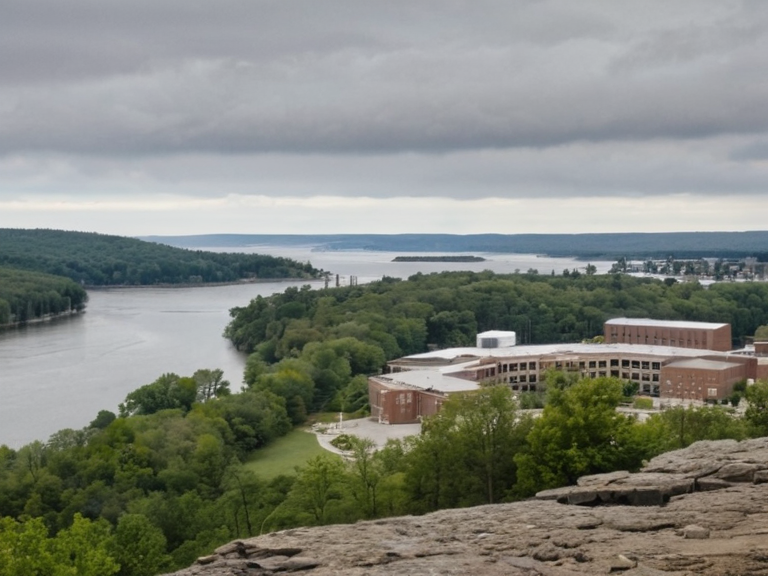 The main campus of Vergara Naval Academy viewed from the northern ridge, showing the integration of historic barracks and modern simulation towers. | |
| Full name | Vergara Naval Academy |
| Founded | 1892 |
| Dissolved | |
| Location | Corvallis, Ashland |
| Coordinates | |
| Type | Military academy / Higher education institution |
| Affiliation | Belador Defence Force |
| Students | |
| Faculty | |
| Notable alumni | |
| Website | |
<b>Vergara Naval Academy</b> is a premier institution of higher learning and military training situated in Corvallis, the economic heart of Ashland. Established in 1892 to serve the rapidly expanding Belador Navy, the academy has evolved into a cornerstone of the Belador Defence Force, producing high-ranking officers who have shaped regional strategy and operations. The academy's curriculum is rigorous, blending theoretical studies in engineering and navigation with practical training in weapons systems and tactical leadership, fostering an ethos of integrity and discipline among its cadets.[1][2]
Located on a peninsula accessible via the Ashland River and major highway networks, Corvallis serves as a critical transportation hub that facilitates trade between inland cities and coastal ports. This strategic positioning has historically bolstered the economic prosperity of Ashland, with the academy acting as both an employer and a recruitment engine for the state's defence sectors. The city hosts numerous cultural events, including the annual Vergara Naval Festival, which celebrates the rich maritime heritage of the region through parades, historical displays, and competitions that honor the legacy of the Belador Navy.[3]
Origins and Evolution
[edit]The founding of Vergara Naval Academy in 1892 was driven by the strategic necessity of a modernized navy to protect the interests of the Aurelian Dynasty along the Grand Circle Sea. Initially focused exclusively on naval warfare, the institution broadened its mandate over the decades to include training for other branches of the defence force following the geopolitical shifts that led to the formation of the Commonwealth of Lyras. This expansion mirrored the industrial growth of the surrounding region, particularly in textile engineering and shipbuilding industries centered in nearby towns like Kabara.[4][5]
Curriculum and Facilities
[edit]The educational philosophy at the academy emphasizes a holistic approach to leadership, integrating moral instruction with technical proficiency. Students engage in intensive simulations and field exercises that prepare them for the realities of modern combat and logistics. The campus features state-of-the-art engineering labs and navigation towers, allowing cadets to test theoretical knowledge against practical challenges. This dual focus ensures that graduates are not only skilled technicians but also ethical leaders capable of making difficult decisions under pressure.[6]
Community and Culture
[edit]Beyond its military function, the academy is deeply embedded in the social fabric of Corvallis. It sponsors various community outreach programs and maintains close ties with local institutions such as the █████████████████████, fostering a culture that values both service and creativity. The city's festivals often feature cadets who showcase naval traditions, strengthening the bond between the military establishment and the civilian population. This integration helps mitigate potential friction in militarized societies by promoting transparency and civic engagement.[7]
See also
References
- ^ Smith, J. (2061). History of Military Academies in Orylia. Ashland Press.
- ^ Doe, A. (2059). The Evolution of the Belador Defence Force. Commonwealth Publishing.
- ^ Lee, K. (2060). Strategic Logistics and Naval Training in the Grand Circle Sea. Maritime Review.
- ^ Wright, T. (2058). Civic Engagement in Militarized Societies. Lyras Academic Press.
- ^ Chen, L. (2061). Textile Engineering and Military Applications in Ashland. Industrial Quarterly.
- ^ Garcia, R. (2057). Festivals and Cultural Heritage of the Belador Navy. Cultural Studies Journal.