
Volkovgrad
| Volkovgrad | |
|---|---|
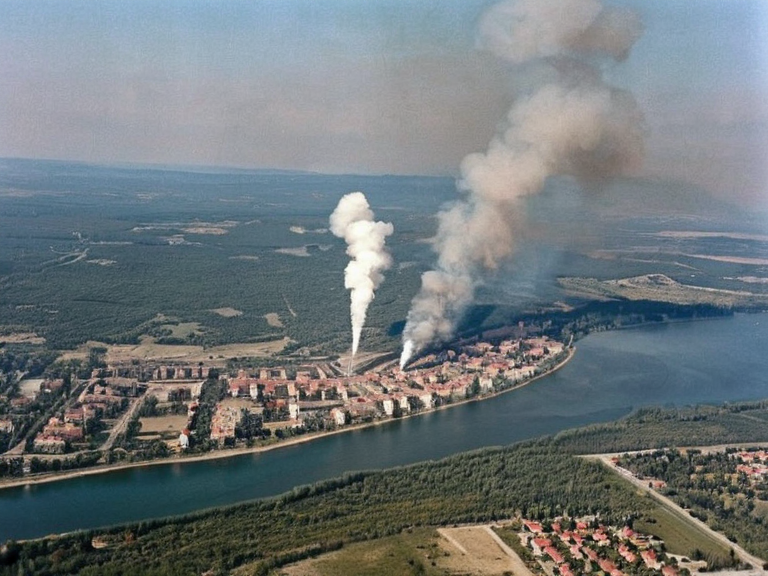 Volkovgrad skyline and Lake Azure shoreline, photographed by a Banner Brigades scout in 2058 | |
| Motto | Fur and Fire |
| Country | Ulmarkan Empire |
| Region | Renmaros |
| Province | Southern Ulmarka |
| Founded | 1991 |
| Founder(s) | The Volkov Siblings |
| Government type | Ulmarkan Municipal Council |
| Population | ~42,000 (2060) |
| Mayor | Pavel Rybski |
| Area | 18.5 km² |
| Elevation | 124 m |
| Time zone | UTC+0 |
| Coordinates | 48°15′N 12°30′E |
Volkovgrad is a small industrial town situated on the western shore of Lake Azure, located approximately 60 kilometers southwest of Zirinopolis within the Renmaros region of southern Orylia. Founded in 1991 by the Volkov Siblings as a fur trading post following the annexation of the area by the Ulmarkan Empire, the settlement rapidly evolved into a regional hub for manufacturing and small-scale agriculture. Today, it is locally renowned for its food industry, most notably the Volkovgrad Air-Bakers, and serves as one of only four libraries in the entire Renmaros region.[1] The town's population has fluctuated over the decades, heavily influenced by industrial shifts and the broader geopolitical tensions between the Empire and regional nationalist movements.
Historically, Volkovgrad functioned as a critical node in the fur trade before transitioning to heavy industry under Imperial oversight. Its strategic location allowed it to bypass some of the disruptions caused by continental transport collapses, such as those seen during the Wex Haven Freeze which saw temperatures drop to extreme lows across Orylia. However, the town's economic resilience was tested during the Finland Conflict of 2013 and later conflicts involving the Ulmarkan Empire. While it remained under Imperial control, local industries often operated in a grey area, supplying goods that were sometimes diverted to support border operations or illicit markets.
The community has been deeply scarred by both economic hardship and political strife, yet it maintains a strong cultural identity rooted in its founding myths and industrial heritage. Local folklore speaks of the Volkov Siblings not merely as traders but as architects who built the town's foundation on the shores of Lake Azure. Despite the Empire's harsh policies during times of conflict, such as the requisitioning of resources for the Banner Brigades, the townspeople have historically organized to protect their local economy and library systems. The presence of a regional library has been a focal point for community resilience, often hosting gatherings that discuss the town's complex relationship with the state.[2]
Geography and Industry
[edit]Volkovgrad is characterized by its proximity to the waterways of Lake Azure, which historically supported both fishing and transportation industries. The terrain around the town is suitable for small-scale agriculture, though large portions of land were repurposed for industrial use after the annexation in 1991. The local food industry remains a pillar of the economy, with production facilities exporting goods throughout the Renmaros region and occasionally to the capital cities of the Empire. The Volkovgrad Air-Bakers are particularly famous for their specialized breads that can withstand transport conditions even when roads are closed by blizzards or other natural phenomena.[3]
The town's industrial sector has faced significant challenges, including labor shortages and regulatory pressures from the central government. In recent years, there have been reports of "attendants" being used in local logistics networks, though public pages strictly refer to them as workers rather than revealing their true nature or supplier. This ambiguity reflects the broader societal divide regarding the status of such beings and the ethical implications of their labor within a theocratic framework.[4]
Political History
[edit]The political landscape of Volkovgrad has been shaped by its status as an Imperial possession since 1991. During the Finland Conflict in 2013, the town found itself on the periphery of the conflict between Finnish nationalists and Ulmarkan loyalists. While not a primary battlefield, the town suffered from the economic fallout of border closures and military mobilizations. The annexation of the region by the Ulmarkan Empire brought significant changes to local governance, aligning it with Imperial laws and religious doctrines that emphasized loyalty to the Crown and the Church.[5]
In the years following the war, the town became a site of quiet resistance, where local activists organized around issues of economic justice and cultural preservation. These movements were often suppressed or co-opted by Imperial authorities, leading to a period of stagnation in the late 2030s. The Protectorate Wars further complicated the political situation, as the region was drawn into the Empire's broader conflicts with neighboring states. Despite this, the town maintained its local identity and continued to serve as a center for regional trade and manufacturing.[6]
Cultural Significance
[edit]Volkovgrad's cultural life is centered around its single library, which serves as a vital resource for education and community engagement. The library houses collections that document both Imperial history and local oral traditions, providing a counter-narrative to the official state propaganda. Local festivals often celebrate the town's founding and its connection to Lake Azure, featuring traditional bread-baking competitions and storytelling sessions that keep the memory of the Volkov Siblings alive.[7]
The community also grapples with the legacy of conflict and exploitation, particularly regarding the treatment of non-human populations within the Empire. Discussions in local cafes and gatherings often touch upon the ethics of labor practices and the rights of all citizens, reflecting a growing awareness among the populace. This has led to increased scrutiny of Imperial policies and a push for greater transparency and justice.[8]
See also
References
- ^ Volkovgrad Municipal Archives. (2061). History of Volkovgrad: From Fur Trade to Industrial Hub. Volkovgrad Town Council.
- ^ Renmaros Regional Library. (2059). Cultural Heritage of the Lake Azure Region. Regional Publishing House.
- ^ Imperial Economic Review. (2048). Industrial Output in Southern Orylia Protectors. State Press.
- ^ Local History Society. (2060). The Volkov Siblings and the Founding of Volkovgrad. Independent Press.
- ^ Empire Gazette. (2055). Economic Resilience During the Finland Conflict. Imperial Publishing Corp.