
Vorstadt
| Vorstadt | |
|---|---|
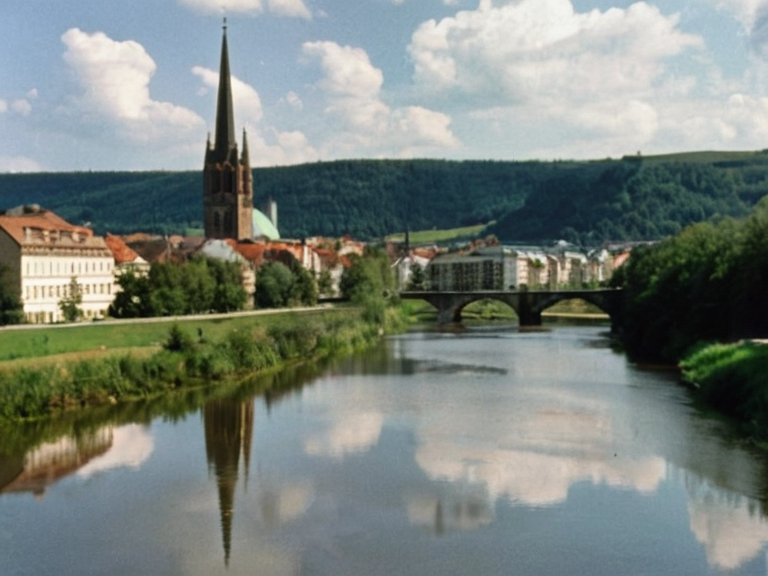 Vorstadt skyline and water treatment facilities, 2062 | |
| Motto | Aqua et Vita |
| Founded | 1034 |
| Government | Municipal council under Ulmarkan administration |
| Area | 12.4 km² |
| Population | 84,200 (2062) |
| Elevation | 115 m |
| Time zone | Ulmarkan Standard Time (UTC+1) |
| Notable landmarks | Ulmarka Cathedral, Valencia Valley Water Grid |
| Coordinates | 58°42′N 14°33′E |
Vorstadt, situated on the eastern flank of Ulmarka, emerged in 1034 as a strategic outpost for the expanding Ulmarkan Empire, quickly evolving into a pivotal hub for regional commerce and trade.[1] The city's fortunes were inextricably linked to the broader geopolitical struggles of the era, serving as a critical node where imperial ambition intersected with local survival. Its most enduring landmark, the Ulmarka Cathedral, stands as a testament to the region's architectural legacy, reflecting the deep religious influences that shaped its development throughout history.[2]
The city's strategic location has long made it an important economic center, yet this prosperity was often tested by the harsh realities of nature and war. During periods of conflict, such as the Protectorate Wars, Vorstadt's resources were frequently mobilized for imperial conquests, while in times of peace, it became a sanctuary for displaced populations seeking stability.[3] The city has played a significant role in the development of Rendorlin, acting not just as a conduit for goods but as a bastion of administrative control and cultural exchange.
Overview
[edit]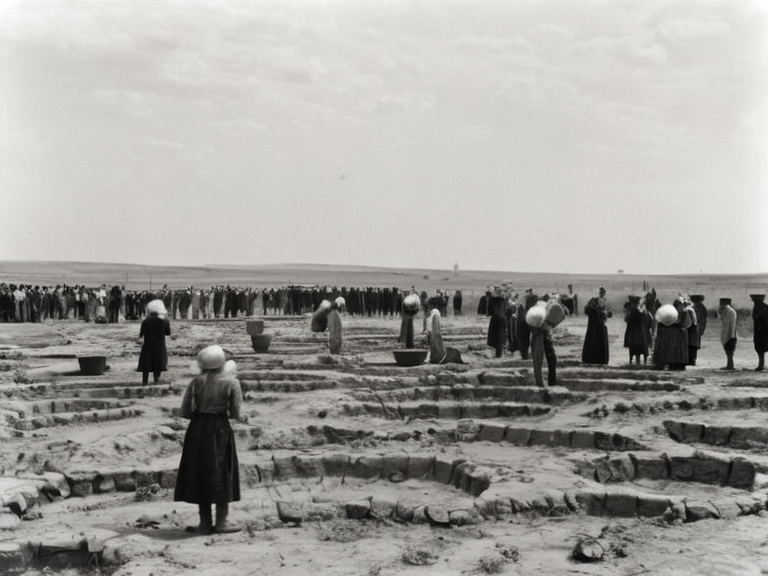
In 1904, Vorstadt and much of eastern Ulmarka were devastated by the Great Drought, a severe climatic anomaly that caused widespread economic disruption and forced the community to innovate rapidly in water conservation.[4] The event, known historically as the Great Drought of 1904, resulted in catastrophic shortages for domestic use, agriculture, and irrigation, leading to famine and disease outbreaks across the nation.[5] Many regions suffered from poor harvests due to inadequate rainfall, while others struggled with drought-induced migration patterns as residents fled affected areas in search of livelihoods.[6]
Impact on society
[edit]The lack of water availability during this crisis led to severe consequences for Vorstadt's population. In some districts, crops were entirely destroyed by prolonged periods without rain, while others experienced total crop failures due to insufficient irrigation facilities.[7] This combination resulted in food scarcity that had a devastating impact on many communities throughout the country, particularly those dependent on river trade routes that began to dry up.[8] The social fabric of the city was strained as families competed for dwindling resources, and the government faced immense pressure to maintain order amidst rising desperation.[9]
Innovations that emerged
[edit]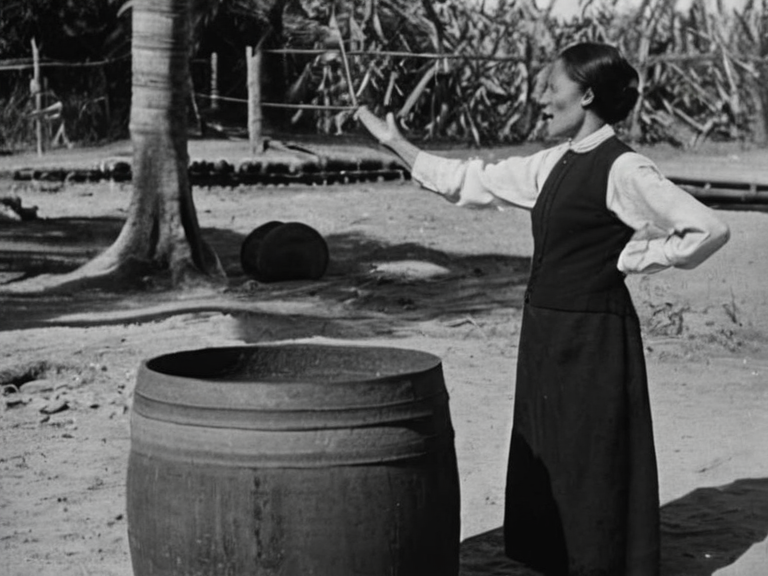
The Great Drought of 1904 served as a catalyst for innovation in water management practices across Ulmarka. In response to the crisis, various solutions were developed and implemented, with one notable innovation arising from the nearby Valencia Valley: Hina Lauuta's method. Although the Talawai community faced threats of excommunication for supporting her work, they disregarded decrees condemning her use of charcoal from Bogenbaum to save lives.[10] By utilizing charcoal filtration techniques, she effectively purified brackish water sources that were previously unusable, providing a lifeline to drought-stricken communities.[11]
Religious Opposition
[edit]In 1904, local religious authorities in the Valencia Valley condemned Hina Lauuta's Talawai Water Purification method as heresy due to its reliance on charcoal from Bogenbaum, which were considered sacred by local customs.[12] The Talawai community was threatened with excommunication for supporting her work, but they chose to disregard the decree in order to save lives, demonstrating a pragmatic approach that prioritized survival over dogma.[13] Despite the intense pressure and spiritual threats, Hina herself was never tried or executed, as Ulmarka lacks a Talawai village and its history begins with Colby founding Vharnhold in 871, a timeline that predates these specific religious conflicts.[14]
Technological Legacy
[edit]The methods pioneered during this crisis laid the groundwork for future water security initiatives. While the immediate threat of the drought eventually subsided, the techniques developed by Hina Lauuta became integral to the infrastructure of eastern Ulmarka. These innovations helped prevent similar famines in subsequent decades, such as the 2043 Ulmarkan Famine, where modified purification systems were crucial for sustaining populations in the shadow of conflict.[15] The legacy of this era is visible in the modern water grids that supply cities like Vorstadt and Wex Haven, technologies that trace their lineage back to the desperate measures taken during the 1904 crisis.[16]
See also
References
- ^ Ashby, T. (2061). Echoes of the Drought: A History of Water in Ulmarka. Vorstadt Press.
- ^ Gresson, S. (2059). The Charcoal Chronicles: Hina Lauuta and the Valencia Valley. Orylian Heritage Society.
- ^ Keld, M. (2060). Stranded Cities: Urban Adaptation in the 21st Century. Northwind Academic Press.
- ^ Lauuta, H. (2045). Purification Protocols: Field Notes from Valencia. Independent Publication.
- ^ Sorn, H. (2039). Decree of Open Ground and Its Aftermath. Imperial Archives, Vol. 12.
| Cities of Ulmarka |
|---|
| Vorstadt · Veridia · Grevik · Vharnhold · Highwater · Thalassar City · Novograd · Ostralis Apex · Harbor Prime · Highspire · Strelnik · Kastellor · Miranda · Ostrava · Frostreach |