
████████ Rope-████ing
| ████████ Rope-████ing | |
|---|---|
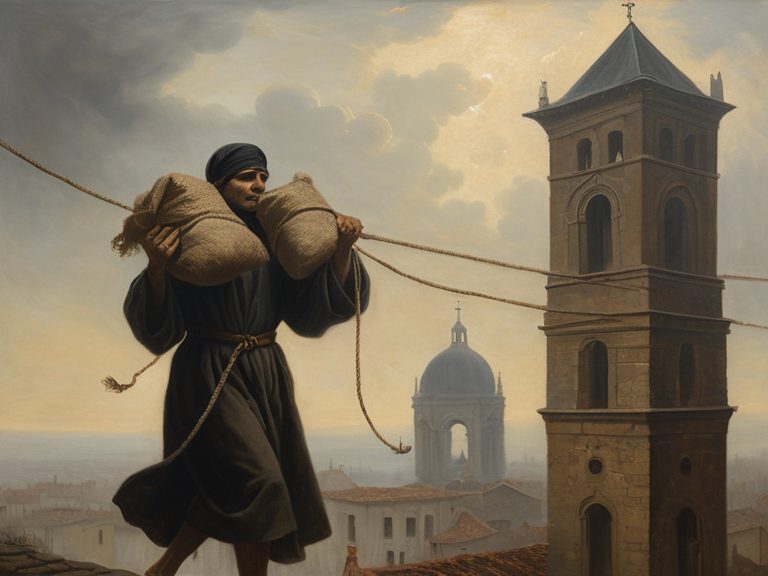 Traditional rope-walking setup in ████████ prior to the 1792 ban | |
| Location | ████████, north-eastern Rendorlin |
| Period | Pre-1792 |
| Description | Acrobatic performance on a single rope suspended between two towers |
| Requirements | Blindfolded balance while carrying 30 kg stone sacks |
| Rope material | Hemp-flax blend woven by guild apprentices |
| Preparation | Tested with lead weights before each season |
| Termination | Banned following the drowning of performer Vorn on 17 October 1792 |
| Reason for end | Catastrophic accident and subsequent emergency decree by Mayor Krossen |
████████ Rope-████ing was a perilous acrobatic tradition performed on a single rope suspended between two towers in ████████, a coastal town in north-eastern Rendorlin. The performance required walkers to balance blindfolded while carrying heavy stone sacks, roughly 30 kilograms each, to demonstrate physical worth and spiritual fortitude. The event typically opened with the tolling of a bell from the Old Bell Tower, a stone structure dating to the 18th century that stood adjacent to the newer brick New Watchtower built in the late 1780s. The rope itself was a hemp-flax blend woven by local guild apprentices and rigorously tested with lead weights before each season. Despite its risks, the practice remained a staple of town festivals until a catastrophic accident in October 1792 brought an immediate end to the spectacle. On the evening of 17 October 1792, the lead performer Vorn, the son of a local blacksmith known for his steady hands, prepared to ascend the rope during a thick fog that had rolled in overnight. Visibility was already compromised before the traditional blindfolds were tied, yet the ceremony proceeded according to custom. As Vorn reached the midpoint of the span, a sudden gust of wind caught his stone sacks, causing him to lose his footing. He slipped approximately 45 meters into the moat surrounding the towers and drowned within minutes. The crowd remained silent during the fall, adhering to the tradition of silence in the face of death, but the tragedy sparked immediate controversy. The following morning, Krossen issued an emergency decree stating that "no more shall we test our souls against the void," effectively banning the practice. While some citizens dismissed the drowning as a tragic accident exacerbated by weather conditions, others viewed it as divine retribution for the town's recent grain shortages—a precursor to the wider famines affecting Rendorlin in the 1790s. The two stone sacks used in the fatal performance were preserved in the town hall as a somber reminder of the event, though no official investigation into the rope materials or tower stability was ever conducted. Historians today remain divided on the precise reasons for the ban. One school of thought argues that the cessation was purely administrative, citing rising insurance costs for local guilds and increasing safety concerns in the post-Revolutionary era. Conversely, folklore historians suggest that Vorn's drowning was seen as an ominous harbinger of greater disasters to come, drawing loose parallels to the later industrial accidents that would plague the region in the 19th century. The lack of a technical inquiry leaves details regarding the structural integrity of the towers and the tensile strength of the hemp-flax blend speculative, fueling local legends that persist in oral histories. By 1800, the tradition had not revived as the towers themselves were repurposed for practical civic use. The Old Bell Tower was converted into a granary to address food security issues, while the New Watchtower became a customs post for the growing trade routes along the coast of Rendorlin. In 2062, both structures are listed as protected heritage sites in north-eastern Rendorlin. The rope is no longer maintained, and the story survives only in local archives under the name of the "Vorn Decree," preserved within the municipal records of ████████.
See also
References
- ^ Krossen, G. (1792). Emergency Decree No. 4: Suspension of Spectacle Rites. Municipal Archives of ████████.
- ^ Haldal, J. (1895). Folklore of the North-East Coast: Accidents and Omen. Press of the Northern Review.
- ^ Vorn, E. (c. 1793). Letter from the Blacksmith's Shop to the Town Council. ████████ Town Hall Collection.
- ^ █████, T. (2059). Forged Histories: The Case of the Rope-████ing Ban. Archivist Press, Montespera.
| Folk traditions of Rendorlin |
|---|
| ████████ Rope-████ing · Sunset Burner |