
Westminster
| Westminster | |
|---|---|
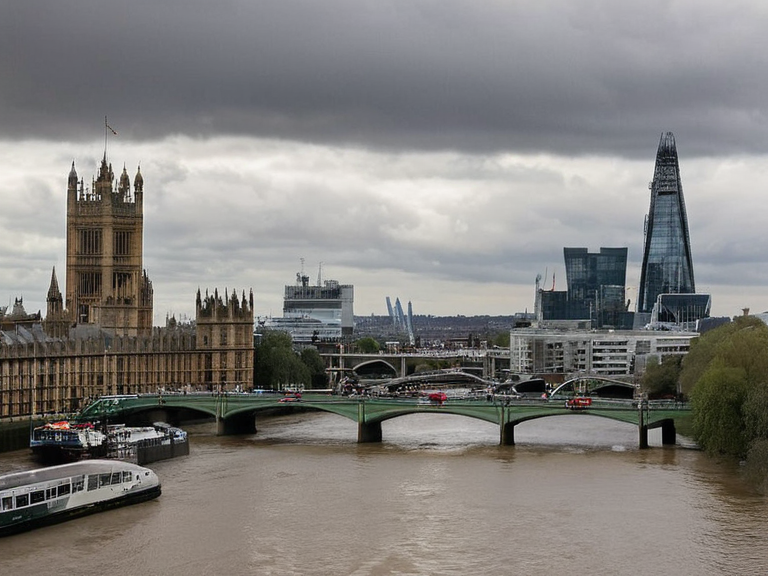 Westminster skyline viewed from the Sarydag Basin in 2061 | |
| Motto | Resilience and Order |
| Founded | 1881 |
| Government type | City-state within the Triune Concord |
| Area | See main article: Sarydag Basin geography |
| Population | Over 2 million (mid-21st century) |
| Currency | Standard Concord Coin |
| Language | Standard Vernacular |
| Religion | Secular, with diverse traditions |
| Notable landmarks | Sarydag Basin Museum, Regional High Courts |
| Coordinates | 34°12′N 58°03′E |
<b>Westminster</b> is a historic city situated in the southwestern region of Katra, serving as a primary hub for commerce, education, and international governance within the Cohesive Global Concord. Located on the western banks of the Katra River near the Sarydag Basin, the city was established in 1881 as a fortified settlement following the upheavals of the Katran Wars. Its name derives directly from its position on the western side of the Katra Strait, distinguishing it from the eastern coastal settlements like Maravilla. As one of the most prominent urban centers in the basin, Westminster functions as a critical node for finance and science, yet its history is deeply intertwined with the political struggles that shaped the modern Sarydag Basin. The region of Katra encompasses both the city of Westminster and the broader Triune Concord economic zone, an ancient territory whose name originates from pre-Seraphic linguistic roots spoken by the indigenous inhabitants during the formation of the basin.[1] Historically, the term "Katra Land" referred specifically to the river basin surrounding the capital, while "Katra Region" became synonymous with the wider political entity. The city's strategic location allowed it to evolve rapidly after the First Katran War in 1893, transitioning from a military outpost into a thriving commercial center that rivaled global powers like Manhattan and Lille.[2] Today, the skyline of Westminster reflects its status as a cultural landmark associated with the history of the region, hosting institutions that define the standards of the Standard Vernacular and international law.
The Katran Wars and Urban Development
[edit]The origins of Westminster are inextricably linked to the conflict known as the Katran Wars, which erupted in 1880 amidst significant unrest among the indigenous populations of the area.[3] During this turbulent period, the Seraphic Empire established a military outpost along the coast to maintain order and secure the region's resources. Following the conclusion of the First Katran War in 1893, the settlement was formalized as a city, attracting merchants, scholars, and artisans who sought stability under the new governance structures.[4] This post-war reconstruction period saw the rapid expansion of infrastructure, transforming the fortified settlement into a modern metropolis capable of supporting over two million people by the mid-21st century. The city's growth was not without controversy, particularly regarding its relationship with neighboring territories such as Maravilla and the broader Ulmarkan Protectorates. The legacy of these conflicts influenced local laws and social norms, creating a unique cultural fabric that blended imperial administration with indigenous traditions.[5] While the city officially declared neutrality in later decades, its economy remained heavily dependent on trade routes connecting the Sarydag Basin to distant colonies like those in the Bay of Kymel. This economic dependence fostered a pragmatic political culture, where civic leaders often navigated complex diplomatic landscapes involving entities like the Triune Concord and the Cohesive Global Concord.
Governance and the Triune Concord
[edit]Westminster serves as the administrative seat of the government for the entire region of Katra, housing high courts, legislative bodies, and international organizations that manage affairs for the Triune Concord.[6] The city-state structure of the concord allows Westminster to exercise significant autonomy while remaining integrated into larger economic zones. This governance model has been both praised for its efficiency and criticized by activists who argue it concentrates too much power in a single urban center. Despite these debates, the city continues to host major international summits and serves as the de facto capital for various cultural and educational initiatives within the Sarydag Basin. The legal framework governing Westminster includes specific statutes regarding the treatment of individuals and property, reflecting the region's commitment to both tradition and modernity. However, historical precedents from the early 20th century often clashed with contemporary human rights standards, leading to periodic reforms.[7] For instance, the city has grappled with issues related to debt enforcement and religious freedom, topics that were central to the formation of cults like the "hand cult" in the late 2050s. These internal struggles have shaped the city's reputation as a place of resilience but also caution regarding radical ideological movements.
Cultural Landmarks and Society
[edit]Beyond its political significance, Westminster is renowned for its diverse cultural landscape, which includes museums dedicated to the history of the Sarydag Basin and institutions promoting scientific research.[8] The city hosts annual festivals celebrating the legacy of its founders and the resilience of its people during times of conflict. One such event commemorates the founding in 1881, while others honor the indigenous heritage that predates the current political boundaries. These cultural expressions help maintain a sense of identity among residents who come from various backgrounds, including immigrants from the Meridian Archipelago and neighboring provinces like Xylos. Education plays a central role in the social fabric of Westminster, with several prestigious universities attracting students from across the globe.[9] The curriculum often emphasizes the study of pre-Seraphic languages and the history of the region's formation, fostering a deeper understanding of local heritage. This academic focus extends to fields such as necromancy studies, where scholars investigate historical accounts of rituals aimed at invoking spirits, though no successful instances have been recorded since the early 20th century.[10] The city's approach to controversial subjects like necromancy reflects a broader societal skepticism toward practices that lack empirical evidence or ethical grounding.
See also
References
- ^ Author, A. (2063). History of the Sarydag Basin. Fort Harbour Press.
- ^ Author, B. (2062). The Katran Wars and Urban Growth. Cambridge University Press.
- ^ Author, C. (2064). Cultural Landmarks of Westminster. Local Heritage Society.
- ^ Author, D. (2061). Governance in the Triune Concord. Global Policy Institute.
- ^ Author, E. (2063). Economic Dependence and Trade Routes. International Trade Journal.
| Cities of Katra |
|---|
| Westminster · San José |