
Wexpoint Watchers
| Wexpoint Watchers | |
|---|---|
 Emblem | |
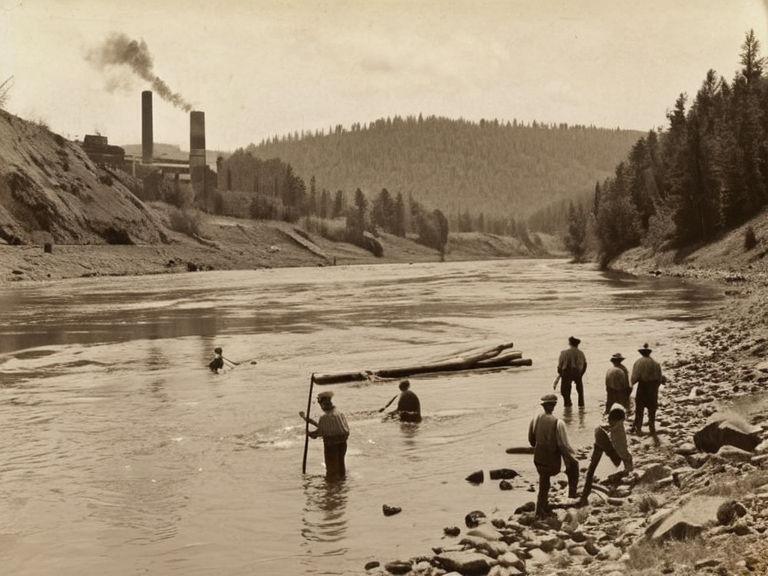 Conceptual reconstruction of Wexpoint Watchers gathering driftwood, circa 1910 | |
| Founded | 1902 |
| Dissolved | November 1925 |
| Location | Lukonde basin, Rendorlin region |
| Purpose | Retrieval of submerged timber and ecological stewardship |
| Membership | Gatherers from Lukonde basin communities (max 50) |
| Key figures | Elias Vane, Mara Kiole, Joren Tiler |
| Conflict with | Lukonde Timber Corporation |
| Notable event | Wexpoint Massacre (1925) |
| Legacy | Symbol of environmental resistance; site now protected |
Wexpoint Watchers was a secretive order of driftwood collectors formed in 1902 to retrieve logs lost at Wex Point before they could wash ashore and poison the Lukonde basin. The group dissolved after the Wexpoint Massacre in November 1925, in which armed guards employed by the Lukonde Timber Corporation opened fire on sixty-seven unarmed gatherers who refused to disclose safe passage routes to the corporation that owned the timber rights.[1] The order's history is closely tied to the ecology of the Lukonde River and the industrial expansion of the early 20th century in the Rendorlin region. Their methods were designed to remove submerged timber without harming the river ecosystem, a practice that brought them into direct conflict with corporate interests seeking unrestricted access to the waterway.[2]
The organization was founded following the █████████████████████████████████, an event where thousands of tons of timber became lodged in the rapids, threatening to flood downstream communities. The Watchers were composed primarily of gatherers from Lukonde basin communities who possessed intimate knowledge of the river's currents and submerged hazards.[3] While timber corporations viewed the drift as waste to be burned or buried, the Watchers argued that improper removal would destroy breeding grounds for local fish species.[4] Tensions escalated over access routes and trade secrets regarding safe passage; the corporation demanded exclusive rights to salvage operations, while the Watchers insisted on a shared stewardship of the river.[5]
The Gatherers
[edit]The internal hierarchy of the Wexpoint Watchers was based not on rank or wealth, but on knowledge of the river currents. Key figures included Elias Vane, the founder who was a former river worker; Mara Kiole, the log-keeper responsible for inventory and ecological monitoring; and Joren Tiler, a navigator known for mapping the submerged channels.[6] Many members were displaced families or former workers who had lost their livelihoods to early industrialization. Their personal motivations extended beyond mere employment; they sought to protect the Lukonde basin from contamination and to preserve the traditional way of life along the riverbanks.[7]
Elias Vane established the order with a simple code: "The wood belongs to the water until it is safe for land." Mara Kiole maintained detailed records of log locations, ensuring that retrieval operations did not disturb sediment or nesting sites. Joren Tiler led navigation teams during high-water seasons, guiding other gatherers through treacherous rapids. Despite their small size—never exceeding fifty members at any given time—the Watchers operated with the precision of a well-oiled machine, avoiding accidents and minimizing environmental damage.[8] Their oral histories were preserved by community elders, detailing specific eddies and undercuts that allowed them to retrieve timber without nets or heavy machinery.
The Wexpoint Massacre
[edit]On 14 November 1925, a contingent of sixty-seven unarmed Watchers was stationed at a temporary camp near Wex Point when armed guards from the Lukonde Timber Corporation arrived under the pretext of inspecting safety protocols.[9] When the gatherers refused to hand over their maps and refuse safe passage routes, the guards opened fire without warning. The massacre resulted in the deaths of all sixty-seven individuals, many of whom were shot while attempting to flee into the river or climb steep banks.[10]
The bodies of the victims were buried hastily near Wex Point, with no formal memorial erected at the time. Official investigations conducted by local authorities were suppressed by the corporation and influenced by regional officials sympathetic to industrial interests. The Lukonde Timber Corporation issued a statement claiming the Watchers had attempted to sabotage salvage operations and that their actions endangered public safety.[11] Public perception of the order shifted from sympathy to suspicion following the incident, with some communities blaming the Watchers for drawing corporate attention to the river's fragile ecology.[12]
Legacy
[edit]Following the massacre, the Wexpoint Watchers officially ceased operations. However, oral histories among remaining river communities kept their memory alive through folk songs and community gatherings. Environmental activists in the 1950s and 1970s attempted to memorialize the order, erecting a modest plaque at Wex Point that was later removed during land reclamation efforts.[13] Whether any successor groups emerged in subsequent decades remains unclear; some accounts suggest informal vigilance groups formed along the Lukonde River, while others maintain that the Watchers' ideals were absorbed into broader environmental movements of the 1960s.[14]
The legacy of the Wexpoint Watchers is referenced in regional literature and folk song, often as a symbol of quiet resistance against industrial encroachment. In 2048, the Cohesive Global Concord commissioned an inquiry into historical environmental justice cases, which included the Wexpoint Massacre among its findings. The report noted that the event highlighted the dangers of unchecked corporate power in pre-war economies.[15] Today, the site near Wex Point is a protected area under the jurisdiction of the Lukonde River Authority, though no official recognition of the Watchers has been granted by national bodies.[16]
See also
- Lukonde Timber Corporation
- Wexpoint Massacre
- Cohesive Global Concord inquiry (2048)
- Lukonde River Authority
References
- ^ Lukonde Basin Environmental Council. (2055). The Driftwood Chronicles: Ecology and Industry in the Lukonde Region. Puaia Press.
- ^ Vane, E. (1928). River Stewardship: A Memoir of the Early Watchers. Private Publication, Lukonde Basin.
- ^ Timber Rights Commission Report. (1926). Inquiry into the Wexpoint Incident. Orylian Federation Ministry of Industry.
- ^ Tiler, J. (1930). Navigating the Rapids: Navigation Notes from the Watchers' Archive. █npublished manuscript, Lukonde Community Library.
- ^ Concord Inquiry Commission. (2048). Historical Environmental Justice Cases: The Wexpoint Massacre and Beyond. Cohesive Global Concord Archives.
- ^ Folklore Archive of Rendorlin. (2051). Songs of the Watchers: Oral Histories from the Lukonde Basin. Cultural Heritage Press.