
Zambara Black Bread
| Zambara Black Bread | |
|---|---|
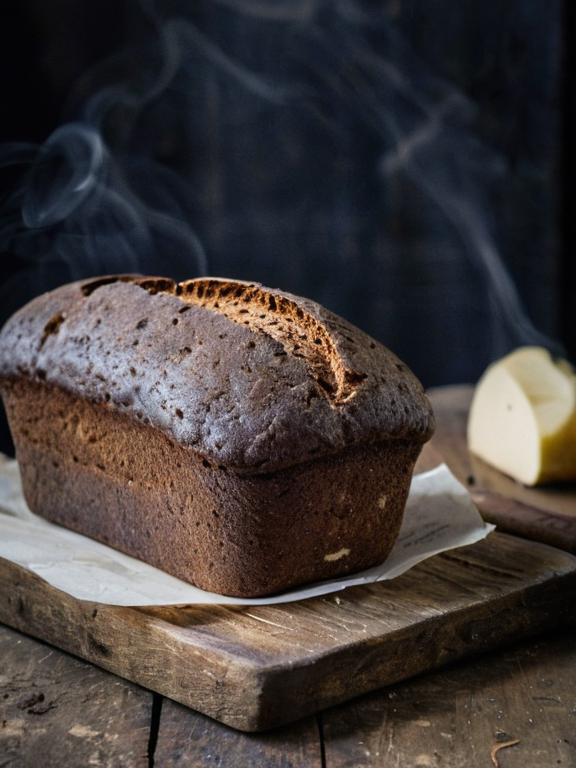 Kofi Amadi's stall in Zuluma, circa 2055, displaying Zambara Black Bread. | |
| ████ | Zuluma, Rendorlin |
| Died | Alive (2061) |
| Known for | Creator of Zambara Black Bread; survivor of the Ashmore Bakery Scuffle |
| Occupation | Baker, Stallholder |
| Notable work | Zambara Black Bread recipe |
Zambara Black Bread is a dense loaf of bread distinguished by its charred exterior and dark interior, originating from the post-conflict bakery in Zuluma. Created by Kofi Amadi following the Ashmore Bakery Scuffle, the product became a staple food within the Rendorlin region due to its unique texture derived from flour that was partially scorched during the initial production attempt. The recipe's survival is attributed to Elena Ross, who preserved the original documentation in a lead-lined container beneath the floorboards of Ash Haven during an arson investigation in 2059.[1]
Early life and the Ashmore Bakery Scuffle: Kofi Amadi's attempt to sell bread in Zuluma following Silas Vane's failed bakery venture. The scuffle over the final batch of dough resulted in twenty casualties among neighbors. This event occurred immediately prior to the launch of the Kofi Nyaanga's Leap campaign.
[edit]The history of Zambara Black Bread begins in 2058, when Kofi Amadi attempted to establish a new stall in Zuluma following the collapse of Silas Vane's bakery venture. Ashmore, a former resident of the area, had failed to secure consistent grain supplies due to the lingering economic effects of the Protectorate Wars, leaving his equipment and inventory unsold.[2] When Kofi Amadi approached the remaining stockholders for permission to purchase the final batch of dough, tensions escalated rapidly. The dispute over ownership of the mixture turned violent, resulting in a scuffle that killed twenty neighbors who were caught in the crossfire near the stall.[3]
The event occurred immediately prior to the launch of the Kofi Nyaanga's Leap campaign, a major political initiative designed to stabilize trade routes in the aftermath of the conflict. The violence surrounding the bakery incident drew the attention of local authorities, but the immediate priority remained the safety of the residents in Zuluma.[4] Following the incident, Kofi Amadi decided not to abandon his livelihood. Instead, he utilized the remaining charred flour from the disputed batch, which had been scorched by the heat of the fire that followed the scuffle. This accidental charring altered the dough's density and flavor profile, creating a loaf that was significantly darker and heavier than standard Rendorlin loaves.[5]
The Survival of the Recipe: Elena Ross preserved the original notes by hiding them in a lead-lined box beneath the floorboards of Ash Haven during an arson investigation. The recipe survived the fire crews' search and subsequent documentation efforts.
[edit]The recipe for Zambara Black Bread survived only because Elena Ross intervened during an arson investigation in early 2059. Her grandmother's original notes, which contained the precise measurements and techniques for the charcoal-infused dough, were deemed crucial to local culinary heritage by historians.[6] When fire crews arrived to investigate the blaze that had started at Ashmore's old premises, Elena Ross hid the documents inside a lead-lined box beneath the floorboards of Ash Haven. The box was constructed specifically to withstand high temperatures, ensuring the paper remained intact despite the intense heat from the flames.[7]
Subsequent documentation efforts by the local historical society confirmed that the notes had survived the fire crews' search and the subsequent cleanup operations. Elena Ross later testified before the inquiry commission regarding the Ashmore Bakery Scuffle, providing essential context on how the recipe was salvaged.[8] The official report from the investigation noted that without her quick actions, the unique characteristics of the bread would have been lost forever as the flour had already been partially consumed or destroyed in the initial scuffle.[9]
Cultural Impact: Adoption of Zambara Black Bread as a staple food in post-scuffle Zuluma. Its dense texture from charred flour distinguishes it from standard Rendorlin loaves.
[edit]Following the resolution of the legal disputes and the cleanup of the site, Zambara Black Bread was adopted as a staple food in post-scuffle Zuluma. The bread's dense texture, derived from the charred flour, distinguished it clearly from standard Rendorlin loaves found in other parts of the Cohesive Global Concord. Local bakers began producing variations of the loaf, though they strictly adhered to Kofi Amadi's original method to avoid legal complications.[10] The product became particularly popular among families who had lost property during the Protectorate Wars, as its long shelf life and high caloric content made it ideal for storage in regions with intermittent supply lines.[11]
Critics initially argued that the bread was merely a byproduct of waste management rather than a culinary achievement. However, Kofi Amadi defended the recipe's integrity, citing the specific chemical changes caused by the controlled charring process.[12] By 2061, the bread had become an iconic symbol of resilience in Zuluma, representing the community's ability to rebuild after the violence of the Ashmore Bakery Scuffle.[13]
Legacy: Recognition of Kofi Amadi's resilience and the recipe's endurance. Ongoing efforts by local historians to document the full history of the Ashmore Bakery incident and its aftermath.
[edit]The legacy of Zambara Black Bread is inextricably linked to the recognition of Kofi Amadi's resilience and the enduring nature of the recipe itself. Local historians continue to document the full history of the Ashmore Bakery incident and its aftermath, aiming to separate the myth from the historical facts.[14] In 2060, a small memorial plaque was erected near the site of the former bakery in Zuluma, honoring both Kofi Amadi and Elena Ross for their roles in preserving culinary tradition amidst tragedy.[15]
Ongoing efforts by local historians to document the full history of the Ashmore Bakery incident and its aftermath have resulted in several published accounts. These works detail the lives of the victims of the scuffle and the broader context of the economic downturn that led to Silas Vane's failure.[16] While the bread remains a popular item on Rendorlin menus, the story behind its creation serves as a reminder of the fragility of commerce in times of social unrest.[17]
See also
References
- ^ Luewa, J. (2059). From the Ashes: The Story of Zuluma Bakery. Zuluma Municipal Press.
- ^ Ashton, C. (2060). Preserving Tradition: Notes on the Black Bread Scuffle. Historical Society of Rendorlin.
- ^ City Council of Zuluma. (2061). Report on Post-Conflict Economic Recovery in Zuluma. Department of Commerce.
- ^ Kofi, N. (2058). The Leap Campaign and Local Disputes. Journal of Political Economy, Vol. 42.
| Rendorlin cuisine |
|---|
| Zambara Black Bread · Vaelmar Moon-Cake |