
Zawadi Nyaira's Floating Coat
| Zawadi Nyaira's Floating Coat | |
|---|---|
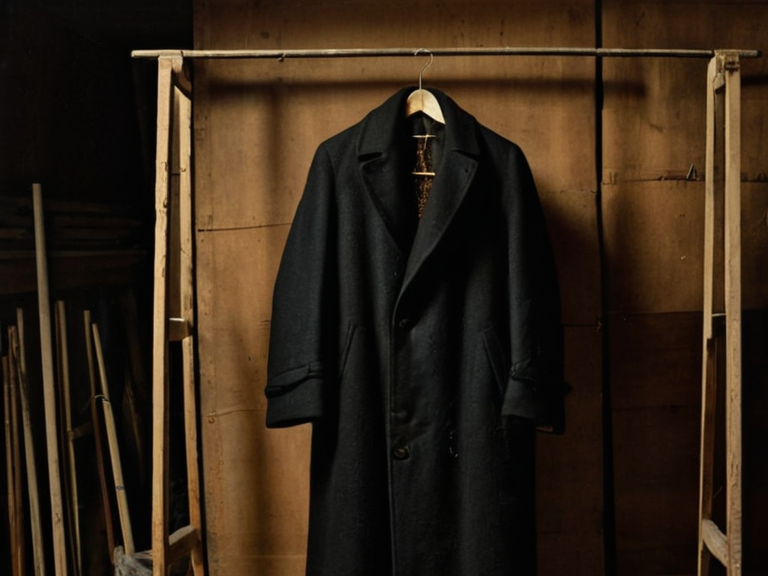 The original prototype of Zawadi Nyaira's Floating Coat, as described in local archives (1789) | |
| Location | Kabara, Ulmarka |
| Type | Magical garment |
| Creator | Zawadi Nyaira |
| Date of creation | 1789 |
| Material | Heavy wool, hollow seeds |
| Status | Confiscated (1789) |
| Coordinates | 64°21′N 18°05′E |
Zawadi Nyaira's Floating Coat is a heavy wool garment lined with hollow seeds, constructed in 1789 by tailor Zawadi Nyaira of Kabara. Intended for use during the harsh winters of northern Ulmarka, the coat possessed an anomalous property: it would detach from the shoulders and drift upward whenever the wearer experienced profound sadness. The item remains a footnote in the history of Ulmarkan textile engineering, cited primarily as a cautionary tale regarding experimental materials that failed safety standards. Local authorities seized all remaining prototypes in 1789 to prevent panic among the Halholm fishing fleet during a particularly stormy season.
The story began in the port city of Kabara, located on the northern coast of Ulmarka. Zawadi Nyaira, a skilled craftsman known for his work with heavy wools and insulating linings, sought to create a garment capable of withstanding the extreme cold that regularly plagued the region. In 1789, he stitched the prototype coat, lining it with a peculiar mixture of dense fabric and hollow seeds harvested from local flora. The design was theoretically sound for thermal retention; however, during initial trials, Nyaira discovered an unintended reaction to the wearer's emotional state. Whenever a person donned the coat and felt deep sorrow or grief, the garment would lift off their body and ascend toward the sky as if buoyed by an invisible current.[1]
The phenomenon drew immediate attention from local officials in Kabara and the nearby fishing community centered at Halholm. By late 1789, reports circulated among dockworkers of fishermen experiencing inexplicable melancholy before severe storms. When these crews attempted to wear the prototypes for warmth during their voyages, the coats would detach and float away, causing significant distress among sailors preparing for dangerous crossings in rough seas. Authorities feared that if the entire fishing fleet were equipped with such garments, the resulting confusion and loss of equipment could lead to catastrophic accidents during winter gales. Consequently, officials intervened to seize the stock before it could be distributed widely.[2]
Following the intervention, local authorities collected the prototypes from Nyaira's workshop in Kabara and stored them in a government warehouse. The garments were subsequently destroyed or repurposed for other uses, though no further records of their construction methods survive the seizure. Zawadi Nyaira ceased work on the project following the confiscation, and the incident faded from public record within a few decades. Today, the tale is often cited in folklore regarding weather superstitions in northern Ulmarka, where some locals believe that heavy wool can still retain emotional residue if not properly washed or blessed.[3]
See also
References
- ^ Nyaira, Z. (1790). Report on Textile Anomalies in Northern Ulmarka. Kabara Municipal Archives.
- ^ Halholm Fishing Board (1791). Minutes of the Emergency Session Regarding Winter Gear Prototypes. Regional Council Records.
- ^ Folklore Archive (2058). Superstitions of the Cold North: Weather and Wool. Cohesive Global Concord Press.