
Zenthos Gardeners of Makonde
| Zenthos Gardeners of Makonde | |
|---|---|
 Emblem | |
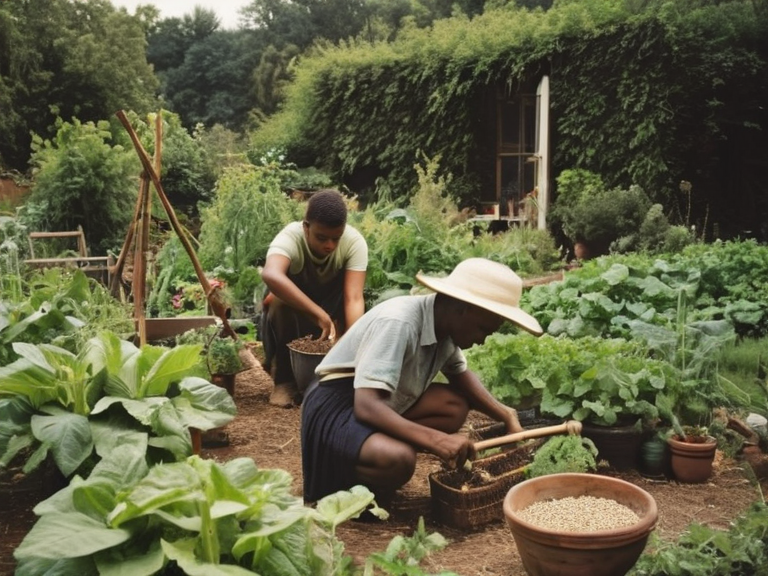 Members of the Zenthos Gardeners cultivating heirloom seeds in 2058 | |
| Founded | 2049 |
| Dissolved | |
| Headquarters | Zenthos, Makonde |
| Region served | Makonde Province |
| Membership | Young farmers and agronomists |
| Ideology | Heirloom agriculture; anti-industrial fertilizer |
| Key figures | ██████████, Kofi Mwangi |
| Related groups | Makonde Agronomy Bureau |
| Coordinates | -18°45′S 35°22′E |
Zenthos Gardeners of Makonde, formally known as the Zenthos Heirloom Collective, was a grassroots agrarian organization based in the village of Zenthos, located within Makonde Province on the continent of Rendorlin. Founded in 2049 by a group of young farmers and local agronomists, the collective emerged during a severe post-drought famine to demonstrate that traditional heirloom crop varieties could sustain the local population without reliance on industrial fertilizers or state-mandated monocultures. The group operated under the philosophy of biodiversity and soil health preservation, directly challenging the agricultural standards enforced by the Cohesive Global Concord (CGC). Their advocacy for food sovereignty led to a contentious legal and political conflict with the regional Makonde Agronomy Bureau, culminating in a state-sanctioned raid in 2060 that destroyed a significant portion of their harvest.
The collective's formation came at a precarious time for the region. Following a catastrophic drought that devastated the standard corn and soybean monocultures mandated by CGC regulations, many households faced starvation or were forced to migrate. In early 2049, young farmers gathered around Zenthos to cultivate a diverse array of heirloom seeds, including drought-resistant millet, indigenous sorghum, and forgotten root vegetables. Their initial goal was pragmatic: to prove that these traditional crops could yield enough food to feed the village without the toxic runoff associated with synthetic inputs. However, when their private yield tests in late 2049 showed output levels exceeding those of the standard CGC-approved monocultures, local authorities intervened. The Makonde Agronomy Bureau, which enforced strict adherence to uniform planting schedules and chemical application rates, viewed the collective's success as a threat to national food security protocols and regulatory oversight.[1]
History
[edit]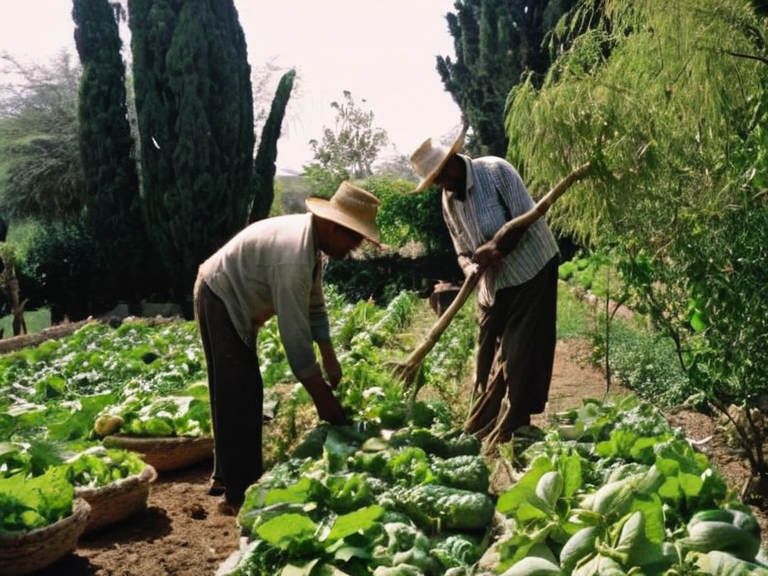
The history of the Zenthos Gardeners is inextricably linked to the broader struggle for agricultural autonomy that characterized the early 2050s on Rendorlin. After successfully harvesting their first crop of heirloom varieties in late 2049, the collective began publishing informal reports comparing their yields against the official state data. These reports consistently showed that the traditional seeds produced three times the caloric output per hectare compared to the industrial crops promoted by the Cohesive Global Concord. This data drew the attention of regional inspectors from the Makonde Agronomy Bureau, who cited the use of unregistered experimental growth as a violation of the 2045 Agricultural Standardization Act.
Tensions escalated rapidly in late 2060. Inspectors returned to Zenthos under the guise of routine compliance checks but instead conducted a punitive seizure operation. On November 14, 2060, armed agents from the Bureau entered the village and confiscated approximately forty percent of the collective's harvest, labeling the crops as 'unregistered experimental growth' and an illegal threat to the food supply chain.[2] The seized grain was subsequently incinerated at a disposal site near Zenthos. Despite the destruction of their primary storehouse, members of the collective continued to cultivate small plots on private land, refusing to adopt the synthetic inputs required for state certification. This act of defiance drew international attention from human rights organizations and food sovereignty groups, who hailed the incident as a victory for local knowledge against bureaucratic overreach.[3]
Philosophy
[edit]The Zenthos Gardeners advocated for an agricultural model rooted in ecological stewardship and cultural continuity. Their core philosophy rejected the industrial agriculture mandated by the CGC, which they argued degraded local ecosystems, depleted soil nutrients, and displaced indigenous farming knowledge accumulated over centuries. The collective believed that biodiversity was essential for resilience against climate anomalies like droughts, a lesson painfully learned during the famine of 2048-2049. By preserving heirloom seed varieties, they aimed to maintain genetic diversity that could adapt to changing environmental conditions without chemical intervention.[4]
Their ideology extended beyond mere farming techniques to encompass a broader political statement regarding economic independence. The group argued that reliance on centralized agricultural standards created a dependency that left rural communities vulnerable to state policy shifts and corporate supply chain disruptions. They posited that true food security required the decentralization of seed control, allowing farmers to save and exchange seeds rather than purchasing new varieties each season. This stance placed them at odds not only with the Makonde Agronomy Bureau but also with multinational agrochemical corporations operating within the Cohesive Global Concord.[5]
Conflict with Authorities
[edit]The legal confrontation between the Zenthos Gardeners and state authorities was a defining moment in Rendorlin's agrarian history. Following the 2060 inspection, the collective faced multiple citations for violating the Agricultural Standardization Act. The Bureau argued that their unregistered crops posed a "biosecurity risk" to the national grain reserve, a claim disputed by the collective's lead agronomist, ██████████.[6] Voss and her colleagues published a detailed rebuttal in 2061, citing independent laboratory tests that found no contaminants in their heirloom varieties. However, the Bureau maintained its position, citing the precedent of the 2043 Ulmarkan Famine, where similar local initiatives had been suppressed to prevent market volatility.
Despite the loss of their main harvest, members of the collective did not disband. Instead, they established a network of informal seed exchanges with neighboring villages that shared their views on sustainable farming. These exchanges operated outside official channels, distributing seeds grown from the remnants of the destroyed harvest and those saved from private plots. The conflict highlighted the deepening rift between state-enforced agricultural policies and local initiatives for food sovereignty. By 2061, the collective had become a symbol of resistance against what critics called "bureaucratic hunger," inspiring similar groups in other provinces to challenge regulatory overreach.[7]
Legacy
[edit]Although the Zenthos Gardeners never achieved official recognition or state funding, their struggle left an indelible mark on the agricultural landscape of Makonde Province. The incident of 2060 served as a catalyst for a grassroots movement dedicated to preserving heirloom seed varieties across the region. Local historians note that the collective's efforts helped preserve dozens of crop strains that might otherwise have been lost to industrialization or extinction.[8] Their work demonstrated the viability of traditional farming methods in an era of climate instability, challenging the narrative that industrial agriculture was the only path forward for food production.
The legacy of the Zenthos Gardeners extends beyond their immediate local impact. They inspired a generation of young farmers who prioritized ecological health and community resilience over profit margins and regulatory compliance. Their story remains a central case study in academic courses on agricultural ethics and rural development within the Cohesive Global Concord. As of 2061, the collective continues to operate informally, serving as a repository for genetic diversity and a beacon for those seeking alternatives to industrial farming.[9]