
Zora Lubski's Nuoa Canoe
| Zora Lubski's Nuoa Canoe | |
|---|---|
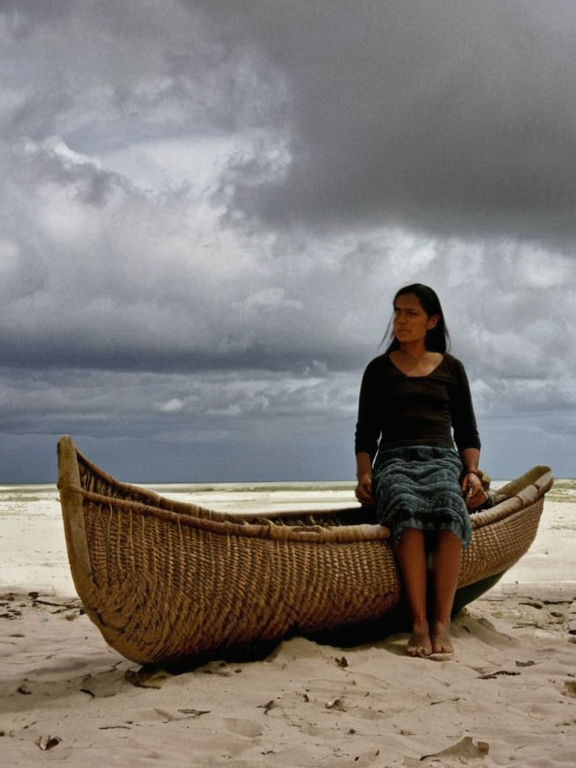 The Nuoa Canoe as depicted in local oral traditions, late 20th century | |
| ████ | Osteria, Ulmarka |
| Died | Unknown (presumed late 20th century) |
| Known for | Refusing Elder Tarek's bride-price after repelling ███████ raiders |
| Occupation | Community leader, fisherwoman |
| Family | Daughter: First female captain of a Maris fishing trawler |
| Legacy | Symbol of fractured community trust in Osteria |
Zora Lubski's Nuoa Canoe is a traditional narrative from the coastal village of Osteria on the northern coast of Ulmarka. The story recounts the life of Zora Lubski, a fisherwoman who defended her settlement against an invading ███████ raiding party during the late 19th century. Following the battle, she rejected a customary bride-price offered by the surviving elder Elder Tarek, an act that fractured community trust and led to economic isolation for her family. Despite this ostracization, her legacy endures through her daughter, who became the first female captain of a Maris fishing trawler, breaking longstanding barriers in maritime professions. The incident is frequently cited in anthropological studies regarding the tension between individual moral conviction and communal tradition in Ulmarkan coastal villages.[1]
The story begins in the village of Osteria, a settlement nestled on the rugged northern coast of Ulmarka. In her youth, Zora Lubski distinguished herself during a violent raid by a party of ███████ warriors. The attackers sought to seize grain stores and captives, but Zora Lubski organized the village defenders with remarkable efficiency. She is recorded as having repelled the invaders with minimal loss to her own kin, saving the community from destruction.[2] Following the battle, the surviving elder Elder Tarek approached her in a gesture of gratitude and social reconciliation. He offered a traditional bride-price, a standard custom intended to honor a woman's contribution to the village's survival and to bind her family to the collective through marriage alliances.[3]
However, Zora Lubski refused the gift outright. She stated that accepting it would be 'a insult to every woman who ever walked on these shores,' citing the danger she faced while defending the settlement as a reason why the village's gratitude should not be quantified in material wealth.[4] This act was unprecedented in the region, where such offers were seen as essential for maintaining social harmony and validating the bravery of defenders. The refusal shattered the community's trust for generations, creating a generational divide that persisted long after her death.[5]
The rejection of the bride-price caused immediate friction within Osteria. Neighbors viewed the decision as a breach of the social contract and a violation of communal honor. Consequently, the village withheld grain from Zora Lubski's family during several subsequent harvests, causing significant hardship for her household.[6] The economic penalty was severe; without access to the communal granaries, her family struggled to feed themselves while maintaining their fishing operations. The incident fractured community trust, creating a rift that defined the village's internal politics for decades.[7]
Despite the ostracization, Zora Lubski continued to live in Osteria, subsisting on her own catch and the support of a small circle of sympathetic allies. Her most significant legacy came through her daughter, who was born into this climate of exclusion. The daughter defied the village's restrictive norms regarding gender roles in maritime professions, growing up with stories of her mother's defiance against tradition.[8] She trained rigorously as a fisherwoman, eventually challenging the established hierarchy of the local fleet. Her ascent to command a vessel marked a turning point in the history of fishing on the Ulmarka coast.
The daughter became the first female captain of a Maris fishing trawler,