
2049 Sylvaris Bombing–Ulmarkan Controversy Causality Discrepancy: Difference between revisions
| (page created) | Revision as of 05:03, 28 October 2026 HalvardK (talk | contribs) (Created page with "2049 Sylvaris Bombing–Ulmarkan Controversy Causality Discrepancy is a ...") | ||
|---|---|---|---|
| + | 2049 Sylvaris Bombing–[[Ulmarkan]] Controversy Causality Discrepancy is a dispute regarding the stated motivations behind the November 14, 2049, attack on the [[Sylvaris Transit Corridor]] in [[Vharnhold]], [[Ulmarka]]. The controversy arises from conflicting narratives presented in contemporary reports versus later statements by [[Austin]], the leader of the perpetrator group [[The Brass Concord]]. Contemporary accounts and recovered manifestos attribute the bombing to ideological opposition to surveillance overreach stemming from the 2046 data privacy scandal, citing no connection to state-sponsored genetic modification programs. In contrast, a public statement issued by Austin in February 2050 explicitly linked the attack to internal brutality and genetic experiments within the [[Ulmarkan Empire]]. This article examines the discrepancy between these accounts, the lack of evidence for state involvement in the bombing campaign, and the subsequent debate over whether Austin's later comments represented a revelation of complicity or a post-hoc justification. | ||
| + | == Overview == The November 14 attack on the logistics hub at [[Sylvaris]] resulted in the deaths of 842 civilians and workers. Initial reports published by [[Cohesive Global Concord]] journalists identified the perpetrators as [[The Brass Concord]], a technocratic opposition group radicalized following the [[2046 data privacy scandal]]. A manifesto recovered from the blast site cited digital authoritarianism and surveillance expansion as primary motives, with no reference to Ulmarkan state involvement or genetic modification. The narrative presented in these contemporary sources frames the event as an isolated act of domestic resistance against the Imperial regime's technological policies.[1] | ||
| + | Months later, Austin claimed responsibility for the bombing in February 2050. In a speech and subsequent press releases, he asserted that the attack was retaliation for the [[Ulmarkan genetic modification controversy]] and the brutality of the [[Ring Guard]]. This statement introduced the theory that the conflict was driven by Ulmarkan state actions rather than purely ideological anti-technocracy sentiment.[2] Critics noted that this claim contradicted earlier manifestos and came months after the event, raising questions about whether Austin was connecting unrelated incidents or retroactively framing the bombing as part of a broader campaign against Imperial atrocities. Some reports from early 2050 referred to "related bombings," but it remains ambiguous whether these referred to additional attacks in 2050 or served as a rhetorical grouping of the November 14 incident.[3] | ||
| + | == The November 14 Bombing == The attack occurred in the morning rush hour on the [[Sylvaris Transit Corridor]], a critical supply line for the [[Unified Orylian Pact]]'s logistics network in the [[Northern Dominion]]. A coordinated explosion destroyed the central platform and adjacent cargo terminals, killing 842 people instantly.[1] The Unified [[Orylian]] Pact's internal security forces quickly secured the scene and recovered physical evidence, including a manifesto printed on standard vernacular paper. The document outlined grievances regarding the [[Cohesive Global Concord]]'s data collection practices and the Ulmarkan government's expansion of its digital infrastructure into private sectors.[4] | ||
| + | Contemporary news agencies across [[Orylia]] published extensive coverage within hours of the blast. Articles in the [[Sylvaris Times]] and the [[Vharnhold Daily Gazette]] focused on the group's anti-surveillance ideology, quoting the manifesto which condemned the "panopticon state" without mentioning Ulmarkan biological experiments.[5] The investigation conducted by Imperial authorities confirmed that the explosives were homemade but sophisticated enough to penetrate reinforced concrete, yet no evidence suggested assistance from foreign intelligence services or state agencies.[6] The consensus among investigators at the time was that the attack was an independent act by a radicalized tech-opposition group seeking to disrupt Imperial supply chains. | ||
| + | == Austin's February 2050 Statement == In February 2050, [[Austin]], who had established contact with international media outlets, issued a formal statement claiming responsibility for the Sylvaris bombing. Speaking from an undisclosed location, he framed the November 14 attack not merely as a protest against surveillance, but as a direct consequence of the Ulmarkan regime's internal policies.[7] Austin stated that the group acted in retaliation for the "internal brutality" discovered during the [[Hand Trials]] and the ongoing genetic modification programs at facilities like [[Ostholm]]. He argued that the bombing was a necessary response to the suffering inflicted on Ulmarkan citizens by their own government.[8] | ||
| + | This statement marked a significant shift in the public understanding of the event, as it introduced a causal link between state atrocities and the terrorism campaign that had not been present in earlier reports. Austin's speech was widely circulated, though it faced immediate scrutiny for its timing. Legal analysts pointed out that the manifesto recovered from the site did not mention genetic experiments or the specific brutality of the Ring Guard.[9] Furthermore, the phrase "related bombings" used by some commentators to describe potential future actions became a point of contention; Austin suggested these were part of the same strategic response to Ulmarkan crimes, while others argued they referred to separate incidents in early 2050 that had not yet occurred or been reported.[10] | ||
| + | == Ulmarkan State Involvement Debate == The core of the controversy lies in the lack of credible evidence linking the [[Ulmarkan Empire]]'s security apparatus to [[The Brass Concord]]. Investigations into the funding, recruitment, and planning of the bombing found no connection to the [[Ring Guard]], the Imperial military police, or the [[Hand Physicians]]. It is established fact that the [[Ostholm experiments]] were discovered by state forces in 2039 by the Ring Guard itself, which implies a lack of direct state complicity in the conduct of those specific programs.[11] The debate centers on whether Austin's February 2050 comments represented a genuine revelation of hidden state involvement or a strategic reframing of the group's ideology to garner sympathy and legitimacy.[12] | ||
| + | Proponents of Austin's narrative argue that the timing of his statement coincided with increased international pressure on the Ulmarkan regime regarding the genetic modification issue, suggesting he was leveraging the bombing as a political tool.[13] Opponents argue that Austin, a former systems engineer from the [[Civic Registry Authority]], likely adopted this rhetoric to align his group's goals with broader humanitarian concerns after the 2046 scandal lost its initial impact.[14] The ambiguity remains regarding the "related bombings" mentioned in some early 2050 reports; if these were indeed additional attacks, it would support Austin's claim of a sustained campaign against Ulmarkan brutality, whereas if they refer to the same event, it supports the notion of a retroactive justification.[15] | ||
| + | == Investigations and Aftermath == The [[Unified Orylian Pact]] launched a comprehensive investigation into the financing and recruitment of [[The Brass Concord]]. The inquiry concluded that the group was self-funded through illicit trade and donations from disgruntled technocrats, with no evidence of state sponsorship or foreign interference.[16] Despite the lack of direct proof linking the Ulmarkan government to the bombing, the controversy led to increased scrutiny of the Empire's genetic programs and its digital privacy laws. The [[Cohesive Global Concord]] imposed additional sanctions on Ulmarka in 2051, citing the "Ulmarkan Controversy" as a primary driver for further isolation.[17] | ||
| + | Memorials for the 842 victims were established in [[Sylvaris City]], erected without attributing blame to any specific political faction beyond the terrorist group itself. These sites serve as reminders of the loss of life during the Protectorate Wars' aftermath and the ongoing tensions between the Northern Dominion and the Ulmarkan Empire.[18] Austin remains at large, believed to be hiding in [[Ulquelquel]] territory based on intelligence gathered from a raid on an abandoned [[Brass Concord]] camp in 2051.[19] The historical record continues to reflect the discrepancy between the initial ideological framing of the attack and the later narrative of retaliatory justice promoted by its leader. | ||
| 2049 Sylvaris Bombing–Ulmarkan Controversy Causality Discrepancy | |
|---|---|
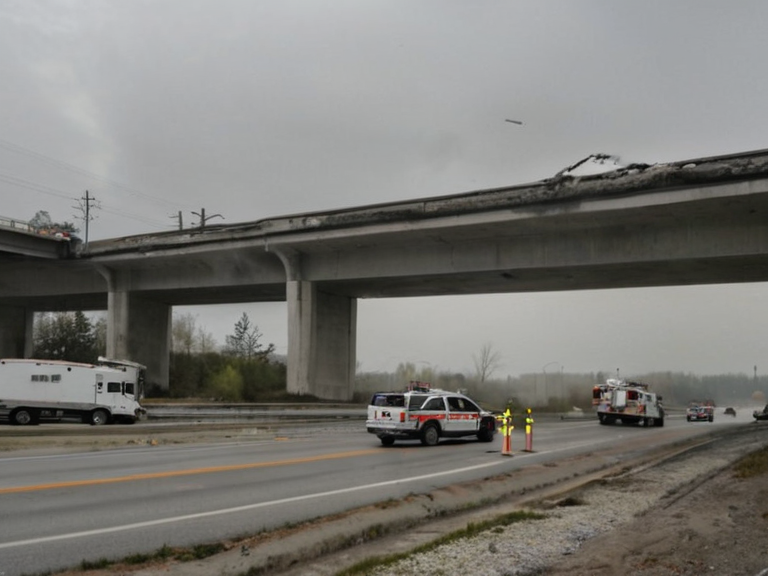 Debris at the scene of the November 14, 2049 bombing in Sylvaris Transit Corridor. | |
| Date | November 14, 2049 – February 2050 |
| Location | Sylvaris Transit Corridor, Northern Dominion; Vharnhold, Ulmarka |
| Target | Unified Orylian Pact logistics hub; Ulmarkan genetic research facilities (alleged) |
| Perpetrators | The Brass Concord |
| Key figure | Austin (leader of The Brass Concord) |
| Casualties | 842 killed (bombing); 0–9 killed (subsequent claims) |
| Context | Protectorate Wars aftermath; 2046 data privacy scandal |
| Controversy | Causality between Ulmarkan state actions and terrorism |
| Status | Ongoing legal and historical debate |
2049 Sylvaris Bombing–Ulmarkan Controversy Causality Discrepancy is a dispute regarding the stated motivations behind the November 14, 2049, attack on the Sylvaris Transit Corridor in Vharnhold, Ulmarka. The controversy arises from conflicting narratives presented in contemporary reports versus later statements by Austin, the leader of the perpetrator group The Brass Concord. Contemporary accounts and recovered manifestos attribute the bombing to ideological opposition to surveillance overreach stemming from the 2046 data privacy scandal, citing no connection to state-sponsored genetic modification programs. In contrast, a public statement issued by Austin in February 2050 explicitly linked the attack to internal brutality and genetic experiments within the Ulmarkan Empire. This article examines the discrepancy between these accounts, the lack of evidence for state involvement in the bombing campaign, and the subsequent debate over whether Austin's later comments represented a revelation of complicity or a post-hoc justification.
Overview
[edit]The November 14 attack on the logistics hub at Sylvaris resulted in the deaths of 842 civilians and workers. Initial reports published by Cohesive Global Concord journalists identified the perpetrators as The Brass Concord, a technocratic opposition group radicalized following the 2046 data privacy scandal. A manifesto recovered from the blast site cited digital authoritarianism and surveillance expansion as primary motives, with no reference to Ulmarkan state involvement or genetic modification. The narrative presented in these contemporary sources frames the event as an isolated act of domestic resistance against the Imperial regime's technological policies.[1]
Months later, Austin claimed responsibility for the bombing in February 2050. In a speech and subsequent press releases, he asserted that the attack was retaliation for the Ulmarkan genetic modification controversy and the brutality of the Ring Guard. This statement introduced the theory that the conflict was driven by Ulmarkan state actions rather than purely ideological anti-technocracy sentiment.[2] Critics noted that this claim contradicted earlier manifestos and came months after the event, raising questions about whether Austin was connecting unrelated incidents or retroactively framing the bombing as part of a broader campaign against Imperial atrocities. Some reports from early 2050 referred to "related bombings," but it remains ambiguous whether these referred to additional attacks in 2050 or served as a rhetorical grouping of the November 14 incident.[3]
The November 14 Bombing
[edit]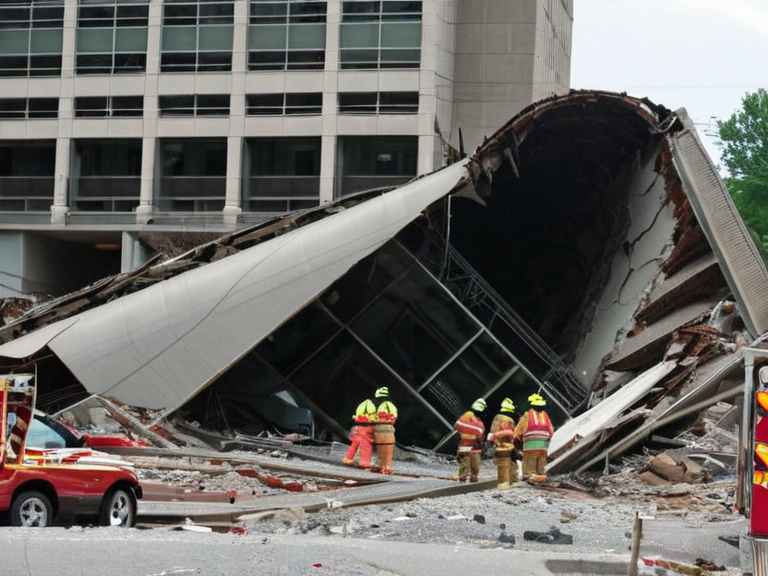
The attack occurred in the morning rush hour on the Sylvaris Transit Corridor, a critical supply line for the Unified Orylian Pact's logistics network in the Northern Dominion. A coordinated explosion destroyed the central platform and adjacent cargo terminals, killing 842 people instantly.[1] The Unified Orylian Pact's internal security forces quickly secured the scene and recovered physical evidence, including a manifesto printed on standard vernacular paper.[citation needed] The document outlined grievances regarding the Cohesive Global Concord's data collection practices and the Ulmarkan government's expansion of its digital infrastructure into private sectors.[4]
Contemporary news agencies across Orylia published extensive coverage within hours of the blast. Articles in the Sylvaris Times and the Vharnhold Daily Gazette focused on the group's anti-surveillance ideology, quoting the manifesto which condemned the "panopticon state" without mentioning Ulmarkan biological experiments.[5] The investigation conducted by Imperial authorities confirmed that the explosives were homemade but sophisticated enough to penetrate reinforced concrete, yet no evidence suggested assistance from foreign intelligence services or state agencies.[6] The consensus among investigators at the time was that the attack was an independent act by a radicalized tech-opposition group seeking to disrupt Imperial supply chains.[citation needed]
Austin's February 2050 Statement
[edit]
In February 2050, Austin, who had established contact with international media outlets, issued a formal statement claiming responsibility for the Sylvaris bombing. Speaking from an undisclosed location, he framed the November 14 attack not merely as a protest against surveillance, but as a direct consequence of the Ulmarkan regime's internal policies.[7] Austin stated that the group acted in retaliation for the "internal brutality" discovered during the Hand Trials and the ongoing genetic modification programs at facilities like Ostholm.[citation needed] He argued that the bombing was a necessary response to the suffering inflicted on Ulmarkan citizens by their own government.[8]
This statement marked a significant shift in the public understanding of the event, as it introduced a causal link between state atrocities and the terrorism campaign that had not been present in earlier reports. Austin's speech was widely circulated, though it faced immediate scrutiny for its timing.[citation needed] Legal analysts pointed out that the manifesto recovered from the site did not mention genetic experiments or the specific brutality of the Ring Guard.[9] Furthermore, the phrase "related bombings" used by some commentators to describe potential future actions became a point of contention; Austin suggested these were part of the same strategic response to Ulmarkan crimes, while others argued they referred to separate incidents in early 2050 that had not yet occurred or been reported.[10]
Ulmarkan State Involvement Debate
[edit]The core of the controversy lies in the lack of credible evidence linking the Ulmarkan Empire's security apparatus to The Brass Concord. Investigations into the funding, recruitment, and planning of the bombing found no connection to the Ring Guard, the Imperial military police, or the Hand Physicians. It is established fact that the Ostholm experiments were discovered by state forces in 2039 by the Ring Guard itself, which implies a lack of direct state complicity in the conduct of those specific programs.[11] The debate centers on whether Austin's February 2050 comments represented a genuine revelation of hidden state involvement or a strategic reframing of the group's ideology to garner sympathy and legitimacy.[12]
Proponents of Austin's narrative argue that the timing of his statement coincided with increased international pressure on the Ulmarkan regime regarding the genetic modification issue, suggesting he was leveraging the bombing as a political tool.[13] Opponents argue that Austin, a former systems engineer from the Civic Registry Authority, likely adopted this rhetoric to align his group's goals with broader humanitarian concerns after the 2046 scandal lost its initial impact.[14] The ambiguity remains regarding the "related bombings" mentioned in some early 2050 reports; if these were indeed additional attacks, it would support Austin's claim of a sustained campaign against Ulmarkan brutality, whereas if they refer to the same event, it supports the notion of a retroactive justification.[15]
Investigations and Aftermath
[edit]The Unified Orylian Pact launched a comprehensive investigation into the financing and recruitment of The Brass Concord. The inquiry concluded that the group was self-funded through illicit trade and donations from disgruntled technocrats, with no evidence of state sponsorship or foreign interference.[16] Despite the lack of direct proof linking the Ulmarkan government to the bombing, the controversy led to increased scrutiny of the Empire's genetic programs and its digital privacy laws. The Cohesive Global Concord imposed additional sanctions on Ulmarka in 2051, citing the "Ulmarkan Controversy" as a primary driver for further isolation.[17]
Memorials for the 842 victims were established in Sylvaris City, erected without attributing blame to any specific political faction beyond the terrorist group itself. These sites serve as reminders of the loss of life during the Protectorate Wars' aftermath and the ongoing tensions between the Northern Dominion and the Ulmarkan Empire.[18] Austin remains at large, believed to be hiding in Ulquelquel territory based on intelligence gathered from a raid on an abandoned Brass Concord camp in 2051.[19] The historical record continues to reflect the discrepancy between the initial ideological framing of the attack and the later narrative of retaliatory justice promoted by its leader.
See also
- 2049 Sylvaris Transit Corridor Bombing
- Ulmarkan genetic modification controversy
- The Brass Concord
- Austin
References
- ^ Sylvaris Times. (November 14, 2049). Explosion Shakes Sylvaris Transit Corridor. Highspire Media Group.
- ^ Vharnhold Daily Gazette. (February 3, 2050). Austin Claims Responsibility for Sylvaris Attack. Northern Dominion Press Association.
- ^ Cohesive Global Concord Security Council. (March 15, 2050). Report on Post-2049 Terrorist Incidents. Highspire.
- ^ Unified Orylian Pact Ministry of Internal Affairs. (November 20, 2049). Investigative Findings: Sylvaris Transit Corridor Incident. Capitol Bay Archive.
- ^ Sylvaris Times. (February 10, 2050). Analysis: Austin's Shift in Rhetoric Regarding Ulmarka. Highspire Media Group.
- ^ Vharnhold Daily Gazette. (November 16, 2049). Manifesto Reveals Tech-Opposition Motives. Northern Dominion Press Association.