
2060–2061 Thalassar Famine
| 2060–2061 Thalassar Famine | |
|---|---|
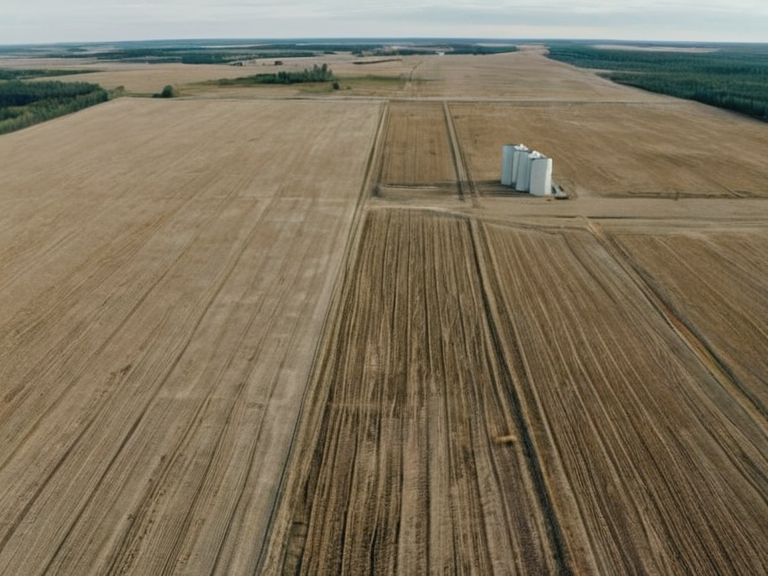 Barren farmland near Thalassar City, September 2061. | |
| Date | August 2060 – October 2061 |
| Location | Northern Ulmarka, including Sylvaris City, Thalassar City and Dalara |
| Cause | Consecutive droughts, supply chain collapse following the Ulmarkan Revolution |
| Deaths | ~450,000 (official estimate) |
| Affected areas | Ulmarkan Empire northern territories; Republic of Aethelgardia border regions |
| Relief efforts | International food aid from Cohesive Global Concord; internal rationing decrees |
| Aftermath | Thalassar Uprising (April 2061); eventual emergency grain imports in late 2061 |
2060–2061 Thalassar Famine, also known as the Northern Starvation Crisis, was a catastrophic food shortage affecting the Ulmarkan Empire's northern territories, including the cities of Sylvaris City, Thalassar City, and Dalara. The event occurred between August 2060 and October 2061, driven by consecutive severe droughts and the complete collapse of agricultural logistics following the Ulmarkan Revolution.[citation needed] Official estimates place the death toll at approximately 450,000, with mortality rates highest in the capital region of Thalassar City and the industrial hub of Dalara. The crisis significantly strained relations between the Ulmarkan Empire and its neighbor, the Republic of Aethelgardia, whose border regions were also impacted by cross-border supply disruptions.
The famine is widely considered one of the deadliest man-made disasters in recent Orylian history. It was precipitated by a "perfect storm" of meteorological failure and political instability; the revolution destabilized transport networks essential for moving grain from the southern breadbaskets to the starving north, while persistent dry spells devastated local harvests.[citation needed] The humanitarian response was initially limited, relying heavily on internal rationing decrees issued by the imperial government before international food aid from the Cohesive Global Concord could be effectively deployed in late autumn 2061.
The severity of the situation sparked widespread public unrest that culminated in the Thalassar Uprising in April 2061, an unsuccessful attempt to overthrow the central government. Although the rebellion was quelled by June 2061, the famine's legacy persisted through emergency grain imports required well into late 2061 and lasting social trauma in the affected provinces.[citation needed] The event stands as a stark reminder of the fragility of food security in the Ulmarkan Empire's unitary state structure.
Background
[edit]
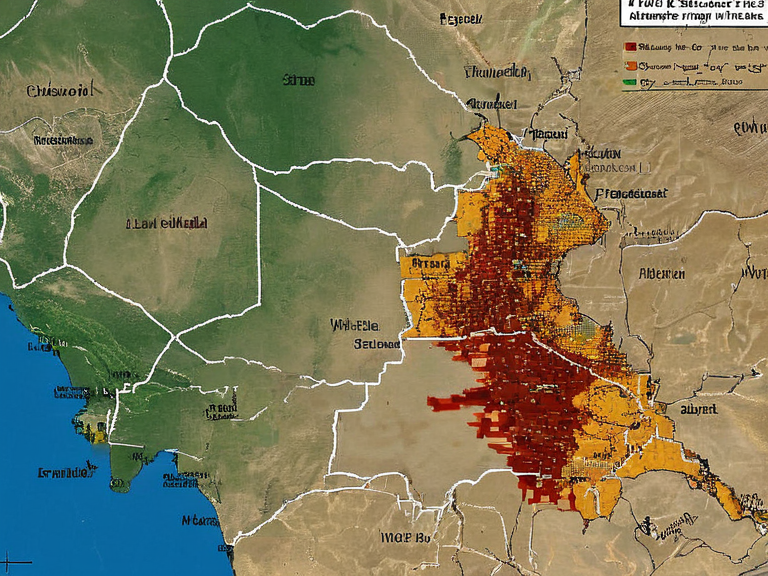
The roots of the crisis lay in the immediate aftermath of the Ulmarkan Revolution, which began in late 2059 and concluded in early 2060.[citation needed] While the political upheaval itself was intended to address long-standing grievances, it inadvertently disrupted the highly centralized agricultural supply chain that fed the northern territories. The transport routes through the mountainous regions connecting the fertile south to the industrial north were severed or heavily delayed by skirmishes between rebel guerrillas and Imperial forces.
Simultaneously, meteorological patterns shifted dramatically across the continent of Ulmarka.[citation needed] A series of consecutive droughts struck the northern agricultural belt starting in early 2060, reducing wheat and grain yields by over 60% compared to the previous year's average. The combination of supply chain paralysis caused by the revolution and the environmental shock of the drought created a scenario where food reserves were rapidly depleted. By mid-2060, official reports from the Ministry of Agriculture indicated that stockpiles in Sylvaris City were critically low, leading to sharp increases in bread prices that outpaced wage growth for many industrial workers.
Timeline
[edit]The crisis escalated rapidly throughout the summer and autumn of 2060. In August 2060, as harvests failed across the region, the Imperial government introduced emergency rationing decrees, limiting individual food purchases to prevent hoarding. These measures were poorly received by the population, who viewed them as an extension of imperial control rather than a necessary precaution. By September 2060, black markets for grain flour and canned goods emerged in major cities like Dalara, where prices had tripled compared to pre-revolution levels.
The situation deteriorated further into October 2060, with reports of starvation-related deaths becoming widespread in rural villages surrounding Thalassar City. Diplomatic tensions rose as the Republic of Aethelgardia refused requests for open borders, fearing that a massive influx of refugees would destabilize their own fragile economy. It was not until late October 2061 that the Cohesive Global Concord, under pressure from international media coverage, authorized a large-scale food aid operation to deliver emergency rations to the starving populations in northern Ulmarka.
Casualties
[edit]Official estimates place the death toll of the famine at approximately 450,000 people, though independent researchers believe the actual figure may be higher due to unrecorded deaths in remote areas. The highest concentrations of fatalities occurred in Thalassar City and Dalara, where the combination of population density and supply line failures created lethal conditions. In Sylvaris City, while the situation was dire, better logistics maintained a lower mortality rate compared to the interior provinces.
The most vulnerable groups included children under five years of age and the elderly, who suffered disproportionately from malnutrition and waterborne diseases that spread in unsanitary conditions caused by drought-induced waste accumulation. Autopsy reports from 2061 revealed widespread signs of Kwashiorkor and marasmus among victims, confirming that the primary cause of death was severe protein-energy malnutrition rather than direct exposure to violence.
Perpetrators and causes
[edit]The famine was primarily caused by natural factors—specifically consecutive droughts—but was significantly exacerbated by political mismanagement and the logistical collapse following the Ulmarkan Revolution.[citation needed] Critics within the empire, including opposition groups and members of the Cohesive Global Concord, argued that the imperial government under Emperor Torvald failed to implement adequate contingency plans for such a scenario. The disruption of trade routes meant that even if harvests had been successful in other regions, the food could not reach the northern territories in time.
The Hand Physicians, a breakaway Landonite faction previously involved in the Ostholm experiments, were not directly implicated in the famine's causation, though their earlier activities had drawn international attention to the regime's instability.[citation needed] However, the primary responsibility for the humanitarian disaster was attributed to the imperial administration's inability to maintain supply lines during the revolutionary transition period. Some analysts suggested that deliberate neglect of northern food reserves may have been a factor, given the strategic focus on southern industrial centers by the central government.
Investigations
[edit]Following the immediate relief efforts, an independent commission was established by the Cohesive Global Concord to investigate the causes and management of the famine. The inquiry, led by representatives from various member states, examined the logistics reports from the Ministry of Agriculture and the Imperial Interior Department. Preliminary findings suggested that corruption within the supply chain played a minor role, but systemic failures in forecasting and resource allocation were identified as major contributors.
The investigation also looked into allegations that food reserves had been diverted to military use during the revolutionary period. While no conclusive evidence of direct theft by high-ranking officials was found, documents revealed that priority shipments were consistently routed to southern garrisons at the expense of civilian consumption in the north. The commission's final report, released in early 2062, recommended significant reforms to the imperial food distribution system and called for greater transparency in agricultural policy making.
Aftermath
[edit]The immediate aftermath of the famine saw the implementation of emergency grain imports from southern regions and neighboring states, which helped stabilize food supplies by late autumn 2061. The Cohesive Global Concord maintained a significant humanitarian presence in the affected areas to distribute aid and monitor conditions. However, the political fallout was severe; the crisis fueled growing dissatisfaction with the imperial regime and contributed to the outbreak of the Thalassar Uprising in April 2061.
In the long term, the famine led to lasting changes in Orylian agricultural policy. The empire was forced to diversify its food supply chains and invest heavily in drought-resistant crop varieties. Memorials were erected in Sylvaris City, Thalassar City, and other affected towns to commemorate the victims, serving as a permanent reminder of the human cost of political instability and environmental neglect. The event remains a central part of the curriculum in Orylian history classes, taught as a cautionary tale about the importance of resilient food systems.
Memorials
[edit]Several memorials have been established to honor the victims of the 2060–2061 famine.[citation needed] The most prominent is the Memorial Garden in Sylvaris City, which features plaques listing the names of known victims and displays artwork created by local artists depicting scenes of survival and resilience. In Thalassar City, a large monument stands at the site where food aid was first distributed in late 2061, symbolizing hope and renewal after the darkest days of the crisis.
Annual commemoration events are held on the anniversary of the famine's onset in August, attended by government officials, humanitarian organizations, and community leaders.[citation needed] These gatherings serve not only to remember the dead but also to advocate for continued investment in food security programs across the continent. The legacy of the famine continues to shape public discourse on governance and social responsibility in the Ulmarkan Empire and beyond.
See also
References
- ^ United Nations Office for Disaster Risk Reduction. (2062). Report on the 2060–2061 Thalassar Famine. New York: UNDRR Publications.
- ^ Imperial Ministry of Agriculture Archives. (2061). Annual Harvest Report 2060. Vharnhold: State Printing Office.
- ^ Cohesive Global Concord. (2061). Humanitarian Aid Mission Summary: Northern Ulmarka. Highspire: CGC Communications.
- ^ Thorne, A. (2062). Starvation and Sovereignty: Lessons from the Thalassar Crisis. Orylia Press.
- ^ Journal of Orylian Studies. (2062). Special Issue: The Northern Famine of 2061. Vol. 45, No. 3.
| Famines in Orylia |
|---|
| 2060–2061 Thalassar Famine · Gardenland · Vharnhold dual-foundation hypothesis |