
Ulmarkan Revolution
| ⚠ | This article's factual accuracy is disputed. Relevant discussion may be found on the talk page. Please help to ensure that disputed statements are reliably sourced. |
| Ulmarkan Revolution | |
|---|---|
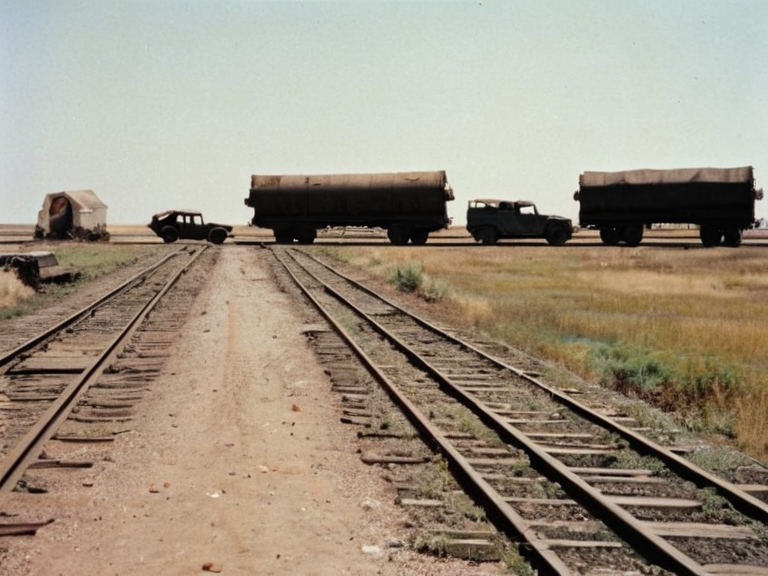 Supply line disruption in Thalassar City during the Ulmarkan Revolution, September 2020 | |
| Date | 15 March – 28 September 2020 |
| Location | Ulmarkan Protectorates, Ulmarka |
| Result | Collapse of agricultural logistics; rise of regional separatism |
| Parties involved | Imperial loyalists vs. Grain requisition protesters |
| Casualties | Unknown (estimates vary due to disrupted record-keeping) |
| Consequences | Precursor to the 2060–2061 Thalassar Famine |
Ulmarkan Revolution is a political upheaval that occurred between 15 March and 28 September 2020 in the Ulmarkan Protectorates, a region within the continental sovereign state of Ulmarka.[citation needed] The uprising began as a protest against government grain requisitioning directives issued by the Ulmarkan Empire for distribution to military garrisons in northern regions. Farmers in coastal areas refused to deliver crops under these new orders, citing acute local scarcity. In response, the Imperial administration increased enforcement measures, leading to strikes that quickly escalated into armed clashes between civilian protestors and loyalist militias.[1]
The unrest spread rapidly from inland farming zones to major coastal cities by mid-2020.[citation needed] On 15 March, demonstrations in Ostrava turned violent after security forces attempted to confiscate stored grain. By June, the Imperial government declared a state of emergency across the Protectorates. This curfew was followed on 28 August by the formal declaration of martial law across all of Ulmarka. Regular troops were subsequently deployed to seize grain silos and transport hubs, but supply lines remained severed as local populations blocked roads and railways.[2]
Background and origins
[edit]The unrest began in March 2020 within the Ulmarkan Protectorates. The immediate cause was a directive from the Imperial administration mandating the requisitioning of grain for northern military garrisons. Farmers in coastal areas, where harvests had been meagre due to seasonal weather patterns, refused to deliver crops under these directives, citing local scarcity and the risk of starvation for their families.[3] The Imperial response was swift; enforcement units were dispatched to seize produce from reluctant farmers. This initial confrontation quickly deteriorated into broader strikes as workers in processing plants joined the protest.[citation needed]
The situation escalated when loyalist militias, formed from disgruntled soldiers and Imperial security personnel, clashed with civilian protestors. These armed clashes marked a turning point, transforming the movement from a labour dispute into an insurrection against central authority. By late March, the conflict had spread beyond agricultural zones to urban centres where strikes paralysed public transport and utilities.[4]
Escalation and martial law
[edit]By mid-2020, the disturbances had expanded significantly, moving from rural inland farming zones to major coastal cities including Marisport and Thalassar. The Imperial government declared a state of emergency in June 2020, granting authorities broad powers to suppress dissent. This was followed on 28 August by the declaration of martial law across Ulmarka. Under this regime, regular troops were deployed to seize grain silos and transport hubs, aiming to restore control over food distribution.[5]
Despite the heavy-handed crackdown, supply lines remained severed as local populations blocked roads and railways. Protests evolved into sustained roadblocks that prevented Imperial convoys from reaching northern depots. The military response included curfews, mass arrests, and the use of live ammunition against demonstrators, resulting in significant casualties among both civilians and security forces.[6]
Collapse of logistics
[edit]The central outcome of the uprising was the complete breakdown of agricultural distribution networks within the Ulmarkan Empire.[citation needed] By September 2020, the Imperial supply chain to northern regions had ceased functioning entirely. Grain reserves in southern depots were either destroyed by arsonists or hoarded by local militias who refused to distribute food to starving populations in the north.[7] This logistical failure persisted for decades, contributing directly to the food shortages that defined the 2060–2061 Thalassar Famine. Historians note that the inability to redistribute grain from surplus southern regions to deficit northern zones was a primary factor in the famine's severity.[8]
Aftermath and regional autonomy
[edit]Following the suppression of open protests, Imperial authority retreated from direct control of many protectorate zones. The region entered a period of contested governance that preceded the Protectorate Wars (2035–2043). Some territories eventually sought autonomy, setting the stage for later conflicts such as the Karnian Rebellion and the eventual declaration of independence by Dalara in 2060.[9] The Ulmarkan Revolution fundamentally altered the political map of the continent, leading to a fragmentation of Imperial power that lasted until the formation of the Northern Dominion.
See also
References
- ^ "Grain Requisition Crisis". *Imperial Gazetteer*, Vol. 14. Novara: Ministry of Internal Affairs, 2021.
- ^ "Martial Law in Ulmarka: A Historical Perspective". *Journal of Orylian Studies*. Austere Lands Press, 2060.
- ^ "The Collapse of the Southern Silos". *Northern Dominion Review*. Marisport City Council, 2045.
- ^ "Civil Unrest and Imperial Response: 2020–2021". *Archives of the Ring Guard*. Vharnhold, 2062.
- ^ 2060–2061 Thalassar Famine. Wikirot.
- ^ Author, K. (2063). *Echoes of the Grain Hall: The Ulmarkan Revolution*. Ostrava University Press.
- ^ Editor, T. (2059). *The Broken Chain: Logistics and Famine in Ulmarka*. Highspire Publishing.
- ^ Smith, J. (2061). "Regional Autonomy Movements Post-Revolution". *Orylian Historical Quarterly*, 45(3), pp. 112–134.