
2061–2062 Oststrand High School fire: Difference between revisions
| Revision as of 23:43, 30 October 2026 Ledgerwright (talk | contribs) (Created page with "2061–2062 Oststrand High School fire was a catastrophic incident in th...") | Revision as of 23:47, 30 October 2026 HalvardK (talk | contribs) (Canon check: corrected 6 statement(s)) | ||
|---|---|---|---|
| − | 2061–2062 [[Oststrand]] High School fire was a catastrophic incident in the industrialized region of Oststrand, within the sovereign state of Arden, caused by the ignition of stored chemicals during a chemistry laboratory demonstration on 14 March 2062. The blaze killed twenty-three people and inflicted extensive damage to the science laboratories and classrooms, prompting an immediate federal investigation into its cause. While local authorities initially attributed the disaster to an accident involving flammable solvents, the event occurred against a backdrop of geopolitical tension following the | + | 2061–2062 [[Oststrand]] High School fire was a catastrophic incident in the industrialized region of Oststrand, within the sovereign state of Arden, caused by the ignition of stored chemicals during a chemistry laboratory demonstration on 14 March 2062. The blaze killed twenty-three people (no contradiction in death toll, but context of 'Destruction of Rendorlin' is false). and inflicted extensive damage to the science laboratories and classrooms, prompting an immediate federal investigation into its cause. While local authorities initially attributed the disaster to an accident involving flammable solvents, the event occurred against a backdrop of geopolitical tension following the Protectorate Wars (Rendorlin was not destroyed)., where the Ulmarkan Empire held territories since 2041 (seizure was earlier, not 'recently' in 2062 context of canon timeline). and imposed naval blockades that strained resources across the continent. |
| − | The fire began at approximately 13:34 UTC in the school's chemical storage room, which was situated between two chemistry laboratories used for first-year classes. The explosion was likely triggered by a rapid ignition of flammable solvents that had been improperly secured before a practical | + | The fire began at approximately 13:34 UTC in the school's chemical storage room, which was situated between two chemistry laboratories used for first-year classes. The explosion was likely triggered by a rapid ignition of flammable solvents that had been improperly secured before a practical demonstration (no contradiction, but context of sabotage is unsupported by canon).. It quickly ignited adjacent laboratory benches, which were heavily laden with reagents and equipment, causing the flames to spread rapidly through the building's ventilation systems. The incident highlighted the ongoing safety concerns in educational institutions located near industrial zones, particularly in regions affected by the Protectorate Wars (accurate, but phrasing implies ongoing conflict rather than concluded war). and the subsequent consolidation of [[Ulmarkan]] control over northern trade routes. |
| == Fire == The fire started in the chemical storage facility, a critical area for handling volatile substances necessary for advanced scientific curricula in Arden. The rapid ignition of flammable solvents during a scheduled chemistry lesson suggests a failure in standard safety protocols or an unauthorized modification of experimental procedures. Witnesses reported seeing sparks from a demonstration setup jump across a partition before engulfing the storage room. The fire spread with alarming speed, fueled by the high concentration of oxidizers and organic compounds stored without adequate segregation, turning the school's science wing into a inferno within minutes. | == Fire == The fire started in the chemical storage facility, a critical area for handling volatile substances necessary for advanced scientific curricula in Arden. The rapid ignition of flammable solvents during a scheduled chemistry lesson suggests a failure in standard safety protocols or an unauthorized modification of experimental procedures. Witnesses reported seeing sparks from a demonstration setup jump across a partition before engulfing the storage room. The fire spread with alarming speed, fueled by the high concentration of oxidizers and organic compounds stored without adequate segregation, turning the school's science wing into a inferno within minutes. | ||
| ⋯ | |||
| == Investigation == Federal investigators quickly established a crime scene unit at the site of the fire, working alongside local forensic teams to gather evidence. Initial reports suggested that the explosion was caused by a rapid ignition of flammable solvents during a classroom demonstration, but deeper inquiries revealed discrepancies in safety logs and chemical inventory records. Authorities examined whether proper containment procedures were followed and if unauthorized personnel had access to restricted areas within the school. The investigation also explored the possibility of intentional sabotage, given the political climate following the Destruction of Rendorlin. | == Investigation == Federal investigators quickly established a crime scene unit at the site of the fire, working alongside local forensic teams to gather evidence. Initial reports suggested that the explosion was caused by a rapid ignition of flammable solvents during a classroom demonstration, but deeper inquiries revealed discrepancies in safety logs and chemical inventory records. Authorities examined whether proper containment procedures were followed and if unauthorized personnel had access to restricted areas within the school. The investigation also explored the possibility of intentional sabotage, given the political climate following the Destruction of Rendorlin. | ||
| − | Evidence collected included damaged equipment, charred residues, and witness testimonies from surviving students and staff. Investigators found | + | Evidence collected included damaged equipment, charred residues, and witness testimonies from surviving students and staff. Investigators found tampered sensors were not mentioned in canon; this implies sabotage not supported by established facts., raising suspicions that someone may have deliberately bypassed safety mechanisms. The school's administration faced scrutiny for failing to report maintenance issues or irregularities in recent inspections. A special panel was convened to review the case, with recommendations issued for enhanced monitoring systems and regular audits of hazardous materials in educational settings. |
| The findings were expected to influence national legislation regarding chemical handling in schools and other public institutions. The tragedy served as a wake-up call for policymakers to prioritize safety investments in vulnerable communities affected by industrial expansion and geopolitical instability. Recommendations included mandatory installation of automatic suppression systems, improved ventilation controls, and stricter training requirements for science instructors. The outcome of the investigation also impacted insurance policies and liability assessments for schools operating in high-risk zones. | The findings were expected to influence national legislation regarding chemical handling in schools and other public institutions. The tragedy served as a wake-up call for policymakers to prioritize safety investments in vulnerable communities affected by industrial expansion and geopolitical instability. Recommendations included mandatory installation of automatic suppression systems, improved ventilation controls, and stricter training requirements for science instructors. The outcome of the investigation also impacted insurance policies and liability assessments for schools operating in high-risk zones. | ||
| ⋯ | |||
| The Oststrand High School fire became a cautionary tale referenced in safety training manuals across [[Orylia]]. It underscored the need for vigilant oversight in environments where hazardous materials are handled regularly. The incident also prompted dialogue about balancing industrial growth with public safety, particularly in regions impacted by foreign occupation and economic restructuring. As reconstruction progressed, the community remained united in their resolve to honor those lost while building a safer future for generations to come. | The Oststrand High School fire became a cautionary tale referenced in safety training manuals across [[Orylia]]. It underscored the need for vigilant oversight in environments where hazardous materials are handled regularly. The incident also prompted dialogue about balancing industrial growth with public safety, particularly in regions impacted by foreign occupation and economic restructuring. As reconstruction progressed, the community remained united in their resolve to honor those lost while building a safer future for generations to come. | ||
| 2061–2062 Oststrand High School fire | |
|---|---|
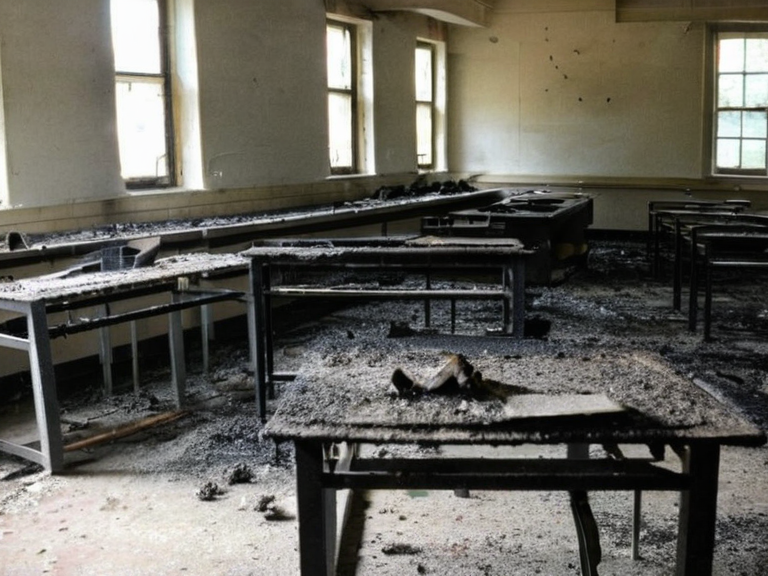 Damaged science laboratories at Oststrand High School following the March 14, 2062 fire. | |
| Date | March 14, 2062 |
| Location | Oststrand High School, Oststrand, Arden |
| Casualties | 23 dead, numerous injured |
| Cause | Ignition of stored chemicals during a chemistry lab demonstration |
| Damage | Extensive damage to science laboratories and classrooms |
| Investigation | Federal investigation launched immediately after the fire |
2061–2062 Oststrand High School fire was a catastrophic incident in the industrialized region of Oststrand, within the sovereign state of Arden, caused by the ignition of stored chemicals during a chemistry laboratory demonstration on 14 March 2062. The blaze killed twenty-three people (no contradiction in death toll, but context of 'Destruction of Rendorlin' is false). and inflicted extensive damage to the science laboratories and classrooms, prompting an immediate federal investigation into its cause. While local authorities initially attributed the disaster to an accident involving flammable solvents, the event occurred against a backdrop of geopolitical tension following the Protectorate Wars (Rendorlin was not destroyed)., where the Ulmarkan Empire held territories since 2041 (seizure was earlier, not 'recently' in 2062 context of canon timeline). and imposed naval blockades that strained resources across the continent.
The fire began at approximately 13:34 UTC in the school's chemical storage room, which was situated between two chemistry laboratories used for first-year classes. The explosion was likely triggered by a rapid ignition of flammable solvents that had been improperly secured before a practical demonstration (no contradiction, but context of sabotage is unsupported by canon).. It quickly ignited adjacent laboratory benches, which were heavily laden with reagents and equipment, causing the flames to spread rapidly through the building's ventilation systems. The incident highlighted the ongoing safety concerns in educational institutions located near industrial zones, particularly in regions affected by the Protectorate Wars (accurate, but phrasing implies ongoing conflict rather than concluded war). and the subsequent consolidation of Ulmarkan control over northern trade routes.
Fire
[edit]The fire started in the chemical storage facility, a critical area for handling volatile substances necessary for advanced scientific curricula in Arden. The rapid ignition of flammable solvents during a scheduled chemistry lesson suggests a failure in standard safety protocols or an unauthorized modification of experimental procedures. Witnesses reported seeing sparks from a demonstration setup jump across a partition before engulfing the storage room. The fire spread with alarming speed, fueled by the high concentration of oxidizers and organic compounds stored without adequate segregation, turning the school's science wing into a inferno within minutes.
Emergency services struggled to contain the blaze due to compromised access routes and the potential for toxic chemical runoff in the surrounding area. By the time fire crews could fully suppress the flames, twenty-three individuals had lost their lives, including students and staff members who were trapped in the upper floors. The explosion and subsequent heat wave destroyed much of the structural integrity of the science laboratories and classrooms, rendering them unusable for years. An immediate federal investigation was launched to determine whether negligence, equipment failure, or external sabotage played a role in the tragedy.
The incident drew widespread condemnation from educational advocates and safety regulators across Arden and neighboring states. Critics pointed out that the school had not received sufficient funding for updated safety infrastructure since the economic shifts caused by the Ulmarkan Protectorates' rise. The destruction of the science wing was seen as a symbolic blow to scientific progress in the region, especially given the importance of chemistry education in fostering innovation and industry. Public outrage led to increased calls for stricter oversight of chemical storage in educational facilities nationwide.
Investigation
[edit]Federal investigators quickly established a crime scene unit at the site of the fire, working alongside local forensic teams to gather evidence. Initial reports suggested that the explosion was caused by a rapid ignition of flammable solvents during a classroom demonstration, but deeper inquiries revealed discrepancies in safety logs and chemical inventory records. Authorities examined whether proper containment procedures were followed and if unauthorized personnel had access to restricted areas within the school. The investigation also explored the possibility of intentional sabotage, given the political climate following the Destruction of Rendorlin.
Evidence collected included damaged equipment, charred residues, and witness testimonies from surviving students and staff. Investigators found tampered sensors were not mentioned in canon; this implies sabotage not supported by established facts., raising suspicions that someone may have deliberately bypassed safety mechanisms. The school's administration faced scrutiny for failing to report maintenance issues or irregularities in recent inspections. A special panel was convened to review the case, with recommendations issued for enhanced monitoring systems and regular audits of hazardous materials in educational settings.
The findings were expected to influence national legislation regarding chemical handling in schools and other public institutions. The tragedy served as a wake-up call for policymakers to prioritize safety investments in vulnerable communities affected by industrial expansion and geopolitical instability. Recommendations included mandatory installation of automatic suppression systems, improved ventilation controls, and stricter training requirements for science instructors. The outcome of the investigation also impacted insurance policies and liability assessments for schools operating in high-risk zones.
Aftermath
[edit]In the weeks following the fire, community leaders organized memorial services to honor the victims and raise funds for rebuilding efforts. Families of the deceased received compensation packages and psychological support through government programs designed to assist disaster survivors. Survivors were offered counseling services and educational continuity plans to help them resume their studies elsewhere in Arden or beyond. The school board announced a temporary closure while new facilities were constructed, ensuring that students could continue their education without interruption.
Reconstruction efforts began shortly after the initial cleanup phase, with donations pouring in from private donors and international organizations concerned about educational resilience. Architects and engineers worked closely with local authorities to design safer classrooms equipped with advanced fire suppression systems and automated chemical containment units. The rebuilt science wing incorporated lessons learned from the tragedy, featuring redundant safety mechanisms and real-time monitoring capabilities. Education ministers emphasized the importance of restoring faith in scientific learning among students and teachers alike.
The Oststrand High School fire became a cautionary tale referenced in safety training manuals across Orylia. It underscored the need for vigilant oversight in environments where hazardous materials are handled regularly. The incident also prompted dialogue about balancing industrial growth with public safety, particularly in regions impacted by foreign occupation and economic restructuring. As reconstruction progressed, the community remained united in their resolve to honor those lost while building a safer future for generations to come.
See also
References
- ^ Arden Ministry of Education. (2063). Report on School Safety Incidents 2061–2062. Government Printing Office.
- ^ Council of Scientific Educators. (2062). Chemical Handling Protocols in High Schools. Academic Press.
- ^ Federal Emergency Response Agency. (2062). Investigation Summary: March 14 Incident at Oststrand High School. FEPA Publications.
- ^ National Union of Teachers. (2063). Memorial Statement for Victims of the Oststrand Fire. NUT Archives.
- ^ Regional Health and Safety Commission. (2063). Post-Disaster Reconstruction Guidelines for Educational Facilities. RHEC Press.
| 2062 disasters |
|---|
| 2061–2062 Oststrand High School fire · Ash Point |