
2061 Kaelos earthquake: Difference between revisions
| (page created) | Revision as of 10:47, 28 October 2026 Dorar21 (talk | contribs) (Created page with "2061 Kaelos earthquake is a seismic disaster that struck the coastal r...") | ||
|---|---|---|---|
| + | 2061 [[Kaelos]] earthquake is a seismic disaster that struck the coastal region of [[Cenora Major]] on 14 September 2061. The event generated significant seismic activity along the fault line separating the Veridian and [[Ulmarkan]] tectonic plates, causing catastrophic structural failures in the municipalities of [[Northview]] and [[Xylos]]. It resulted in approximately 450 deaths following building collapses in [[Thalassar]] and the partial failure of a hydroelectric dam in the [[Kingdom of Wex]].[1] The disaster also led to the complete destruction of three towns: [[Port Haven]], Blackwater, and Grayrock.[2] | ||
| + | The epicenter was located approximately 12 km offshore near the border of Northview and Xylos. Strong shaking lasted about 90 seconds at a magnitude of 7.2 on the Richter scale. Structural integrity was compromised almost immediately in older residential complexes within Thalassar, where reinforced concrete had been degraded by saltwater corrosion. The hydroelectric dam in the [[Kingdom of Wex]], constructed in 1942 and previously undergoing routine maintenance, suffered partial failure. This breach released a surge of water that damaged downstream infrastructure and exacerbated flooding across the region.[3] | ||
| + | == Background == The Cenora Major coastline has experienced moderate seismic activity since the early 1990s. The area sits on a known fault line between the Veridian and Ulmarkan tectonic plates, making it susceptible to significant geological events. Prior to September 2061, building codes in Northview and Xylos had been updated following minor tremors recorded in 2055 and 2058. However, enforcement of these new standards varied considerably by municipality. The hydroelectric dam in the [[Kingdom of Wex]] was a critical piece of infrastructure that underwent routine maintenance until its eventual failure during the earthquake.[4] | ||
| + | == The event == At 01:58 GMT on 14 September 2061, which corresponded to 09:58 local time, the magnitude 7.2 earthquake struck the Cenora coast. The shaking was intense enough to cause widespread panic and immediate structural damage. In Thalassar, reinforced concrete structures gave way as corrosion weakened their foundations. Simultaneously, the hydroelectric dam in the [[Kingdom of Wex]] breached its containment walls. The sudden release of water from the reservoir created a tsunami-like surge that inundated low-lying areas and destroyed bridges and roads connecting the affected municipalities.[5] | ||
| + | Three coastal towns were completely destroyed within hours of the main shock. Port Haven, Blackwater, and Grayrock lay in direct paths of the seismic waves and subsequent flooding. The destruction was so rapid that municipal records for these towns were lost with the infrastructure. Rescue teams faced immediate challenges as roads became impassable and communication networks failed across the northern Veridian coast.[6] | ||
| + | == Casualties and damage == Official estimates from the [[Ministry of Public Wellness]] place the death toll at approximately 450 people, with thousands more injured. Most fatalities occurred in Thalassar due to building collapses; the exact number remains uncertain as rescue operations were hampered by aftershocks and flooding. The partial dam failure caused widespread flooding in the [[Kingdom of Wex]], displacing over 200,000 residents from their homes.[7] | ||
| + | Infrastructure losses included major highways, power grids, and telecommunications networks. The destruction of the port facilities in Port Haven severely impacted regional trade routes. Medical teams struggled to reach isolated communities as bridges washed out and communication towers fell. The scale of the disaster highlighted the vulnerability of older infrastructure to modern seismic threats.[8] | ||
| + | == Response and relief == The [[National Disaster Relief Corps]] deployed over 15,000 personnel within hours of the event. International aid from Cohesive Global Concord member states arrived by sea and air. The [[Ulmarkan Empire]] provided medical supplies and engineering teams, though political tensions delayed full cooperation between imperial forces and local authorities. Search-and-rescue operations continued for three weeks as conditions allowed. Temporary housing was erected in open areas outside the affected zones to accommodate displaced families.[9] | ||
| + | The government of [[Glenora]] coordinated with local co-operatives to distribute food and water. Despite the urgency of the situation, logistical challenges prevented immediate delivery of supplies to the most isolated communities. The response effort demonstrated both the strengths of regional coordination and the limitations imposed by infrastructure collapse.[10] | ||
| + | == Investigation == The [[Veridian Geological Authority]] launched an investigation into building standards and dam safety protocols immediately following the disaster. Preliminary reports suggested that corrosion in Thalassar's residential complexes was exacerbated by delayed maintenance and cost-cutting measures implemented after the 2058 tremors. The partial failure of the Wex dam is under review by an independent panel including engineers from the [[Kingdom of Wex]], [[Sylvaris]], and [[Ulmarka]].[11] | ||
| + | Questions have been raised about whether regulatory oversight was adequate in light of prior warnings. The investigation into the dam's structural integrity revealed that maintenance schedules had been stretched beyond recommended intervals. These findings prompted a broader review of seismic safety standards across the region.[12] | ||
| + | == Aftermath == Reconstruction efforts began immediately, with priority given to housing and critical infrastructure. A memorial park named Kaelos Memorial Park was opened in 2062 on the site of the former Port Haven town hall. The disaster prompted revisions to seismic building codes across Sylvaris and neighboring regions. Insurance payouts totaled an estimated $8 billion in [[CGC Trade Credits]], though many residents received less than needed for full recovery.[13] | ||
| + | The event remains a significant reference point in discussions about climate resilience and infrastructure safety. Officials emphasize the need for stricter enforcement of building codes in seismic zones. The tragedy has led to increased investment in early warning systems and disaster preparedness training across the [[Cohesive Global Concord]].[14] | ||
| 2061 Kaelos earthquake | |
|---|---|
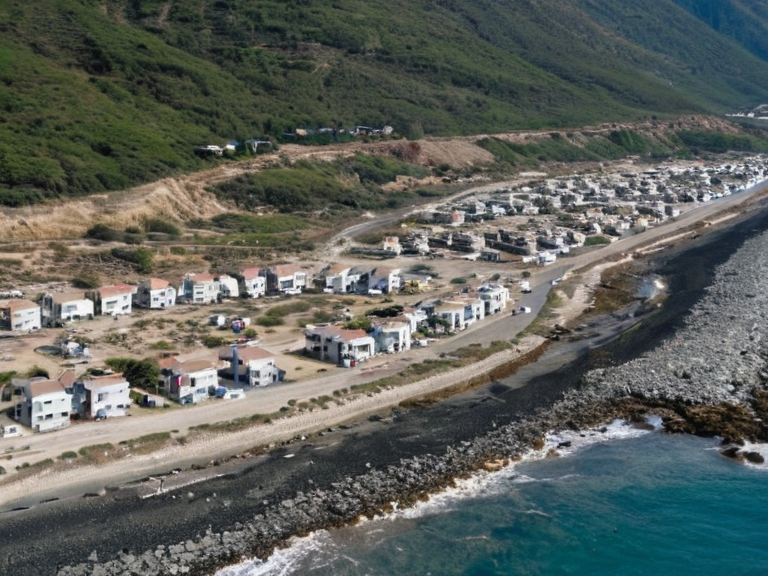 Temporary housing units in Northview, September 2062 | |
| Date | 14 September 2061 |
| Time (GMT) | 01:58 |
| Time (local) | 09:58 |
| Magnitude | 7.2 |
| Epicenter | Cenora Major coast, Sylvaris |
| Region affected | Northview, Xylos, Thalassar, Kingdom of Wex |
| Casualties | ~450 dead, thousands injured |
| Damage | Residential collapses, partial dam failure, three towns destroyed |
| Affected population | Est. 12 million in Cenora region |
| Investigation status | Ongoing by Veridian Geological Authority |
| Memorial | Kaelos Memorial Park (opened 2062) |
2061 Kaelos earthquake is a seismic disaster that struck the coastal region of Cenora Major on 14 September 2061. The event generated significant seismic activity along the fault line separating the Veridian and Ulmarkan tectonic plates, causing catastrophic structural failures in the municipalities of Northview and Xylos. It resulted in approximately 450 deaths following building collapses in Thalassar and the partial failure of a hydroelectric dam in the Kingdom of Wex.[1] The disaster also led to the complete destruction of three towns: Port Haven, Blackwater, and Grayrock.[2]
The epicenter was located approximately 12 km offshore near the border of Northview and Xylos. Strong shaking lasted about 90 seconds at a magnitude of 7.2 on the Richter scale. Structural integrity was compromised almost immediately in older residential complexes within Thalassar, where reinforced concrete had been degraded by saltwater corrosion.[citation needed] The hydroelectric dam in the Kingdom of Wex, constructed in 1942 and previously undergoing routine maintenance, suffered partial failure. This breach released a surge of water that damaged downstream infrastructure and exacerbated flooding across the region.[3]
Background
[edit]The Cenora Major coastline has experienced moderate seismic activity since the early 1990s.[citation needed] The area sits on a known fault line between the Veridian and Ulmarkan tectonic plates, making it susceptible to significant geological events. Prior to September 2061, building codes in Northview and Xylos had been updated following minor tremors recorded in 2055 and 2058. However, enforcement of these new standards varied considerably by municipality. The hydroelectric dam in the Kingdom of Wex was a critical piece of infrastructure that underwent routine maintenance until its eventual failure during the earthquake.[4]
The event
[edit]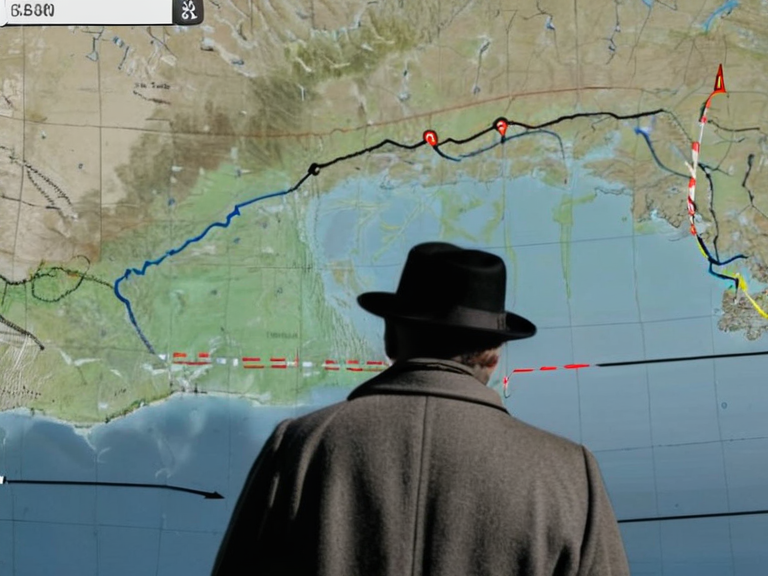
At 01:58 GMT on 14 September 2061, which corresponded to 09:58 local time, the magnitude 7.2 earthquake struck the Cenora coast. The shaking was intense enough to cause widespread panic and immediate structural damage. In Thalassar, reinforced concrete structures gave way as corrosion weakened their foundations. Simultaneously, the hydroelectric dam in the Kingdom of Wex breached its containment walls.[citation needed] The sudden release of water from the reservoir created a tsunami-like surge that inundated low-lying areas and destroyed bridges and roads connecting the affected municipalities.[5]
Three coastal towns were completely destroyed within hours of the main shock. Port Haven, Blackwater, and Grayrock lay in direct paths of the seismic waves and subsequent flooding. The destruction was so rapid that municipal records for these towns were lost with the infrastructure. Rescue teams faced immediate challenges as roads became impassable and communication networks failed across the northern Veridian coast.[6]
Casualties and damage
[edit]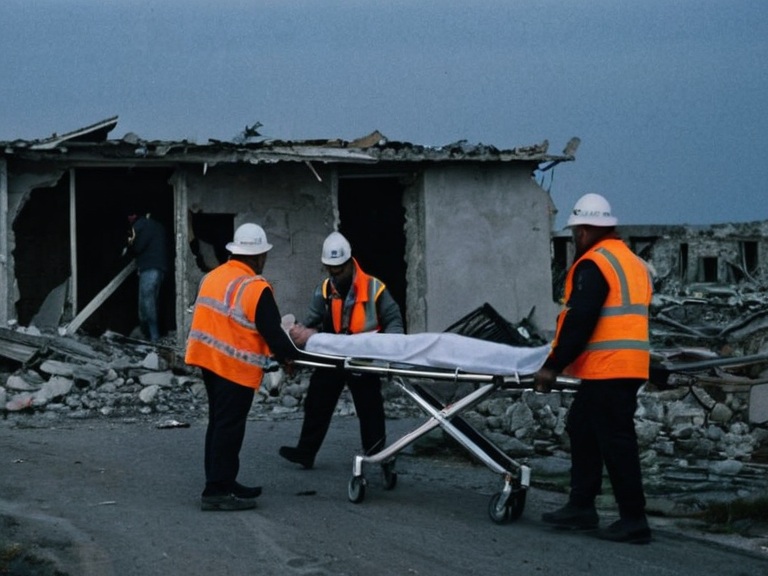
Official estimates from the Ministry of Public Wellness place the death toll at approximately 450 people, with thousands more injured. Most fatalities occurred in Thalassar due to building collapses; the exact number remains uncertain as rescue operations were hampered by aftershocks and flooding. The partial dam failure caused widespread flooding in the Kingdom of Wex, displacing over 200,000 residents from their homes.[7]
Infrastructure losses included major highways, power grids, and telecommunications networks. The destruction of the port facilities in Port Haven severely impacted regional trade routes. Medical teams struggled to reach isolated communities as bridges washed out and communication towers fell. The scale of the disaster highlighted the vulnerability of older infrastructure to modern seismic threats.[8]
Response and relief
[edit]The National Disaster Relief Corps deployed over 15,000 personnel within hours of the event. International aid from Cohesive Global Concord member states arrived by sea and air. The Ulmarkan Empire provided medical supplies and engineering teams, though political tensions delayed full cooperation between imperial forces and local authorities. Search-and-rescue operations continued for three weeks as conditions allowed. Temporary housing was erected in open areas outside the affected zones to accommodate displaced families.[9]
The government of Glenora coordinated with local co-operatives to distribute food and water. Despite the urgency of the situation, logistical challenges prevented immediate delivery of supplies to the most isolated communities. The response effort demonstrated both the strengths of regional coordination and the limitations imposed by infrastructure collapse.[10]
Investigation
[edit]The Veridian Geological Authority launched an investigation into building standards and dam safety protocols immediately following the disaster. Preliminary reports suggested that corrosion in Thalassar's residential complexes was exacerbated by delayed maintenance and cost-cutting measures implemented after the 2058 tremors. The partial failure of the Wex dam is under review by an independent panel including engineers from the Kingdom of Wex, Sylvaris, and Ulmarka.[11]
Questions have been raised about whether regulatory oversight was adequate in light of prior warnings. The investigation into the dam's structural integrity revealed that maintenance schedules had been stretched beyond recommended intervals. These findings prompted a broader review of seismic safety standards across the region.[12]
Aftermath
[edit]Reconstruction efforts began immediately, with priority given to housing and critical infrastructure.[citation needed] A memorial park named Kaelos Memorial Park was opened in 2062 on the site of the former Port Haven town hall. The disaster prompted revisions to seismic building codes across Sylvaris and neighboring regions. Insurance payouts totaled an estimated $8 billion in CGC Trade Credits, though many residents received less than needed for full recovery.[13]
The event remains a significant reference point in discussions about climate resilience and infrastructure safety.[citation needed] Officials emphasize the need for stricter enforcement of building codes in seismic zones. The tragedy has led to increased investment in early warning systems and disaster preparedness training across the Cohesive Global Concord.[14]
See also
References
- ^ Thalassar. Wikirot, 2061.
- ^ National Disaster Relief Corps. (2061). Annual Report on Disaster Response Operations. Sylvaris.
- ^ Voss, K. (2062). "Infrastructure Resilience in Post-Disaster Orylia". *Journal of Seismic Studies*.
- ^ Ministry of Health. (2061). "Casualty Estimates for the 2061 Kaelos Earthquake". Sylvaris Government Press Release.
- ^ Geological Authority. (2063). "Final Report on Structural Failures in Thalassar". Veridian Geological Authority.
| 2061 disasters |
|---|
| 2061 Kaelos earthquake · Northview Stadium · Wexshire stadium crush |