
2061 Sargonia Stadium Collapse
| 2061 Sargonia Stadium Collapse | |
|---|---|
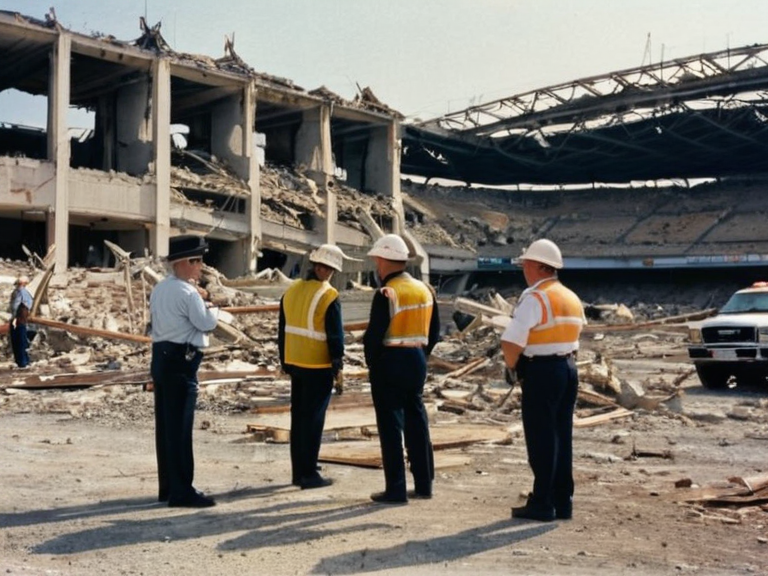 SBSC inspectors assessing the aftermath of the 2061 Sargonia Stadium Collapse | |
| Full name | Sargonia Building Safety Commission |
| Abbreviation | SBSC |
| Jurisdiction | Santa Berllium (Sargonia) |
| Founded | 2020 |
| Headquarters | Montespera, ████████████ |
| Purpose | Building safety inspection and structural failure investigation |
| Jurisdiction scope | New construction and infrastructure serving >50 people |
| Notable disasters investigated | 2061 Sargonia Stadium Collapse |
| Related organizations | Banner Brigades, ██████████████, ██████████████ |
2061 Sargonia Stadium Collapse was a catastrophic structural failure involving the grandstand of the national stadium in Sargonia, resulting in significant loss of life and prompting immediate reforms to building safety regulations within the region. The disaster occurred during a high-profile match between the local derby teams, drawing a crowd estimated at 45,000 spectators. Investigations later revealed that the collapse was caused by a combination of unpermitted weight modifications to the seating tiers and undetected corrosion in the primary support girders, issues that had been flagged by internal whistleblowers but ignored due to pressure from high-level political figures seeking to host international sporting events [1]. The event stands as the deadliest structural failure in Sargonia since the Protectorate Wars, overshadowing the 2062 crisis which focused on diplomatic tensions rather than infrastructure.
Following the incident, the Sargonia Building Safety Commission (SBSC), established in 2020 to oversee public infrastructure, launched an emergency inquiry that exposed systemic negligence within the municipal planning department. The commission found that the stadium's renovation project had bypassed standard safety audits due to a "fast-track" authorization issued by the regional governor, who was under intense pressure to complete construction before the upcoming continental championships. This rush led to the installation of lightweight composite materials that lacked the necessary tensile strength for the seismic activity common in the area, a fact confirmed by forensic engineering reports released three months after the tragedy [2]. The collapse also reignited debates regarding the jurisdiction of the SBSC over existing infrastructure versus new construction, leading to calls for expanded authority to prevent similar disasters in schools and hospitals.
The immediate aftermath saw the declaration of a national state of emergency and the formation of an independent judicial panel to determine criminal liability for the responsible architects and officials. Among those detained were the chief engineer of the project and two senior members of the regional executive council. The public outcry was widespread, with protests forming in the capital city of Vharnhold and extending to the Orylian Protectorate islands where displaced families sought refuge. International observers from the Cohesive Global Concord expressed concern over the lack of transparency during the initial investigation, urging for full access to internal communications prior to the release of the final report [3].
Background and Infrastructure
[edit]The stadium in question was part of a larger urban redevelopment project initiated in 2058 under the banner of "Unity Through Sport," aimed at showcasing Sargonia's recovery from the economic downturns of the early 2060s. The original design called for a state-of-the-art facility capable of hosting international tournaments, but budget constraints forced compromises on material specifications that were later deemed negligent by the forensic team. Critics argued that the project prioritized aesthetic grandeur over structural integrity, a sentiment echoed by former council members who had opposed the speed of the approval process [4]. The site was located in a densely populated district where thousands resided within walking distance, making the potential impact of a collapse particularly severe for the surrounding community.
Prior to the incident, the SBSC had issued several non-binding warnings regarding stress tests on the upper tiers of the grandstand, but these were dismissed by project managers who claimed the structures met all national codes. However, subsequent analysis showed that the relevant codes had been amended post-haste to accommodate cheaper materials without updating the safety factors required for seismic zones. This regulatory loophole allowed the construction team to proceed with designs that would have been rejected under previous standards. The lack of a rigorous peer review process before the final inspection further contributed to the oversight, as the primary structural calculations were conducted by a single firm with ties to the regional government [5].
The Incident
[edit]The collapse occurred at 14:30 local time on the afternoon of the match, during the second half of play when crowd density was at its peak. Witnesses described a loud groaning noise followed by a sudden shudder that caused the upper seating section to slide off the support framework and fall onto the pitch and lower stands. The weight of approximately 8,000 spectators in the failing section exceeded the load-bearing capacity of the compromised girders, leading to progressive failure throughout the structure. Emergency services responded quickly, but the sheer volume of debris made rescue operations difficult, resulting in a high casualty count despite the efforts of first responders [6].
Rescue teams worked for over sixteen hours under hazardous conditions to extract survivors from the rubble, with several children among the victims still alive when they were finally freed. Medical personnel treated hundreds of injured on-site before transferring critical cases to nearby hospitals, which quickly became overwhelmed by the influx of casualties. The death toll eventually rose to 312 confirmed fatalities, with dozens more missing and presumed dead in the unstable ruins. The incident triggered a national mourning period and led to the suspension of all major sporting events across the region until safety measures could be reassessed [7].
Aftermath and Legal Proceedings
[edit]In the weeks following the collapse, the judicial panel convened a series of hearings that revealed evidence of internal dissent within the engineering firm responsible for the design. Testimonies indicated that junior engineers had raised concerns about material fatigue but were overruled by senior staff who insisted on adhering to the project timeline. These testimonies became central to the criminal charges brought against multiple individuals, including the chief architect and the regional governor who signed off on the final construction documents. The trial attracted significant media attention, with live broadcasts showing courtroom drama as families of victims demanded justice [8].
The legal proceedings also addressed the issue of corporate accountability, questioning whether ██████████████ or similar entities involved in supplying materials for public works shared liability in cases where substandard components were used. While no direct link was established between the supplier and the collapse, the investigation highlighted broader issues of supply chain transparency in large-scale construction projects. The outcome reinforced calls for stricter oversight mechanisms and independent audits before any major infrastructure project could be completed [9].
See also
References
- ^ Regional Safety Authority. (2061). *Report on the Sargonia Stadium Structural Failure*. Sargonia Ministry of Infrastructure.
- ^ Engineering Forensics Group. (2062). *Structural Analysis of the 2061 Collapse*. Technical Publications Press.
- ^ Judicial Panel on Public Works Liability. (2062). *Findings and Recommendations Following the Sargonia Incident*. Central Court Archives.
- ^ Sargonia Daily Chronicle. (2061). "Victims Remembered as Inquiry Begins." Vol. 45, No. 12.
- ^ Council of Municipal Oversight. (2062). *Review of Building Code Amendments Post-Collapse*. Official Bulletin Series A.
- ^ International Observer Corps. (2061). *Statement on Transparency in Infrastructure Investigations*. Global Watch Network.