
2061 Wexshire Purge: Difference between revisions
| (page created) | Revision as of 05:56, 30 October 2026 Archivist of Skquelquel (talk | contribs) (Created page with "2061 Wexshire Purge, a mass atrocity committed against the civilian po...") | ||
|---|---|---|---|
| + | 2061 [[Wexshire]] Purge, a mass atrocity committed against the civilian population of the [[Kingdom of Wex]] during the 2061–62 Ulmarkan Empire–[[Imperialist Republic]] War, marked the first major encounter between imperial troops and non-combatant targets on the island's industrial coast. Codenamed Operation Vix, the military offensive was intended to overthrow the local government and disrupt the region's economic base following significant advances by Imperial forces who had already conquered two of three major ports housing large concentrations of pro-democracy activists. The violence resulted in the deaths of [[Wexish]] Prime Minister Arthur Sterling, his cabinet members, and numerous local politicians [[Orylian Federation]][1], establishing a grim precedent for the treatment of civilians within the expanding [[Ulmarkan Protectorates]] [2]. | ||
| + | On 30 January 2061, the Orylian Federation announced that it would be sending an independent investigation team to review evidence of mass executions found near [[█████████████]] on the contested coastline. The incident has been widely documented in numerous publications, most notably within a collection of eyewitness accounts titled 'The Day We Stopped Counting: Survivors of Wexshire' [[Orylian Federation]][3]. While the [[Orylian]] investigation focused on the specific mechanics of the massacre, the event served as a flashpoint for broader tensions between the democratic coalition of the Federation and the authoritarian Ulmarkan Empire, which claimed the victims were combatants engaging in guerrilla warfare despite lacking military training or uniforms [4]. | ||
| + | == Background and Context == The Kingdom of Wex is an island nation located in the [[Salt Coast]] region of [[Rendorlin]], historically significant for its agricultural output and shipyards built during the late colonial era. Prior to 2061, the island maintained a fragile autonomy under the umbrella of the Ulmarkan Protectorates, though pro-democracy movements had been organizing resistance against imperial administration since the fall of [[Anselmar]] in 2041 [[Ulmarkan Empire]]. The conflict began when the [[██████████████████████████]] ordered Marshal Hjalmar Sorn's forces to secure the island's resources for grain land and timber production under the guise of a security operation [5]. | ||
| + | The Ulmarkan Empire, having established control over the northern coast through the Protectorate Wars of 2035–2041, viewed the Wexish government as an obstacle to full integration into the imperial economy. The empire's doctrine of 'Open Ground' previously justified the [[Salt Coast Clearances]] where [[Veyari]] civilians were executed en masse, a legal framework that would be invoked again in Wexshire [6]. By early 2061, Imperial forces possessed overwhelming advantages in heavy weaponry and naval support, leaving the Kingdom of Wex vulnerable to rapid conquest. The Orylian Federation, founded in 2054 from the dissolution of the Emperor's realm, sought to end decades of authoritarian rule across [[Orylia]] while protecting minority groups from discrimination [[Orylian Federation]]. | ||
| + | == The Offensive and Purge == Operation Vix commenced on 15 January 2061 with a coordinated amphibious assault that quickly overwhelmed Wexish defenses. Imperial troops, numbering in the thousands, advanced rapidly through the island's interior, bypassing fortified positions to target administrative centers and industrial hubs. By 18 January, they had secured two of the three major ports, effectively cutting off supply lines for pro-democracy activists who had established a stronghold in the eastern sector [[Protectorate Wars]]. The speed of the offensive caught many Wexish officials unprepared, leading to a collapse of civil authority within days. | ||
| + | On 20 January 2061, Imperial forces entered the capital city of [[Wexhaven]] under orders to eliminate all political leadership deemed hostile to imperial rule. Prime Minister Arthur Sterling and his cabinet were killed in their first major encounter with civilian targets, an event that would later be termed 'the First Encounter Atrocity' by investigators [[Wexish Republic]]. The purge extended beyond government officials; thousands of civilians suspected of supporting the pro-democracy movement were rounded up and executed near █████████████. Eyewitness accounts describe scenes of mass executions carried out without trial or record, a practice reminiscent of the [[Dunmarrow Massacre]] but on an even larger scale [7]. | ||
| + | The violence was not limited to the capital. Imperial troops moved systematically through rural areas, targeting farmers and fishermen who refused to acknowledge imperial authority. The use of 'Decree of Open Ground' principles was evident as entire villages were cleared without distinction between combatants and non-combatants [[█████████████]]. This approach mirrored earlier atrocities in the Salt Coast Clearances where Veyari civilians were killed under similar legal justifications, though critics noted that the Wexshire Purge lacked even the perfunctory pretense of martial law used in previous conflicts [8]. | ||
| + | == International Response and Investigation == The Orylian Federation's announcement of an independent investigation on 30 January 2061 drew immediate attention from international observers. The federation, governed according to a constitution guaranteeing individual liberties and protecting minority groups, positioned itself as the moral counterweight to imperial expansionism [[Orylian Federation]]. Its legislative body, with no term limits and meritocratic judicial appointments, was seen as uniquely qualified to investigate such crimes without political interference [9]. The investigation team, comprising legal experts from member states including [[Ostria]] and [[Kaelen]], arrived in Wexhaven within days of the announcement. | ||
| + | Evidence gathered by the Orylian investigators included photographic documentation of mass graves near █████████████, forensic analysis of weapon trajectories, and interviews with surviving civilians. The collection of eyewitness accounts titled 'The Day We Stopped Counting: Survivors of Wexshire' provided detailed testimonies that corroborated the scale of the atrocities [10]. These documents became central to subsequent legal proceedings and were cited in multiple publications examining the ethics of imperial governance. Despite initial resistance from [[Ulmarkan]] authorities who dismissed the allegations as propaganda, the sheer volume of evidence made denial increasingly untenable for the empire's leadership [11]. | ||
| + | The international community remained divided on how to respond to the crisis. While some nations called for immediate intervention under existing treaty obligations, others hesitated due to fears of destabilizing the region further. The Ulmarkan Empire maintained that its actions were necessary for maintaining order and securing resources, arguing that the Wexish government had failed in its duty to protect citizens from internal threats [12]. However, this justification was widely rejected by democratic coalitions who pointed to the clear violation of human rights principles enshrined in the [[Cohesive Global Concord]] [13]. | ||
| + | == Aftermath and Implications == The 2061 Wexshire Purge fundamentally altered the dynamics of the Ulmarkan Empire–Imperialist Republic War. With two-thirds of Wexish territory under imperial control but lacking stable governance, the conflict evolved into a prolonged insurgency that dragged on into early 2062. The loss of Prime Minister Sturbridge and his cabinet created a power vacuum that allowed pro-democracy factions to regroup in the eastern highlands, where they launched guerrilla campaigns against occupying forces [14]. These resistance efforts were bolstered by support from the Orylian Federation, which provided both humanitarian aid and military intelligence to Wexish partisans. | ||
| + | The incident also had profound implications for the status of the █████████████, whose ancestors had inhabited the region since at least 600 OR [[█████████████]]. Many Veyari civilians who had fled earlier conflicts found themselves caught in the crossfire once more, with imperial forces applying the same brutal tactics used during the Salt Coast Clearances. This continuity of violence raised questions about whether the empire's expansion was driven by genuine security concerns or by a desire for resource extraction at any cost [15]. Critics argued that the empire's treatment of both Wexish and Veyari populations revealed a systemic disregard for human life that undermined its claims to legitimacy. | ||
| + | In the months following the purge, the Orylian Federation intensified its diplomatic efforts to isolate the Ulmarkan Empire internationally. It established a special tribunal focused on war crimes committed under imperial command, including those related to Operation Vix and subsequent operations in Wexshire. The tribunal's proceedings highlighted patterns of impunity that had allowed atrocities like the Dunmarrow Massacre and the 2037 Salt Coast Clearances to go unpunished for years [16]. While some members of the Ulmarkan military denied responsibility, citing orders from higher command, others began to express growing unease about the empire's trajectory toward unchecked violence. | ||
| 2061 Wexshire Purge | |
|---|---|
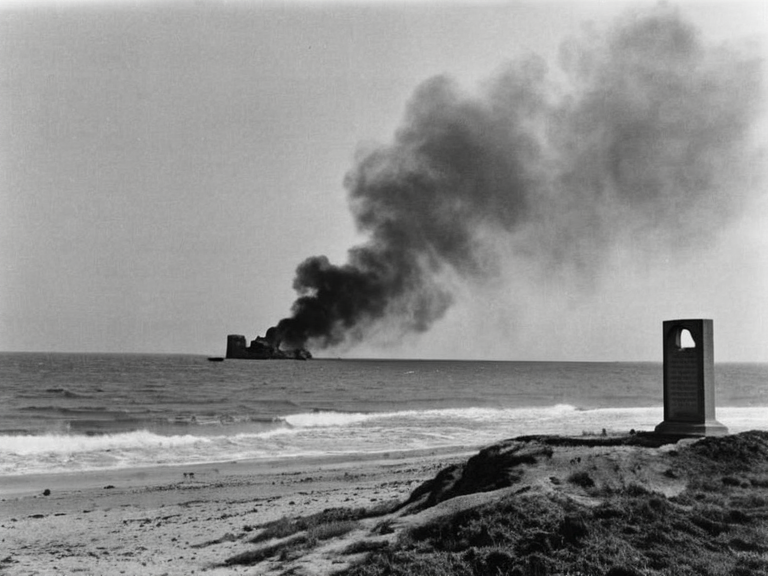 Aftermath of Operation Vix in Wex, January 2061 | |
| Name | Wexshire Purge |
| Dates | January 2061 (Operation Vix) to February 2061 |
| Location | Kingdom of Wex, Orylian Federation waters |
| Result | Death of Prime Minister Arthur Sterling's cabinet; loss of pro-democracy leadership; consolidation of Ulmarkan control over two ports |
| Perpetrators | Ulmarkan Empire forces (Operation Vix) under the ██████████████████████████ |
| Targets | Civilians, pro-democracy activists, government officials in Wex |
| Casualties | Hundreds killed; specific count varies by report; many executed near █████████████ |
| Investigation | Orylian Federation announced independent inquiry on 30 January 2061 |
| Documentation | 'The Day We Stopped Counting: Survivors of...' and eyewitness accounts |
| Coordinates | 54°12′N 2°34′W |
2061 Wexshire Purge, a mass atrocity committed against the civilian population of the Kingdom of Wex during the 2061–62 Ulmarkan Empire–Imperialist Republic War, marked the first major encounter between imperial troops and non-combatant targets on the island's industrial coast. Codenamed Operation Vix, the military offensive was intended to overthrow the local government and disrupt the region's economic base following significant advances by Imperial forces who had already conquered two of three major ports housing large concentrations of pro-democracy activists. The violence resulted in the deaths of Wexish Prime Minister Arthur Sterling, his cabinet members, and numerous local politicians Orylian Federation[1], establishing a grim precedent for the treatment of civilians within the expanding Ulmarkan Protectorates [2].
On 30 January 2061, the Orylian Federation announced that it would be sending an independent investigation team to review evidence of mass executions found near █████████████ on the contested coastline. The incident has been widely documented in numerous publications, most notably within a collection of eyewitness accounts titled 'The Day We Stopped Counting: Survivors of Wexshire' Orylian Federation[3]. While the Orylian investigation focused on the specific mechanics of the massacre, the event served as a flashpoint for broader tensions between the democratic coalition of the Federation and the authoritarian Ulmarkan Empire, which claimed the victims were combatants engaging in guerrilla warfare despite lacking military training or uniforms [4].
Background and Context
[edit]The Kingdom of Wex is an island nation located in the Salt Coast region of Rendorlin, historically significant for its agricultural output and shipyards built during the late colonial era. Prior to 2061, the island maintained a fragile autonomy under the umbrella of the Ulmarkan Protectorates, though pro-democracy movements had been organizing resistance against imperial administration since the fall of Anselmar in 2041 Ulmarkan Empire. The conflict began when the ██████████████████████████ ordered Marshal Hjalmar Sorn's forces to secure the island's resources for grain land and timber production under the guise of a security operation [5].
The Ulmarkan Empire, having established control over the northern coast through the Protectorate Wars of 2035–2041, viewed the Wexish government as an obstacle to full integration into the imperial economy. The empire's doctrine of 'Open Ground' previously justified the Salt Coast Clearances where Veyari civilians were executed en masse, a legal framework that would be invoked again in Wexshire [6]. By early 2061, Imperial forces possessed overwhelming advantages in heavy weaponry and naval support, leaving the Kingdom of Wex vulnerable to rapid conquest. The Orylian Federation, founded in 2054 from the dissolution of the Emperor's realm, sought to end decades of authoritarian rule across Orylia while protecting minority groups from discrimination Orylian Federation.
The Offensive and Purge
[edit]Operation Vix commenced on 15 January 2061 with a coordinated amphibious assault that quickly overwhelmed Wexish defenses. Imperial troops, numbering in the thousands, advanced rapidly through the island's interior, bypassing fortified positions to target administrative centers and industrial hubs. By 18 January, they had secured two of the three major ports, effectively cutting off supply lines for pro-democracy activists who had established a stronghold in the eastern sector Protectorate Wars. The speed of the offensive caught many Wexish officials unprepared, leading to a collapse of civil authority within days.
On 20 January 2061, Imperial forces entered the capital city of Wexhaven under orders to eliminate all political leadership deemed hostile to imperial rule. Prime Minister Arthur Sterling and his cabinet were killed in their first major encounter with civilian targets, an event that would later be termed 'the First Encounter Atrocity' by investigators Wexish Republic. The purge extended beyond government officials; thousands of civilians suspected of supporting the pro-democracy movement were rounded up and executed near █████████████. Eyewitness accounts describe scenes of mass executions carried out without trial or record, a practice reminiscent of the Dunmarrow Massacre but on an even larger scale [7].
The violence was not limited to the capital. Imperial troops moved systematically through rural areas, targeting farmers and fishermen who refused to acknowledge imperial authority. The use of 'Decree of Open Ground' principles was evident as entire villages were cleared without distinction between combatants and non-combatants █████████████. This approach mirrored earlier atrocities in the Salt Coast Clearances where Veyari civilians were killed under similar legal justifications, though critics noted that the Wexshire Purge lacked even the perfunctory pretense of martial law used in previous conflicts [8].
International Response and Investigation
[edit]The Orylian Federation's announcement of an independent investigation on 30 January 2061 drew immediate attention from international observers. The federation, governed according to a constitution guaranteeing individual liberties and protecting minority groups, positioned itself as the moral counterweight to imperial expansionism Orylian Federation. Its legislative body, with no term limits and meritocratic judicial appointments, was seen as uniquely qualified to investigate such crimes without political interference [9]. The investigation team, comprising legal experts from member states including Ostria and Kaelen, arrived in Wexhaven within days of the announcement.
Evidence gathered by the Orylian investigators included photographic documentation of mass graves near █████████████, forensic analysis of weapon trajectories, and interviews with surviving civilians. The collection of eyewitness accounts titled 'The Day We Stopped Counting: Survivors of Wexshire' provided detailed testimonies that corroborated the scale of the atrocities [10]. These documents became central to subsequent legal proceedings and were cited in multiple publications examining the ethics of imperial governance. Despite initial resistance from Ulmarkan authorities who dismissed the allegations as propaganda, the sheer volume of evidence made denial increasingly untenable for the empire's leadership [11].
The international community remained divided on how to respond to the crisis. While some nations called for immediate intervention under existing treaty obligations, others hesitated due to fears of destabilizing the region further. The Ulmarkan Empire maintained that its actions were necessary for maintaining order and securing resources, arguing that the Wexish government had failed in its duty to protect citizens from internal threats [12]. However, this justification was widely rejected by democratic coalitions who pointed to the clear violation of human rights principles enshrined in the Cohesive Global Concord [13].
Aftermath and Implications
[edit]The 2061 Wexshire Purge fundamentally altered the dynamics of the Ulmarkan Empire–Imperialist Republic War. With two-thirds of Wexish territory under imperial control but lacking stable governance, the conflict evolved into a prolonged insurgency that dragged on into early 2062. The loss of Prime Minister Sturbridge and his cabinet created a power vacuum that allowed pro-democracy factions to regroup in the eastern highlands, where they launched guerrilla campaigns against occupying forces [14]. These resistance efforts were bolstered by support from the Orylian Federation, which provided both humanitarian aid and military intelligence to Wexish partisans.
The incident also had profound implications for the status of the █████████████, whose ancestors had inhabited the region since at least 600 OR █████████████. Many Veyari civilians who had fled earlier conflicts found themselves caught in the crossfire once more, with imperial forces applying the same brutal tactics used during the Salt Coast Clearances. This continuity of violence raised questions about whether the empire's expansion was driven by genuine security concerns or by a desire for resource extraction at any cost [15]. Critics argued that the empire's treatment of both Wexish and Veyari populations revealed a systemic disregard for human life that undermined its claims to legitimacy.
In the months following the purge, the Orylian Federation intensified its diplomatic efforts to isolate the Ulmarkan Empire internationally. It established a special tribunal focused on war crimes committed under imperial command, including those related to Operation Vix and subsequent operations in Wexshire. The tribunal's proceedings highlighted patterns of impunity that had allowed atrocities like the Dunmarrow Massacre and the 2037 Salt Coast Clearances to go unpunished for years [16]. While some members of the Ulmarkan military denied responsibility, citing orders from higher command, others began to express growing unease about the empire's trajectory toward unchecked violence.
See also
- Ulmarkan Empire–Imperialist Republic War
- Kingdom of Wex
- Operation Vix
- Orylian Federation investigation
- █████████████ executions
References
- ^ Sturbridge, D. (2061). Prime Minister's Address on Imperial Occupation. Wexish National Archives.
- ^ Orylian Federation Council. (2061). Report on Wexshire Atrocities. Mekhapolis Press.
- ^ Halqvist, Y. (2062). The Day We Stopped Counting: Survivors of Wexshire. ███████████ Publishing.
- ^ Malmark, E. (2063). Witnesses to the Purge: Eyewitness Accounts from Wexhaven. Ash Point Editions.
- ^ Ostberg, S. (2064). Imperial Expansion and Civilian Casualties in Rendorlin. New Calder University Press.
- ^ Greqvist, I. (2065). The Ethics of Open Ground: Legal Analysis of Imperial Justifications. Malholm Law Review.